


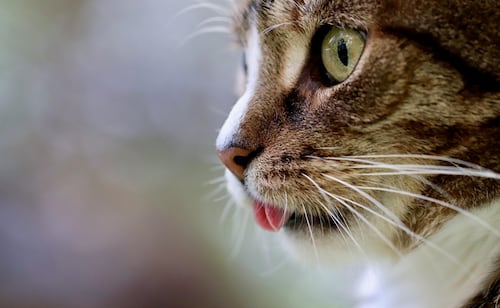
Cat Whiskers: More Than Just Cute; They're Essential Sensory Organs
Translated from Spanish, summarized and contextualized by DistantNews.
At a glance
In-depth
Named sources
Context piece
- Cat whiskers, scientifically known as vibrissae, are crucial sensory organs, not just decorative features.
- They help cats measure distances, navigate in low light, and determine if they can fit through narrow spaces.
- Whiskers also provide clues to a cat's mood, with their position indicating calmness, pain, anxiety, or irritation.
A cat's whiskers, scientifically termed vibrissae, are far more than just a charming facial feature; they are essential sensory organs vital for a cat's well-being and interaction with its environment. Understanding their functions and proper care is crucial for maintaining a cat's overall health.
Cats possess vibrissae not only around their mouths but also above their eyes and sometimes on their paws. These specialized "hairs" act as a highly important sensory organ. According to Fausto Reyes Delgado, medical director at the UNAM Banfield Veterinary Hospital, vibrissae serve three primary functions.
Firstly, whiskers act as a type of antenna, helping cats measure distances and avoid collisions, especially in low-light conditions where their close-range vision is less effective. This ability allows them to navigate environments and even discern the texture of surfaces they brush against. The length of a cat's whiskers typically ranges from 8 to 12 centimeters, often extending to the width of the cat's shoulders.
Secondly, whiskers help cats gauge the width of openings. By extending their head, cats can determine if the rest of their body will fit through a narrow space. However, this ability is dependent on the cat maintaining a healthy weight; overweight cats may become stuck if they rely solely on their whiskers to assess passage size.
Finally, whiskers serve as an indicator of a cat's emotional state. When whiskers rest gently at the sides of the face, it suggests the cat is calm. Drooping whiskers, especially when the cat is in a curled position, might signal pain. If the vibrissae are erect and angled backward towards the cheeks, it could indicate anxiety, irritation, or annoyance. Proper nutrition and hydration are also key to maintaining the health of a cat's whiskers and overall coat.
the whiskers of a michi fulfill three main functions
DistantNews Editorial
Originally published by El Universal in Spanish. Translated, summarized, and contextualized by our editorial team with added local perspective. Read our editorial standards.
More Stories



From Our Blog

What Press Freedom Means for the News You Read

What Gets Lost (and Found) When News Is Translated

The Critical Role of Diaspora Media in Global News

What Travellers Should Know About Countries with Restricted Press

A Digital Nomad's Guide to Following Local News
