


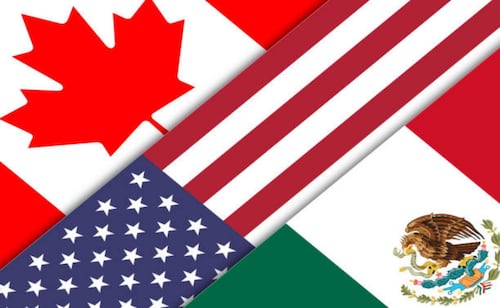
CCE and Coparmex representatives travel to Europe to calm concerns about T-MEC's future; say it will remain in effect
Translated from Spanish, summarized and contextualized by DistantNews.
At a glance
News
Sources not specified
Context piece
- Mexican business leaders traveled to Europe to reassure investors about the continued validity of the T-MEC trade agreement.
- Representatives from CCE and Coparmex met with European investors to address concerns over the agreement's future, emphasizing its ongoing validity under various negotiation scenarios.
- The business groups aim to attract investment and integrate SMEs into export value chains, highlighting Mexico's legal and fiscal certainty.
Mexican private sector leaders embarked on a working tour of the European Union to quell investor anxieties regarding the future of the T-MEC trade agreement. Representatives from the Business Coordinating Council (CCE) and the Mexican Employers' Federation (Coparmex) sought to provide a message of certainty about the treaty's continued validity amidst European concerns about its potential termination.
the T-MEC continues to be valid under any of the ongoing negotiation scenarios, whether it is an extension of the treaty for 16 years with reviews every six years or annual reviews with a validity of 10 years.
During their visit, the leaders focused on four key objectives: attracting investment, integrating small and medium-sized enterprises into export value chains, exploring innovations, and demonstrating Mexico's legal and fiscal certainty. They communicated to European investors that the T-MEC remains in effect, regardless of ongoing negotiation scenarios, whether it involves a 16-year extension with six-year reviews or annual reviews with a 10-year term.
the CCE actively supports the federal government by collaborating with authorities to reach the best possible agreement.
The CCE actively supports the federal government's efforts to reach the best possible agreement. The council has committed to specific follow-ups with European organizations, including sharing studies on semiconductors and dialogue schemes with the EU, exploring memorandums of understanding, and monitoring the ratification of the Mexico-EU Agreement. This coordinated, long-term agenda aims to stimulate investment in Mexico, reinforcing the country's appeal as an export platform to North America and generating confidence among European investors amid global trade uncertainties.
the private sectors of the three countries, represented in the CCE, the US Chamber of Commerce, the Business Round Table, and the Canadian Business Council, agree that the agreement should be maintained trilaterally, that free trade without tariffs should continue for products that meet the rules of origin.
DistantNews Editorial
Originally published by El Universal in Spanish. Translated, summarized, and contextualized by our editorial team with added local perspective. Read our editorial standards.
More Stories


From Our Blog

What Press Freedom Means for the News You Read

What Gets Lost (and Found) When News Is Translated

The Critical Role of Diaspora Media in Global News

What Travellers Should Know About Countries with Restricted Press

A Digital Nomad's Guide to Following Local News
