

Cement Without CO2 Emissions? Climate-Friendly Cement from Baden-Württemberg?
Translated from German, summarized and contextualized by DistantNews.
At a glance
News
Named sources
Context piece
- Researchers in Heidenheim, Baden-Württemberg, are developing a new method for producing cement with significantly reduced CO2 emissions.
- The pilot plant uses pure oxygen instead of air in its rotary kiln, creating a nearly pure CO2 stream that is easier to capture.
- This innovative technology, backed by over 120 million euros in investment from four European cement manufacturers, aims to test and scale up climate-friendly cement production for industrial use.
A groundbreaking initiative in Heidenheim, Baden-Württemberg, is pioneering a new approach to cement production, aiming to drastically cut the industry's significant carbon footprint. Cement manufacturing is a major global source of CO2 emissions, making this research crucial for climate goals.
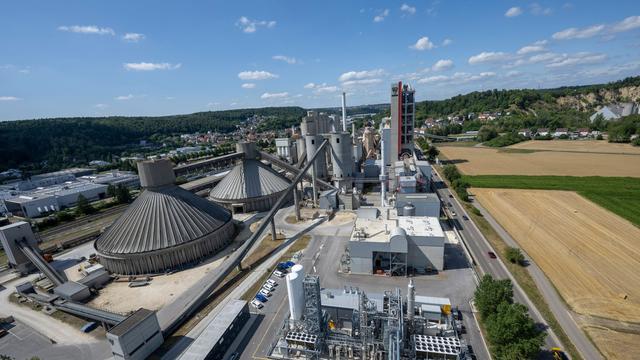
The pilot plant, located about 50 kilometers north of Ulm, employs a novel technique in its rotary kiln. Instead of using air, it operates with pure oxygen. This process generates a concentrated stream of CO2, which is considerably easier to capture and potentially reuse or store, unlike the mixed gases produced in conventional methods.
The plant was specifically built for research and development and allows the process to be tested under realistic conditions.
This innovative process separates the CO2 from other byproducts, such as nitrogen, which are generated when air is used. The captured CO2 could be utilized in industries like beverage production or fire extinguishers, or permanently stored in geological formations, such as under the North Sea. However, the development of necessary transport and storage infrastructure remains a key challenge.
The facility represents a significant investment, with four European cement manufacturers contributing over 120 million euros. It is designed as a research and development hub to test the technology under real-world conditions and gather data for future large-scale plants. This project, part of Thyssenkrupp Calvion's portfolio, is reportedly the world's first research plant of its kind with its own clinker line, aiming to prove the viability of industrial-scale, low-carbon cement production.
The functionality of the process has been proven. Now it needs to show whether the technology is also suitable for industrial use.
DistantNews Editorial
Originally published by Die Zeit in German. Translated, summarized, and contextualized by our editorial team with added local perspective. Read our editorial standards.
More Stories


From Our Blog

What Gets Lost (and Found) When News Is Translated

How the Same Story Looks Different in Different Countries

The Critical Role of Diaspora Media in Global News

What Travellers Should Know About Countries with Restricted Press

A Digital Nomad's Guide to Following Local News
