


Center for Military Electronics Opens in Gdynia; Will Produce Parts for Super Radars
Translated from Polish, summarized and contextualized by DistantNews.
At a glance
News
Sources not specified
Outcome reported
- A new Center for Military Electronics (CEM) has opened in Gdynia, Poland, as part of the Polish Armaments Group (PGZ).
- The facility will service, repair, test, produce, and design advanced military electronics, enhancing Poland's defense industry capabilities.
- CEM will produce key components for U.S. Patriot radar systems, including Circuit Card Assemblies and energy storage modules, fulfilling offset agreements related to the Wisła program.
Poland is bolstering its defense industry with the opening of the Center for Military Electronics (CEM) in Gdynia. This new facility, a part of the state-owned Polish Armaments Group (PGZ) Research and Development Center for Maritime Technology, signifies a significant step in enhancing the nation's capacity for advanced military technology.
The CEM, constructed at a cost of 23 million PLN, spans 2,180 square meters across three floors. It is designed to not only service and repair but also to test, produce, and design sophisticated electronics crucial for modern military systems. The center is expected to employ around 70 people per shift, significantly boosting the domestic defense sector's potential.
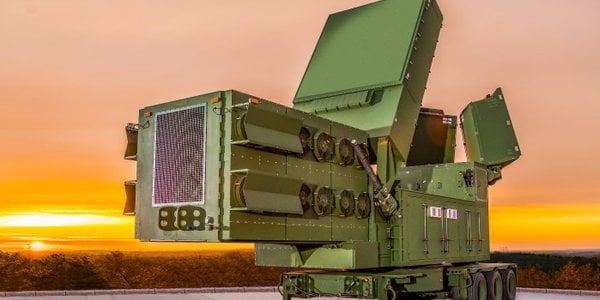
This investment aligns with the growing role of the Tricity area (Gdańsk, Gdynia, Sopot) as a key supplier of advanced solutions for the Polish Armed Forces. The CEM's most critical function will be the production of components for the U.S. Patriot missile defense system, specifically for the LTAMDS radars. This includes manufacturing Circuit Card Assemblies (CCAs) and energy storage modules, essential for the high-energy demands of these advanced radar systems. These activities are a direct fulfillment of offset agreements linked to Poland's acquisition of Patriot systems under the Wisła program, which aims to bolster the country's air defense capabilities.
DistantNews Editorial
Originally published by Rzeczpospolita in Polish. Translated, summarized, and contextualized by our editorial team with added local perspective. Read our editorial standards.
More Stories



From Our Blog

What Gets Lost (and Found) When News Is Translated

The Critical Role of Diaspora Media in Global News

What Travellers Should Know About Countries with Restricted Press

A Digital Nomad's Guide to Following Local News

How the Same Story Looks Different in Different Countries
