

Ceramic Pans Popular, But Experts Warn of Significant Drawbacks
Translated from Croatian, summarized and contextualized by DistantNews.
At a glance
Analysis
Named sources
Context piece
- Ceramic pans are popular for their non-stick properties and perceived health benefits, often marketed as PFAS-free.
- However, a comprehensive test by Wirecutter found that their non-stick performance degrades significantly and quickly.
- Experts suggest that traditional non-stick pans, when undamaged and used correctly, pose minimal risk, and recommend alternatives like stainless steel or cast iron for longevity.
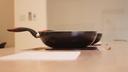
Ceramic cookware has surged in popularity, largely promoted as a healthier and more eco-friendly alternative to traditional non-stick pans, particularly those containing PTFE (polytetrafluoroethylene), often associated with PFAS chemicals. However, extensive testing by Wirecutter, a product recommendation service from The New York Times, reveals that the reality is more complex.
After evaluating ten popular ceramic pans, Wirecutter concluded that none were a worthy replacement for conventional non-stick cookware. The primary issue identified was the rapid deterioration of their non-stick capabilities. While many performed well initially, cooking eggs, pancakes, and fish fillets, their effectiveness diminished noticeably after just a few uses. Some pans lost significant performance after as few as ten uses, with even the better models showing a decline within months.
The term 'ceramic coating' itself is somewhat misleading. These coatings are typically based on silicon and oxygen, with various additives kept as trade secrets by manufacturers. They provide initial non-stick properties but are not the same as traditional ceramic material. Furthermore, while often advertised as PFAS-free, experts caution against a simplistic view of 'toxic' versus 'non-toxic.' Properly used and undamaged PFAS-coated pans are generally considered safe for everyday cooking, with risks increasing primarily when the surface is severely scratched or overheated.
Conversely, the 'non-toxic' label on ceramic cookware lacks a standardized definition or universal certification. Research on the long-term effects of ceramic coatings is also less extensive compared to PFAS compounds. While concerns about PFAS are valid due to their environmental persistence, replacing a non-stick pan that quickly loses its function with another that rapidly becomes waste is hardly a sustainable solution. Wirecutter suggests that cookware made from stainless steel, cast iron, or carbon steel offers a more durable and long-lasting alternative.
DistantNews Editorial
Originally published by Večernji List in Croatian. Translated, summarized, and contextualized by our editorial team with added local perspective. Read our editorial standards.
More Stories



From Our Blog

What Gets Lost (and Found) When News Is Translated

The Critical Role of Diaspora Media in Global News

What Travellers Should Know About Countries with Restricted Press

A Digital Nomad's Guide to Following Local News

How the Same Story Looks Different in Different Countries
