


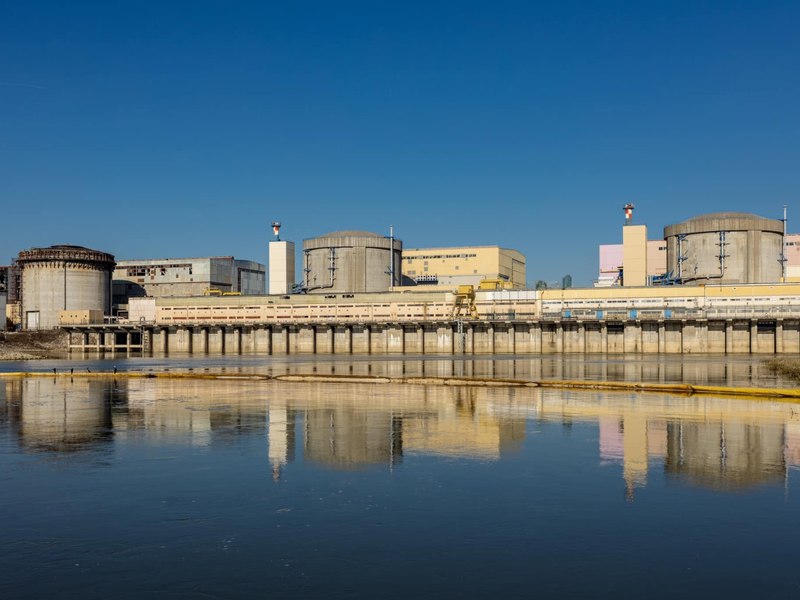
Cernavodă Nuclear Plant to Disconnect Today; Romania to Rely on Imports
Translated from Romanian, summarized and contextualized by DistantNews.
At a glance
News
Named sources
Ongoing story
- Romania's Cernavodă nuclear power plant will be disconnected from the national grid on August 13 due to low Danube River levels.
- The disconnection will result in a loss of approximately 680 megawatts of domestic energy production, requiring Romania to rely on imports and other sources.
- Authorities assure that household consumers and essential services will not be affected, though industrial users might face limitations in extreme scenarios.
The Cernavodă nuclear power plant is scheduled for a gradual disconnection from Romania's National Energy System on Thursday, August 13. This shutdown, expected to take several hours, will remove about 680 megawatts of domestic power generation capacity, forcing the country to compensate through imports and other available energy resources.
Procedures to reduce the power output of Reactor 2 will begin at 7:00 AM, with the plant ceasing energy supply to the national grid around 11:00 AM, according to plant director Romeo Urjan. "This means that the 680 megawatts we produce will be taken out of the National Energy System," he explained.
This means that the 680 megawatts we produce will be taken out of the National Energy System.
To bridge the energy gap, Romanian authorities are relying on several measures. Sorin Elisei, Secretary General of the Ministry of Energy, stated that the country will primarily depend on energy imports, particularly from Bulgaria, where Romania has significant import capacity. Additionally, hydroelectric reserves and voluntary reductions in energy consumption are expected to contribute. Authorities estimate that voluntary consumption cuts could save between 200 and 400 megawatts during peak evening hours. Forecasts for wind power production are also being monitored.
Once the decision is made, having the appropriate level, 24-48 hours, a day or two, it's not a problem, it restarts, we have the procedures, it's a normal restart.
The exact date for restarting the Cernavodă plant remains uncertain, largely due to the continued decline in the Danube River's water level. Hydrological forecasts indicate a further drop, potentially delaying the restart for at least ten days. Once conditions permit, the plant could resume normal production within 24 to 48 hours. "Once the decision is made, having the appropriate level, 24-48 hours, a day or two, it's not a problem, it restarts, we have the procedures, it's a normal restart," Urjan said.
Despite the significant reduction in domestic production, officials assure the public that the situation will not impact household consumers or essential services. Cristian Bușoi, State Secretary at the Ministry of Energy, stated that in an extreme scenario, limitations might affect large industrial consumers. "Production for household consumption, for people who will not feel anything regarding their consumption, the electricity they have access to, essential services, hospitals, pharmacies, medicine factories, police, institutions that ensure the functioning of the state, there is not the slightest danger," he affirmed. The plant's shutdown is attributed to the critically low water levels of the Danube, which affect its cooling water supply.
Production for household consumption, for people who will not feel anything regarding their consumption, the electricity they have access to, essential services, hospitals, pharmacies, medicine factories, police, institutions that ensure the functioning of the state, there is not the slightest danger.
DistantNews Editorial
Originally published by Adevărul in Romanian. Translated, summarized, and contextualized by our editorial team with added local perspective. Read our editorial standards.
More Stories

From Our Blog

What Gets Lost (and Found) When News Is Translated

The Critical Role of Diaspora Media in Global News

What Travellers Should Know About Countries with Restricted Press

A Digital Nomad's Guide to Following Local News

How the Same Story Looks Different in Different Countries
