


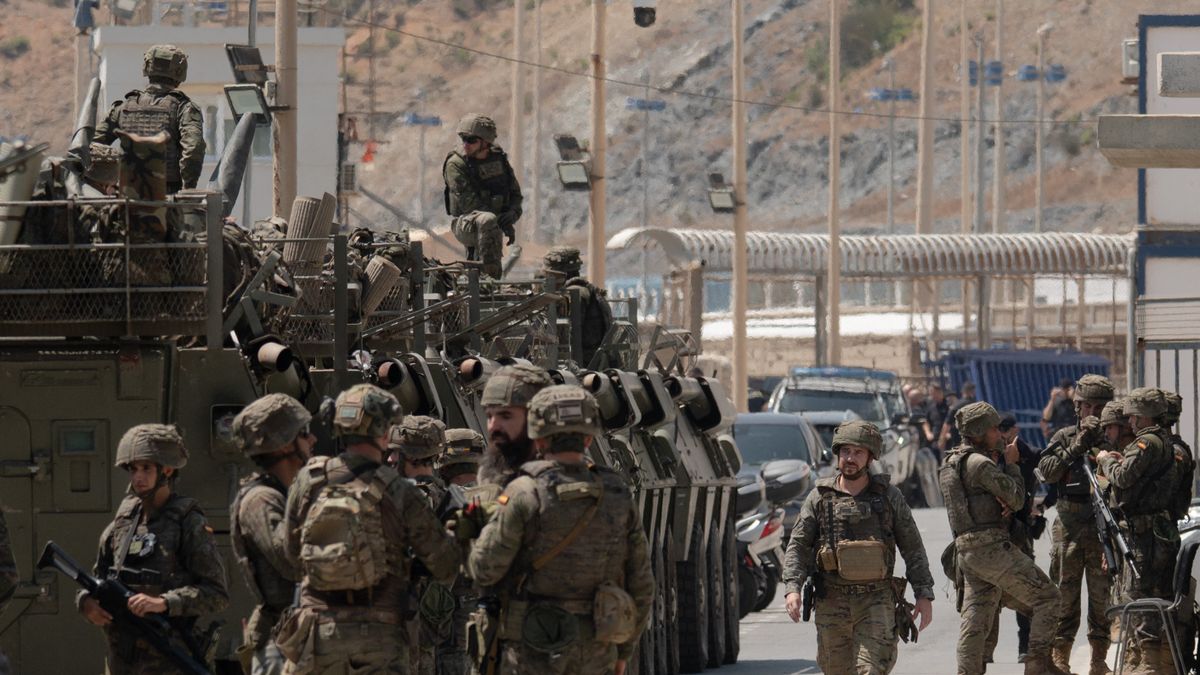
Ceuta Crisis Exemplifies 21st Century Political Blackmail Through Migration
Translated from Hungarian, summarized and contextualized by DistantNews.
At a glance
Analysis
Named sources
Context piece
- Migration has become a tool for political blackmail, transforming people into "live ammunition" at borders, according to an expert.
- Misinformation spread online falsely claimed Spain had opened its borders, leading to a crisis in Ceuta.
- The situation highlights a new form of hybrid warfare where digital mobilization and economic hardship fuel migration flows.
Migration has evolved into a ruthless instrument of political blackmail, a security expert warns, describing the current crisis as a prime example of 21st-century political extortion. György Nógrádi, a security policy specialist, explained that the chaos in Ceuta, coupled with the Spanish government's perceived helplessness and Morocco's strategic maneuvers, reveals a new form of hybrid warfare.
The migration is no longer just a humanitarian issue, but a ruthless tool of political blackmail.
In this evolving conflict, human beings have become "live ammunition" used to challenge borders. The situation was exacerbated by distorted reporting in Moroccan and North African social media, fueled by human trafficking networks and disinformation profiles. These sources falsely propagated that a Spanish court had permanently opened the borders, promising immediate passage to mainland Europe for anyone reaching Ceuta.
The human beings have become live ammunition, pushing against the borders.
This narrative tragically merged with news of Spanish amnesty plans for existing undocumented residents. For tens of thousands of young people, mobile phone screens became the primary tool for mobilization, overriding real laws and physical dangers. Spanish border guards are still investigating massive online groups coordinating the next wave of mass crossings.
The human trafficking networks and various disinformation profiles spread the false news that the Spanish court had permanently opened the borders.
Nógrádi also pointed to Morocco's internal struggles, particularly severe economic problems in regions bordering Ceuta. High unemployment, corruption, and a lack of political prospects drive a generation to view Ceuta as their only tangible gateway to a European dream, fueling immense migratory pressure. The crisis also reflects the strained relationship between Spain's left-wing government and the Moroccan monarchy, with Madrid facing domestic criticism for losing border control and international scrutiny from more conservative EU states.
For tens of thousands of young people, the mobile phone screen has become the primary mobilization tool, overriding real laws and physical dangers.
DistantNews Editorial
Originally published by Magyar Nemzet in Hungarian. Translated, summarized, and contextualized by our editorial team with added local perspective. Read our editorial standards.
More Stories

From Our Blog

Countries Without a Free Press: What You Need to Know

What Press Freedom Means for the News You Read

What Gets Lost (and Found) When News Is Translated

The Critical Role of Diaspora Media in Global News

What Travellers Should Know About Countries with Restricted Press
