


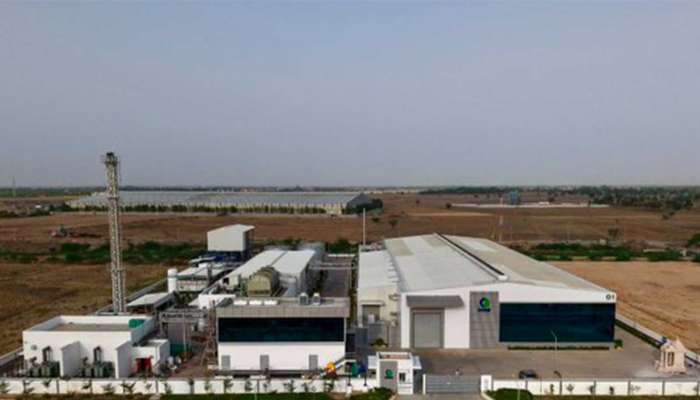
CG Semi starts production in Gujarat, 200 million chips to be produced every year
Summarized and contextualized by DistantNews.
At a glance
News
Named sources
New plan
- Prime Minister Narendra Modi inaugurated a semiconductor facility in Gujarat, aiming to boost India's chip manufacturing capabilities.
- The facility is expected to produce 200 million chips annually, contributing to India's goal of manufacturing 500 million chips per year.
- India's electronics production has surged significantly since 2014, with exports increasing nearly elevenfold, positioning the country as a major player in the global electronics market.
Prime Minister Narendra Modi inaugurated the CG Semi Outsourced Semiconductor Assembly and Test (OSAT) facility in Sanand, Gujarat, marking a significant step in India's ambition to become a global semiconductor hub. The new facility is poised to produce 200 million chips annually, bolstering the nation's target of manufacturing 500 million chips per year.
I've been told that 200 million chips will be produced here every year from now on. I am firmly confident that you will achieve it soon. This confidence also stems from the fact that the Semicon India programme is gaining momentum. STEP BY STEP, BRICK BY BRICK, and now CHIP BY CHIP. We have set a target of manufacturing 500 million chips annually. I am confident that you will achieve this target very soon. I extend my heartfelt congratulations to the entire team at CG Semi.
Modi expressed confidence in the facility's production goals, linking its success to the growing momentum of the 'Semicon India' program. He highlighted India's remarkable progress in the electronics sector, noting that electronic production has risen nearly sevenfold and exports have increased approximately elevenfold since 2014. This surge has established India as the world's second-largest manufacturer and exporter of mobile phones.
Today, India is the world's second-largest mobile manufacturer and also the second-largest mobile exporter. Today, India's total electronic production has increased by nearly 7 times compared to 2014. Electronics exports have increased by nearly 11 times.
The Prime Minister emphasized that India's advancement in semiconductors is not an overnight achievement but a culmination of a decade-long electronics revolution. The nation is strategically transitioning from producing finished electronic products to manufacturing components and, now, semiconductors, with the aim of establishing an entire electronics value chain domestically. This initiative is framed as a crucial element of India's roadmap for becoming a developed nation and represents the next phase of the 'Make in India' campaign.
The expansion of the semiconductor industry in India did not happen suddenly. This is the next step of the electronics revolution that has come to India over the past decade. First Product, then Components, and now Semiconductor. Meaning the entire 'VALUE CHAIN of ELECTRONICS' will be in India. This is the roadmap for a developed India. This is the next phase of Make in India.
Modi recalled laying the foundation stone for the plant in 2024 and the commencement of testing chip work in August 2025, underscoring the rapid progress from inception to production. He also highlighted the collaborative nature of the project, which involved industry partners from India, Japan, and Thailand, symbolizing international cooperation in advancing India's technological capabilities.
This CG Semi plant is also a symbol of the collective efforts of our industry partners from India, Japan, and Thailand.
DistantNews Editorial
Originally published by Times of Oman. Summarized and contextualized by our editorial team with added local perspective. Read our editorial standards.
More Stories


From Our Blog

What Gets Lost (and Found) When News Is Translated

The Critical Role of Diaspora Media in Global News

What Travellers Should Know About Countries with Restricted Press

A Digital Nomad's Guide to Following Local News

How the Same Story Looks Different in Different Countries
