


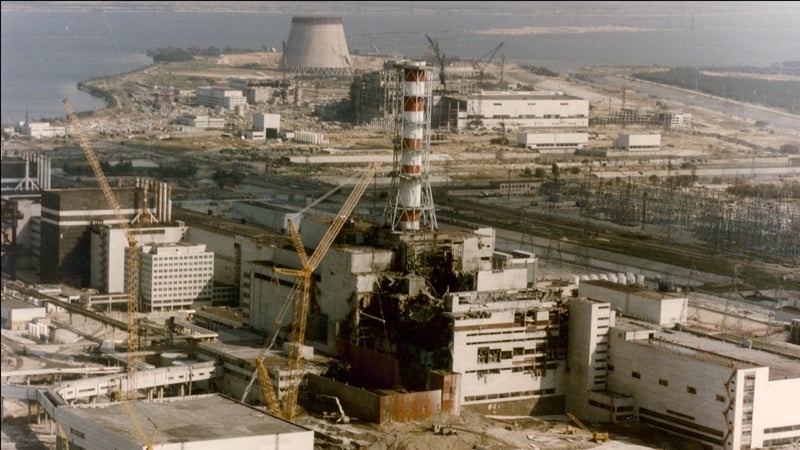
Chernobyl Disaster's 40th Anniversary: Site Remains at Risk Amidst Conflict
Translated from English, summarized and contextualized by DistantNews.
TLDR
- Chernobyl's Reactor 4 exploded on April 26, 1986, causing the world's worst nuclear disaster and releasing radioactive waste across Europe.
- Soviet authorities delayed evacuation and public admission, leading to thousands of first responders' deaths and long-term health effects.
- Despite ongoing decommissioning efforts, the site remains at risk, particularly after Russian troops occupied it during the 2022 invasion, an act described as "nuclear terrorism."
Forty years on, the scars of the Chernobyl disaster remain deeply etched into the landscape and psyche of Ukraine and the world. The catastrophic explosion at Reactor 4 on April 26, 1986, was not merely an industrial accident; it was a defining moment that exposed the flaws of the Soviet system and unleashed a wave of radioactive fallout that stretched across Europe, with Belarus bearing the brunt.
The initial response from Soviet authorities was a chilling display of secrecy and delay. It took 36 hours to evacuate the nearby town of Pripyat, and a full two days after the explosion for the Soviet Union to even admit to its own population that an accident had occurred, and only after scientists in Sweden detected the tell-tale signs of a nuclear catastrophe. The immediate aftermath saw the deaths of around 30 first responders from radiation exposure, with thousands more enlisted in a dangerous clean-up operation. The exclusion zone, established in the ensuing months, rendered over 2,500 square kilometers uninhabitable and displaced over 200,000 people permanently.
It was an act of nuclear terrorism by the aggressor state of Russia. It is very sad that the international community reacted very weakly, or, one might say, did not react at all.
Today, the Chernobyl site is a testament to resilience and ongoing vigilance. Over 2,000 workers continue the painstaking process of decommissioning the plant, managing nuclear waste, and dismantling infrastructure—a task that will take decades. However, this critical work has been severely jeopardized by Russia's full-scale invasion of Ukraine. The occupation of the plant by Russian troops in the early weeks of the war, during which 300 staff members were held captive, has been rightly condemned.
As Oleksandr Hryhorash, head of Chernobyl NPP’s operational control, stated to Ukrinform, this was "an act of nuclear terrorism by the aggressor state of Russia." The international community's muted reaction to such a brazen seizure of a nuclear facility is deeply concerning. The world cannot afford to forget the lessons of Chernobyl, especially now, as the site itself faces renewed threats. The ongoing decommissioning is not just a technical challenge; it is a matter of global security, a stark reminder that the legacy of 1986 continues to demand our attention and action.
No one could have foreseen that nuclear facilities would be seized and shelled.
DistantNews Editorial
Originally published by RTÉ News in English. Translated, summarized, and contextualized by our editorial team with added local perspective. Read our editorial standards.
More Stories


From Our Blog

What Gets Lost (and Found) When News Is Translated

The Critical Role of Diaspora Media in Global News

What Travellers Should Know About Countries with Restricted Press

A Digital Nomad's Guide to Following Local News

How the Same Story Looks Different in Different Countries
