

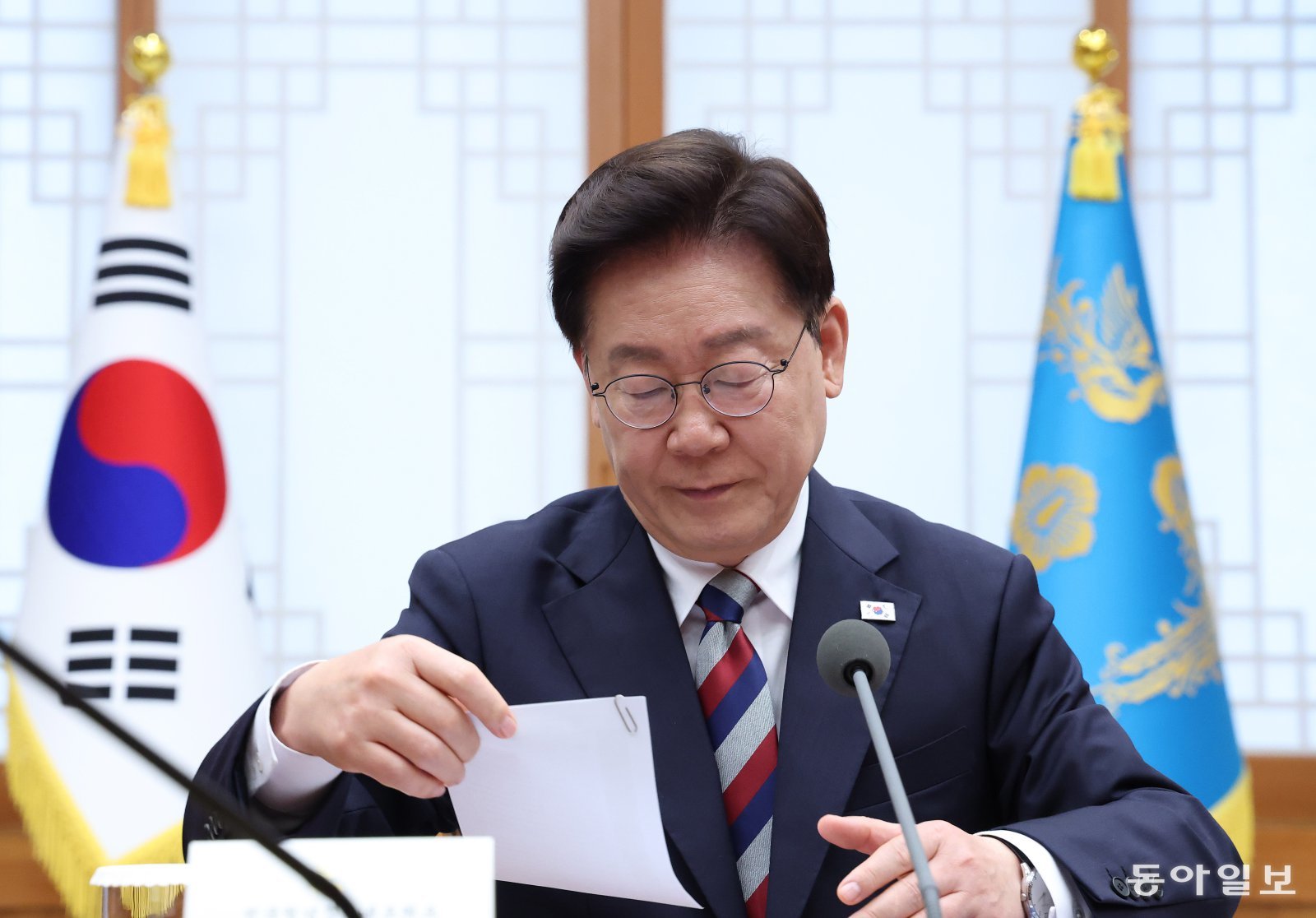

Chief Justice Cho Hee-dai: What is he plotting now? [Analysis]
Translated from Korean, summarized and contextualized by DistantNews.
At a glance
Analysis
Named sources
Context piece
- South Korea's Supreme Court is facing a judicial vacuum as Chief Justice Cho Hee-dai has not yet nominated replacements for two retiring justices.
- Critics accuse Cho of intentionally neglecting his constitutional duty, potentially to influence future judicial appointments.
- The delay raises concerns about the court's functionality and the Chief Justice's politically motivated actions.
South Korea's Supreme Court is grappling with an unprecedented judicial vacuum, with Chief Justice Cho Hee-dai failing to nominate replacements for two retiring justices for months. This inaction has drawn sharp criticism from opposition lawmakers, who accuse Cho of neglecting his constitutional duty and potentially engaging in political maneuvering.
Chief Justice Cho Hee-dai's dereliction of duty has brought the judiciary to a halt. The constitution stipulates that the President appoints Supreme Court justices upon the Chief Justice's recommendation and parliamentary consent. Recommendation is not a discretion but a constitutional duty. Yet, Chief Justice Cho is effectively refusing to make recommendations. This is a judicial administrative vacuum unseen in constitutional history.
According to Rep. Seo Young-kyo of the Democratic Party, Cho's failure to submit nominations is causing a standstill in the judiciary. The constitution mandates that the Chief Justice propose candidates for the Supreme Court, a duty that cannot be disregarded. Despite recommendations from the Supreme Court Justice Recommendation Committee, Cho has not put forward any names for over seven months, a situation described as a deliberate obstruction and a violation of the constitution.
Legal experts and politicians like lawyer Choi Kang-wook suggest Cho might be intentionally delaying nominations to pressure the President into appointing his preferred candidates. "He might be delaying to create a situation where the president is forced to appoint his nominee due to public pressure," Choi speculated, drawing from past experiences in government.
He is engaging in sabotage. The public should harshly criticize such sabotage.
However, other analyses, including those from Rep. Park Ju-min, suggest a different motive: Cho might be withholding nominations because none of the recommended candidates align with his personal preferences. This perspective argues that Cho has the authority to select one candidate from the recommended list and submit the nomination, shifting the decision to the President if he disagrees. The prolonged delay, therefore, appears to stem from Cho's dissatisfaction with the candidates rather than a disagreement with the presidential office.
Why is he not making recommendations? Could it be to spite the government? Based on my past experience in the Blue House, when four candidates are recommended, there's usually one person he wants to appoint. If he thinks that person won't be approved, he might drag out the process. Then, when people ask why the court is short-handed, the president might be pressured to appoint the person Cho recommends.
Adding to the controversy, the Supreme Court is reportedly considering a "1+1 simultaneous nomination" plan, where Cho and President Yoon Suk-yeol would each select one justice. This alleged political negotiation, if true, would be highly inappropriate for a Chief Justice expected to maintain strict neutrality. With Cho's term ending in June 2025, questions linger about whether he will fulfill his duty before leaving office, further deepening concerns about the integrity of the South Korean judiciary.
He is not making the nomination because he doesn't think the person he wants will become a Supreme Court justice. That's the only way to see it. He just needs to make the nomination. He can choose the best person from the recommended list and send it to the president. But he is delaying it because he doesn't have anyone he likes, or because he thinks the president won't pick the person he likes.
DistantNews Editorial
Originally published by Hankyoreh in Korean. Translated, summarized, and contextualized by our editorial team with added local perspective. Read our editorial standards.
More Stories


From Our Blog

What Gets Lost (and Found) When News Is Translated

The Critical Role of Diaspora Media in Global News

What Travellers Should Know About Countries with Restricted Press

A Digital Nomad's Guide to Following Local News

How the Same Story Looks Different in Different Countries
