


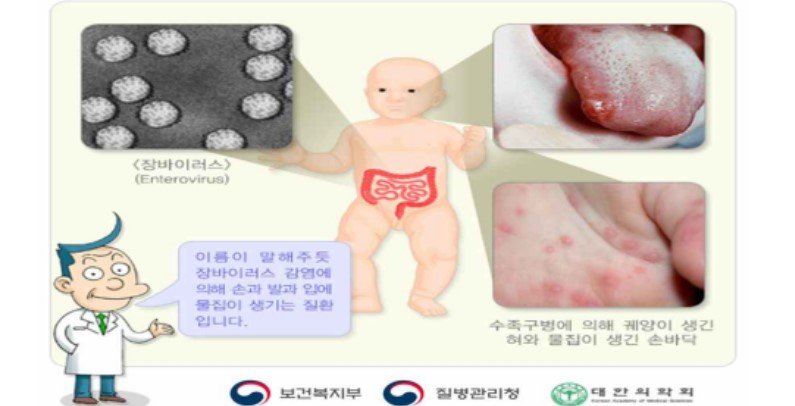
Children's Limbs Paralyzed by Rare Hand, Foot, and Mouth Disease Complication
Translated from Korean, summarized and contextualized by DistantNews.
At a glance
News
Sources not specified
Context piece
- Two children have been diagnosed with acute flaccid myelitis, a rare neurological complication of hand, foot, and mouth disease, marking the first such cases since 2015.
- The condition causes sudden weakness in the limbs, mimicking polio symptoms, and requires immediate medical attention if observed in children diagnosed with hand, foot, and mouth disease.
- Health authorities are monitoring the situation closely, urging parents to watch for specific warning signs and advising medical institutions to share swift analysis of complications and causative viruses.
A rare and serious neurological complication of hand, foot, and mouth disease has reappeared in South Korea, with two children diagnosed with acute flaccid myelitis (AFM). This marks the first occurrence of AFM linked to the common childhood illness since 2015, raising concerns among parents and medical professionals.
Consecutive cases of acute flaccid myelitis, one of the complications of hand, foot, and mouth disease, have occurred in our member hospitals. The fact that neurological complications have occurred consecutively in a short period warrants attention.
AFM, which presents symptoms similar to polio, causes sudden weakness in a child's arms or legs. This can affect one or both limbs and may appear about a week after a fever or respiratory illness, though sometimes it emerges later. The two affected children are currently undergoing neurological evaluations and viral testing at a tertiary hospital.
We need to closely examine the national patient occurrence situation, as cases of rare neurological complications have occurred consecutively in a short period.
Dr. Choi Yong-jae, president of the Korean Pediatric and Adolescent Hospital Association, highlighted the unusual nature of these consecutive cases occurring within a short period. He emphasized the need for close monitoring of national patient trends, particularly to determine if both cases are linked to Enterovirus A71 (EV-A71), a known cause of severe hand, foot, and mouth disease complications.
Parents should observe whether their child walks as usual, moves both arms and legs equally, and has a clear consciousness, rather than focusing on the number of rashes on their hands and feet.
Hand, foot, and mouth disease is currently circulating, with the number of reported cases increasing. The Korea Disease Control and Prevention Agency (KDCA) data shows a rise in outpatient cases, particularly among children aged 0-6. Health officials are urging parents to be vigilant for warning signs such as sudden limb weakness, difficulty walking, loss of consciousness, severe headache, persistent vomiting, or breathing difficulties, and to seek immediate medical care if any of these symptoms appear.
If a child is staggering, suddenly loses strength in one arm or leg, is severely lethargic, or vomits repeatedly, they should receive medical attention immediately without waiting until the next day.
DistantNews Editorial
Originally published by Dong-A Ilbo in Korean. Translated, summarized, and contextualized by our editorial team with added local perspective. Read our editorial standards.
More Stories



From Our Blog

What Gets Lost (and Found) When News Is Translated

The Critical Role of Diaspora Media in Global News

What Travellers Should Know About Countries with Restricted Press

A Digital Nomad's Guide to Following Local News

How the Same Story Looks Different in Different Countries
