


Chilean Senate Approves Government Vetoes, Concluding Congressional Process for Reconstruction Bill
Translated from Spanish, summarized and contextualized by DistantNews.
At a glance
News
Sources not specified
In the courts
- The Senate approved the government's vetoes on the National Reconstruction bill, concluding its congressional process.
- Key approved vetoes include removing the "right to be forgotten" and a 30-day payment deadline for small businesses.
- The bill now awaits a decision from the Constitutional Court.
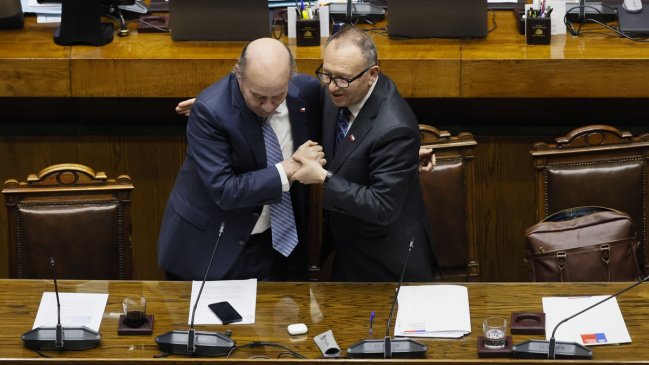
Chile's Senate has approved the government's three vetoes on the National Reconstruction bill, effectively ending its passage through Congress. The initiative now awaits a ruling from the Constitutional Court, expected on Thursday.
The Senate's Finance Commission had initially rejected two of the Executive's vetoes, only approving the one that eliminated the prohibition of anatocism (charging interest on interest). However, the full Senate later voted separately on the observations. The veto to remove the "right to be forgotten", which would have obligated banks and businesses to erase unpaid or overdue debt histories after five years, was approved by 23 votes to 15, with two abstentions. Similarly, a veto targeting the obligation for businesses to pay small and medium-sized enterprises (SMEs) within a maximum of 30 days was ratified with 18 votes in favor and 17 against.
We finally got out of Congress. I thank all the parliamentarians from all sectors for their contribution, their discussions. There have been different votes, and, in particular, I think it was a very interesting discussion, with issues that remain pending for us to continue working on in the future.
Minister of Finance Jorge Quiroz expressed satisfaction with the bill's progression through Congress. He acknowledged the diverse voting outcomes and highlighted the "right to be forgotten" and the 30-day payment rule as particularly contentious issues. Quiroz stated that the 30-day payment rule for SMEs requires deeper examination to understand why existing legislation is not fully effective, indicating a need for future work on the matter. The bill's journey through Congress has concluded, but its final implementation hinges on the Constitutional Court's decision.
The 30-day payment for SMEs is an issue that requires a thorough look, to reconsider why the existing law is not fully working. So I think this discussion was very good and I value it highly.
DistantNews Editorial
Originally published by Cooperativa in Spanish. Translated, summarized, and contextualized by our editorial team with added local perspective. Read our editorial standards.
More Stories



From Our Blog

What Gets Lost (and Found) When News Is Translated

The Critical Role of Diaspora Media in Global News

What Travellers Should Know About Countries with Restricted Press

A Digital Nomad's Guide to Following Local News

How the Same Story Looks Different in Different Countries
