


China Denounces ‘Malicious’ Indian Claims Over Deadly Flood
Translated from English and summarized by DistantNews. Read the original for the full story.
At a glance
News
Named sources
Ongoing story
- China said experts had attributed last week’s disaster along the Nepal-Tibet border to the collapse of a high-altitude glacier in Nepal.
- Some Indian television commentators and analyst Brahma Chellaney questioned whether Chinese infrastructure or changes to the Himalayan river system amplified the flooding.
- The dispute comes as India and China seek to rebuild relations before a possible meeting between Narendra Modi and Xi Jinping.
China has rejected suggestions from Indian commentators that Beijing helped cause last week’s deadly disaster along the Nepal-Tibet border, calling the claims “groundless and malicious speculation.”
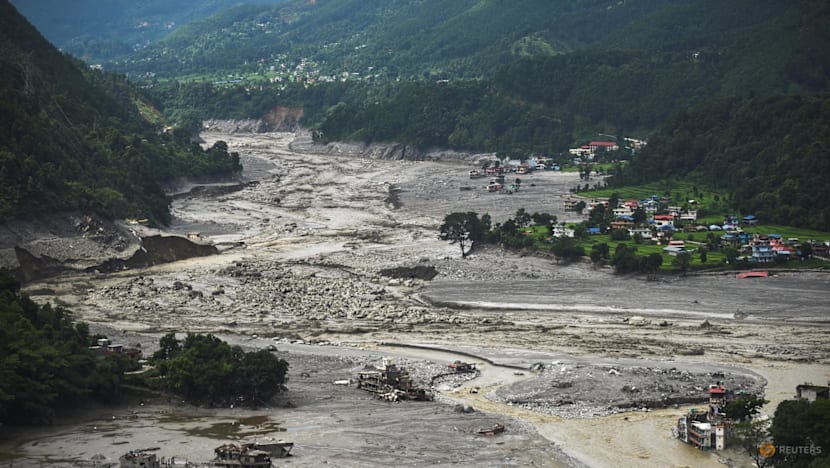
The disaster has been triggered by the collapse of a high-altitude glacier in Nepal.
Foreign Ministry spokesman Guo Jiakun said experts had determined that the disaster began when a high-altitude glacier in Nepal collapsed. He said China opposed speculation that assigned blame without evidence. Guo also said China had provided Nepal with money, humanitarian aid and rescue teams.
The comments followed a wave of debate on Indian television. Arnab Goswami, a nationalist broadcaster, described the floods as a possible “China made” disaster and promoted a segment titled “5 Reasons That Nail China’s Role.” India Today TV also asked whether Beijing had played “foul.” Much of India’s mainstream media has taken a more cautious approach, separating questions about possible shortcomings in China’s data sharing from questions about what caused the floods.
In the face of major disasters, we firmly oppose such groundless and malicious speculation.
Brahma Chellaney, an Indian strategic analyst and former national security adviser, argued in an opinion piece that a natural glacier and rock collapse triggered the flooding, but that Chinese infrastructure and changes to the Himalayan river system may have worsened its effects. Scientists examining satellite and seismic data have linked the catastrophe to the collapse of ice, rock and mountainside material. The U.S. Geological Survey said a seismic event initially interpreted as a magnitude 5.2 earthquake was generated by the collapse. Researchers are still examining the roles of unusually warm conditions, melting ice, degrading permafrost and possible construction activity.
China made
The argument has emerged as Modi prepares to welcome Chinese President Xi Jinping to India in September, their first such visit in seven years. The two leaders may meet at the Shanghai Cooperation Organisation summit in Bishkek, Kyrgyzstan, although no bilateral meeting is planned. India and China have spent two years cautiously repairing ties damaged by deadly fighting along their disputed Himalayan frontier in 2020.
may have amplified its consequences
About this summary
Originally published by The Straits Times in English. Translated, summarized, and contextualized automatically by DistantNews, with a note on how the source frames the story. Not individually reviewed before publishing. How this works.
More Stories


From Our Blog

What Gets Lost (and Found) When News Is Translated

The Critical Role of Diaspora Media in Global News

What Travellers Should Know About Countries with Restricted Press

A Digital Nomad's Guide to Following Local News

How the Same Story Looks Different in Different Countries
