

China joins India, Iran as key security officials gather at BRICS
Summarized and contextualized by DistantNews.
At a glance
News
Official statement
Context piece
- Top Indian and Iranian security officials met in New Delhi to discuss Middle East security and bilateral ties.
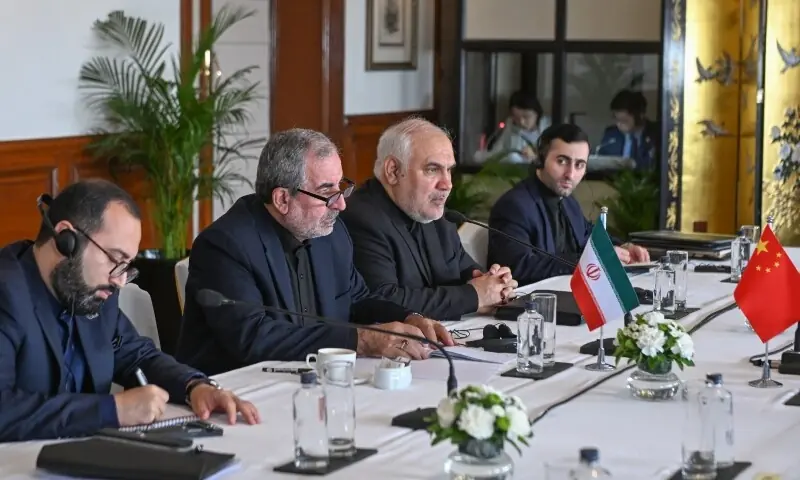
- China's Foreign Minister Wang Yi also attended the BRICS security chiefs gathering, meeting with Iranian officials.
- The BRICS meeting focused on "non-traditional security challenges" and the role of new technologies in emerging threats.
High-level security officials from India and Iran convened in New Delhi to address the volatile situation in the Middle East and strengthen their bilateral relationship, according to the Indian foreign ministry.
ongoing situation
Ajit Doval, India's National Security Advisor, met with Ghadir Nezamipour, a senior member of Iran's Supreme National Security Council. Their discussions covered the ongoing regional conflicts and the nuances of India-Iran ties. India, which has historically maintained friendly relations with Iran, is navigating a delicate balance amid recent Middle East tensions and its strategic partnership with the United States.
implementation of the peace agreement
China's Foreign Minister Wang Yi was also present at the BRICS security chiefs meeting. He held separate discussions with Nezamipour, focusing on the "implementation of the peace agreement" and Tehran's "appreciation for China’s political support." Beijing reaffirmed its backing for Iran's sovereignty and national dignity, while also welcoming potential follow-up consultations between Tehran and Washington.
appreciation for China’s political support
The BRICS gathering, which includes Russia, South Africa, and Brazil, was set to focus on "non-traditional security challenges." The Indian foreign ministry highlighted that discussions would encompass the evolving nature of national security threats and the impact of new technologies in this domain. This meeting follows a period of slow improvement in India-China ties since a deadly border clash in June 2020.
supports Iran in safeguarding its sovereignty, security, and national dignity
DistantNews Editorial
Originally published by Dawn. Summarized and contextualized by our editorial team with added local perspective. Read our editorial standards.
More Stories


From Our Blog

What Gets Lost (and Found) When News Is Translated

The Critical Role of Diaspora Media in Global News

What Travellers Should Know About Countries with Restricted Press

A Digital Nomad's Guide to Following Local News

How the Same Story Looks Different in Different Countries
