


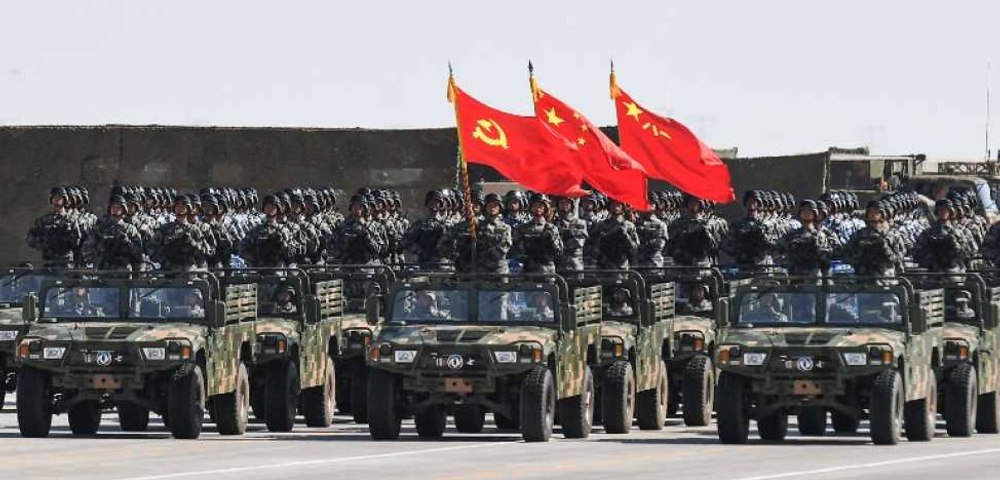
China puts its economy on a war footing under revised mobilization law
Translated from Romanian and summarized by DistantNews. Read the original for the full story.
At a glance
Explainer
From a news agency
Approved/passed
- China’s revised defense mobilization law expands potential wartime mobilization to private property, industry, artificial intelligence, drones, cyberspace, media and digital infrastructure.
- The law, approved by the Standing Committee of the National People’s Congress, is scheduled to take effect on Oct. 1, 2026.
- It allows authorities to call eligible adults to contribute, requisition certain property and impose penalties on people or companies that refuse mobilization duties.
China has adopted a revised defense mobilization law that would allow the state to draw much more of the economy and society into a potential war effort, from private property and factories to artificial intelligence, drones and digital infrastructure.
The Standing Committee of the National People’s Congress approved the law a few days ago, and it is due to take effect on Oct. 1, 2026, Xinhua reported. The document contains 14 chapters and 82 articles. Chinese authorities say it will modernize the mobilization system and improve the integration of civilian and military resources, reflecting President Xi Jinping’s goal of strengthening military capabilities and national security.
The legislation sets out how China could shift its economy, administration and society from peacetime operations to a system adapted to war or a major threat. Mobilization would be coordinated by the Chinese Communist Party, while the decision to activate it would rest with Xi Jinping on the basis of a resolution by the National People’s Congress.
Men aged 18 to 60 and women aged 18 to 55 could be called to contribute to national defense. The law exempts pregnant or breastfeeding women, people caring for children, people with disabilities, those caring for elderly residents in specialist institutions, primary-school teachers and sick people.
The state could requisition or use private property, excluding homes and personal belongings, with compensation required if property were damaged or destroyed. Companies could be ordered to adapt production, storage and transport for defense equipment. Alternative production capacity and reserve stocks would be established near strategic factories and warehouses in case they were destroyed.
The law also covers AI, drones, cyberspace, cybersecurity and the media. Authorities could impose information controls and punish the dissemination of information deemed false. Finances, transport, communications, the internet, energy and food supplies would face increased controls during mobilization. Refusal to comply could bring fines, forced execution of duties, administrative detention or, in some cases, criminal liability.
About this summary
Originally published by Adevărul in Romanian. Translated, summarized, and contextualized automatically by DistantNews, with a note on how the source frames the story. Not individually reviewed before publishing. How this works.
More Stories


From Our Blog

What Gets Lost (and Found) When News Is Translated

The Critical Role of Diaspora Media in Global News

What Travellers Should Know About Countries with Restricted Press

A Digital Nomad's Guide to Following Local News

How the Same Story Looks Different in Different Countries
