


China's 'Celestial River' Project Aims to Redirect Tibetan Rainfall
Translated from Romanian, summarized and contextualized by DistantNews.
At a glance
News
Named sources
Context piece
- China is implementing an ambitious weather modification project called 'Tianhe' (Celestial River) to combat water shortages.
- The project aims to increase precipitation over the Tibetan Plateau and redirect monsoon moisture to arid northern and western regions.
- While proponents claim success, scientists express skepticism about the efficiency and measurability of cloud seeding, especially given climate change impacts on the plateau.
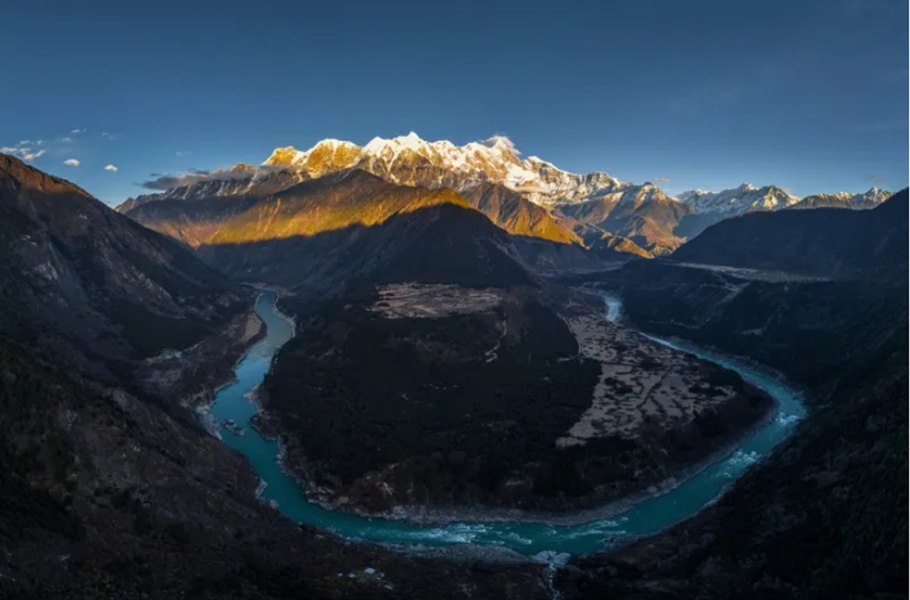
China has embarked on one of the world's most extensive weather modification programs, known as 'Tianhe' or 'Celestial River,' with the goal of alleviating water scarcity in its northern and western regions. This ambitious project focuses on increasing rainfall over the Tibetan Plateau, often referred to as Asia's "water tower," and redirecting monsoon moisture to drought-stricken areas.
The initiative involves specialized teams using rockets and other devices to disperse chemical particles into the atmosphere, a process called cloud seeding. This technique, used globally for decades, aims to stimulate the formation of water droplets in clouds. China is reportedly the largest operator of such programs, with tens of thousands of personnel and billions of dollars invested.
Launched in 2018, the Tianhe project specifically targets the Tibetan Plateau, a critical source of major Asian rivers that supply water to nearly two billion people. The region faces increasing pressure from climate change, including accelerated glacier melt, altered rainfall patterns, and desertification, raising concerns about long-term water security.
Chinese authorities estimated that the project could generate an additional water volume equivalent to about 7% of China's annual consumption. However, these claims have been met with skepticism from some scientists. Researchers point out that the effectiveness of cloud seeding is highly dependent on existing weather conditions and is difficult to measure precisely. They also question the ethical and environmental implications of attempting to control complex climatic processes, particularly given the Tibetan Plateau's sensitive ecosystem and its role in regional and global weather patterns.
DistantNews Editorial
Originally published by Adevărul in Romanian. Translated, summarized, and contextualized by our editorial team with added local perspective. Read our editorial standards.
More Stories



From Our Blog

What Gets Lost (and Found) When News Is Translated

The Critical Role of Diaspora Media in Global News

What Travellers Should Know About Countries with Restricted Press

A Digital Nomad's Guide to Following Local News

How the Same Story Looks Different in Different Countries
