


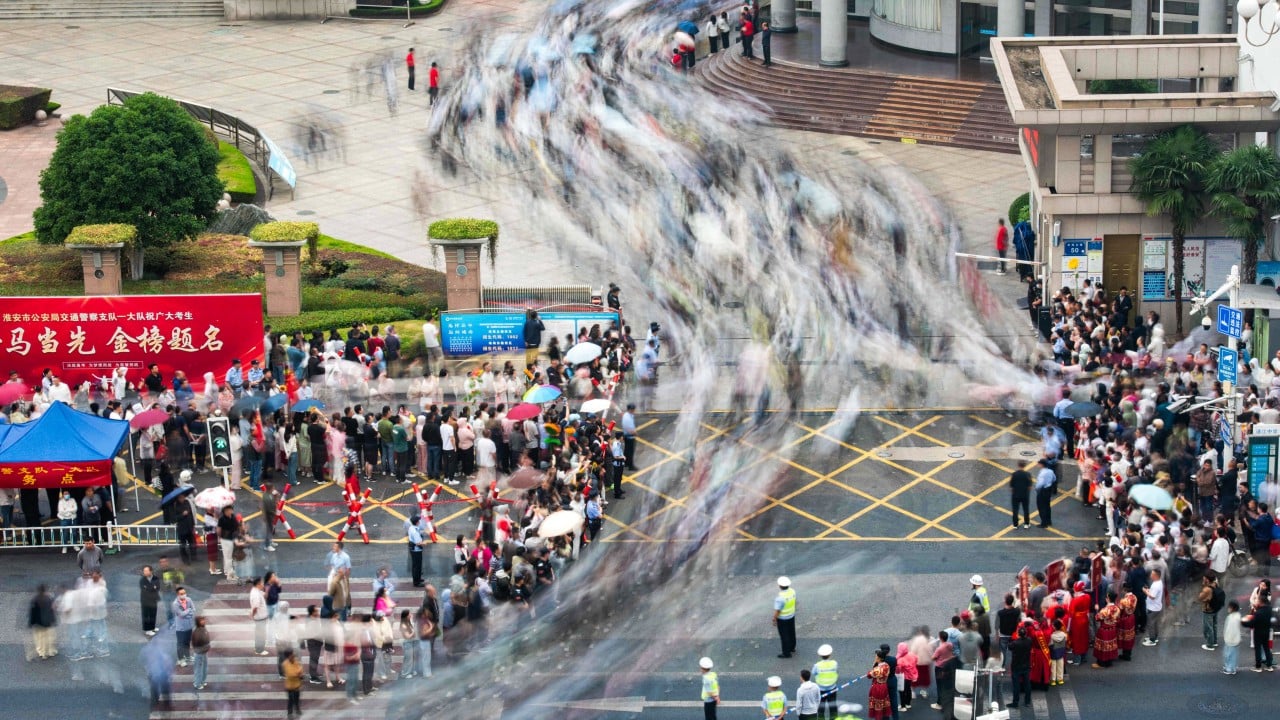
China's Gaokao: A reflection of evolving political economy
Translated from English, summarized and contextualized by DistantNews.
At a glance
Analysis
Sources not specified
New plan
- China's National Higher Education Entrance Examination, the gaokao, results are being released, prompting students and families to make critical university and major choices.
- The gaokao acts as a sorting mechanism, matching student results with available program spaces, influenced by historical admission marks and future employment market predictions.
- The system self-adjusts by downsizing programs with poor employment outcomes and expanding those aligned with national industrial policy, such as semiconductors and embodied intelligence.
As China releases the results of its National Higher Education Entrance Examination, the gaokao, students and their families face the consequential task of selecting universities and majors. This process unfolds amid imperfect information and uncertainty, requiring candidates to find the right match based on their gaokao scores and indicative historical admission marks.
Parents must also make educated guesses about the employment market four years into the future, as preferences fluctuate and admission marks for majors shift accordingly. Candidates essentially participate in a series of auctions, using their gaokao results as bids, to secure spots in desired programs. The number of available spaces in university faculties is determined by the state, influenced by two key processes.
One process is retroactive: programs with poor employment outcomes are downsized or closed. Between 2021 and 2025, over 12,000 programs, particularly in humanities and management, were canceled. The second process is prospective: the education ministry allocates expanded quotas to programs that align with the nation's industrial policy, leading to the creation of new majors in fields like semiconductors and embodied intelligence.
This dynamic system of oversubscription and undersubscription in different majors feeds into future planning, making the system self-adjusting. However, it remains inherently unpredictable for individual students. Currently, more than half of Chinese university graduates hold STEM degrees, with roughly one in three bachelor's degrees in engineering, a significantly higher proportion compared to industrialized economies like South Korea and Germany, where STEM graduates represent about 21-23 percent.
DistantNews Editorial
Originally published by South China Morning Post in English. Translated, summarized, and contextualized by our editorial team with added local perspective. Read our editorial standards.
More Stories

From Our Blog

Countries Without a Free Press: What You Need to Know

What Press Freedom Means for the News You Read

What Gets Lost (and Found) When News Is Translated

The Critical Role of Diaspora Media in Global News

What Travellers Should Know About Countries with Restricted Press
