

China's Mega-Dam Project in Himalayas Faces Geological and Geopolitical Alarms
Translated from Greek, summarized and contextualized by DistantNews.
At a glance
News
Sources not specified
Ongoing story
- Chinese geologists have raised safety concerns about the world's largest planned hydroelectric project in Tibet, citing a major fault line.
- The Medog dam project on the Yarlung Tsangpo River faces risks from high seismic activity and potential landslides.
- Downstream countries India and Bangladesh worry about reduced water flow, intensifying geopolitical tensions over water resources.
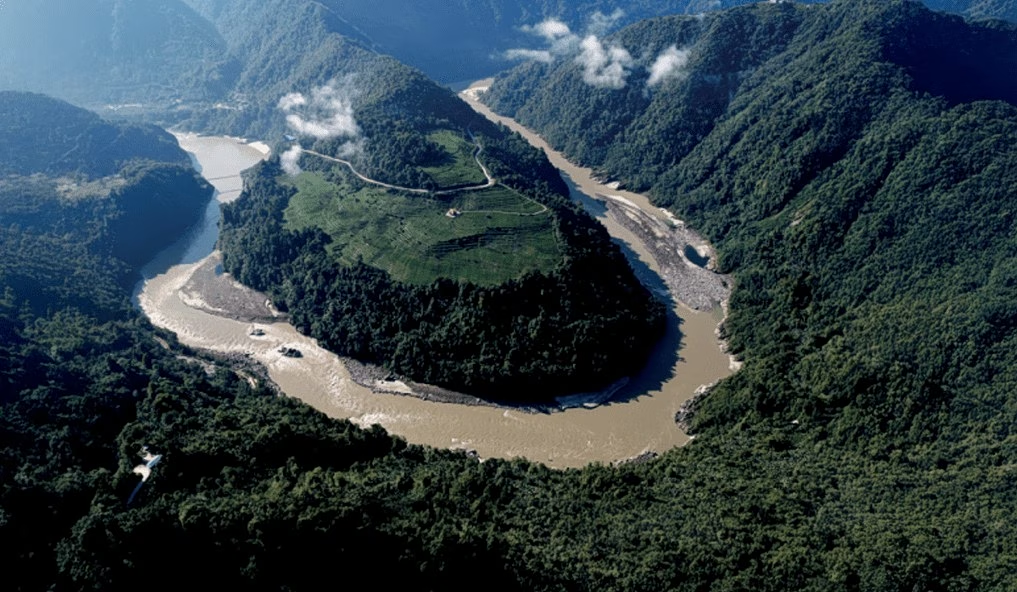
A team of Chinese geologists has issued a stark warning regarding the safety of the world's largest planned hydroelectric project, situated on the banks of a crucial river in southern Tibet. Their study, published in the journal 'Sedimentary Geology and Tethyan Geology,' highlights the structural instability of the area designated for the Medog dam. This colossal undertaking aims to harness the Yarlung Tsangpo River, known as the Brahmaputra in India, and is designed to surpass even China's Three Gorges Dam in scale and power.
Construction began last summer at a site dubbed 'The Great Bend,' where the river drops 2,000 meters over 50 kilometers amidst steep Himalayan peaks. Research from the Chengdu University of Technology points to extreme seismic risks associated with the Paizhen fault. This tectonic fracture has shown significant activity since the Pleistocene epoch, creating highly unstable ground prone to landslides that could threaten the massive infrastructure and personnel.
Beyond geological challenges, the Medog dam is a deeply contentious initiative with significant geopolitical implications. While Beijing anticipates generating approximately 300 billion kilowatt-hours annually by its projected 2033 completion, boosting the nation's green energy supply, downstream nations are deeply concerned. India and Bangladesh fear a dramatic reduction in water flow from a vital South Asian artery. This fuels international accusations of China weaponizing water resources, leveraging its control over Tibet, the source of Asia's major rivers upon which millions depend.
This project intensifies existing disputes over water management in the region. China's ambition to control the flow of the Yarlung Tsangpo River raises critical questions about regional cooperation and the potential impact on millions of lives reliant on its waters.
DistantNews Editorial
Originally published by Ta Nea in Greek. Translated, summarized, and contextualized by our editorial team with added local perspective. Read our editorial standards.
More Stories


From Our Blog

What Gets Lost (and Found) When News Is Translated

The Critical Role of Diaspora Media in Global News

What Travellers Should Know About Countries with Restricted Press

A Digital Nomad's Guide to Following Local News

How the Same Story Looks Different in Different Countries
