

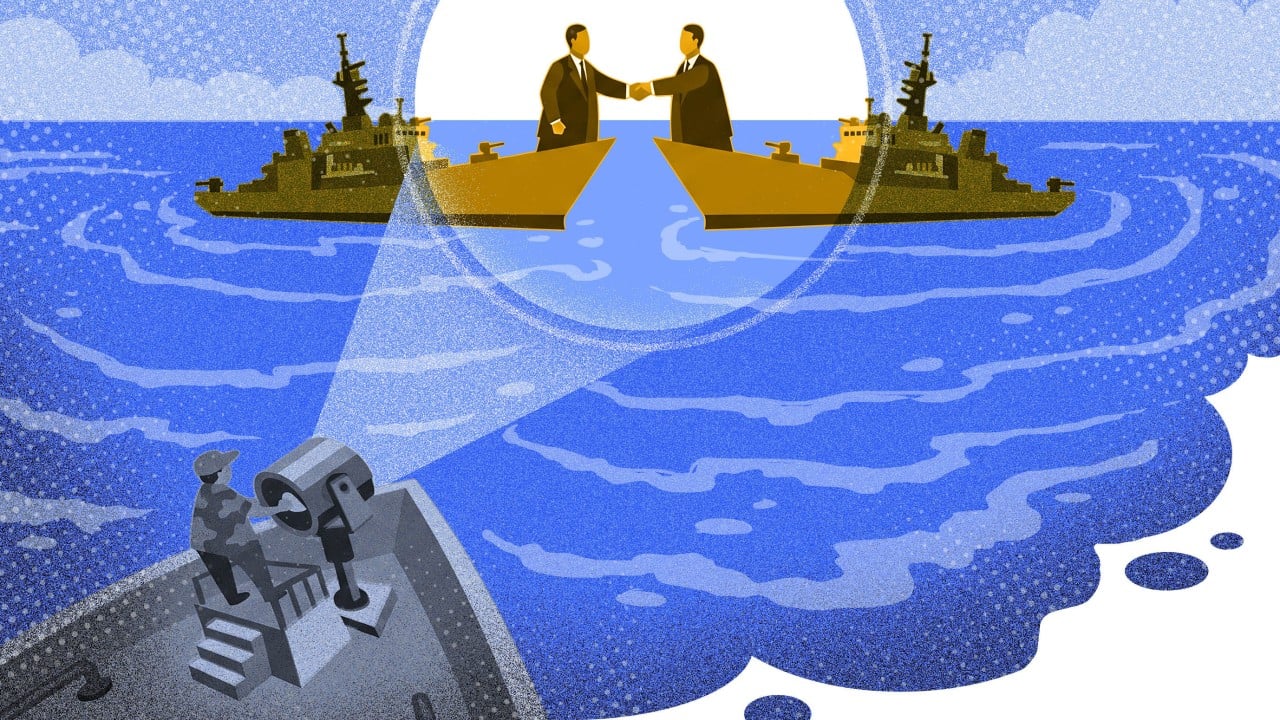

China's Missile Test Exposes Weaknesses in Global Nuclear Governance
Translated from English, summarized and contextualized by DistantNews.
At a glance
Analysis
Named sources
New plan
- China conducted a routine missile test with a dummy warhead in the Pacific, notifying relevant countries.
- Australia, Japan, the US, and Pacific nations expressed concerns over insufficient notification and nuclear-free zone politics.
- The test highlights shifts in global nuclear governance, influenced by Sino-Russian alignment, US-led deterrence, and a growing middle layer of nuclear powers.
A recent missile test conducted by a Chinese strategic nuclear submarine in the Pacific has ignited international concern, underscoring the fragile state of global nuclear governance. Beijing characterized the launch, which involved a training dummy warhead, as routine and stated that relevant nations had been informed, emphasizing that it targeted no specific country.
However, the regional response was swift and critical. Australia, Japan, the United States, and various Pacific nations voiced apprehension regarding the adequacy of the notification provided. Their concerns also touched upon the political implications for established nuclear-free zones in the region, highlighting how nuclear politics extends beyond the arsenals of major powers.
The test has been interpreted through multiple lenses: as evidence of China's advancing second-strike capability, a potential challenge to U.S. allies, a disruption to Pacific nuclear-free norms, and a signal to nations contemplating their own nuclear weapons policies. This event signals a dynamic and evolving nuclear order.
This evolving order is increasingly shaped by three interconnected dynamics. Firstly, there is the strengthening Sino-Russian strategic alignment, where both nations, despite differing nuclear doctrines, have developed a shared discourse on "strategic stability" since 2016. They jointly frame instability as stemming from U.S. missile defense systems, long-range conventional strike capabilities, the Aukus security pact, space militarization, and the pursuit of "absolute security."
Secondly, the U.S.-led system of extended deterrence remains a significant factor. Thirdly, a diverse middle layer comprising secondary nuclear powers, states on the nuclear threshold, and allies anxious about security guarantees adds further complexity. While the first two dynamics appear to be solidifying, the third layer remains fluid, contributing to the overall uncertainty in the global nuclear landscape.
DistantNews Editorial
Originally published by South China Morning Post in English. Translated, summarized, and contextualized by our editorial team with added local perspective. Read our editorial standards.
More Stories

From Our Blog

Countries Without a Free Press: What You Need to Know

What Press Freedom Means for the News You Read

What Gets Lost (and Found) When News Is Translated

The Critical Role of Diaspora Media in Global News

What Travellers Should Know About Countries with Restricted Press
