


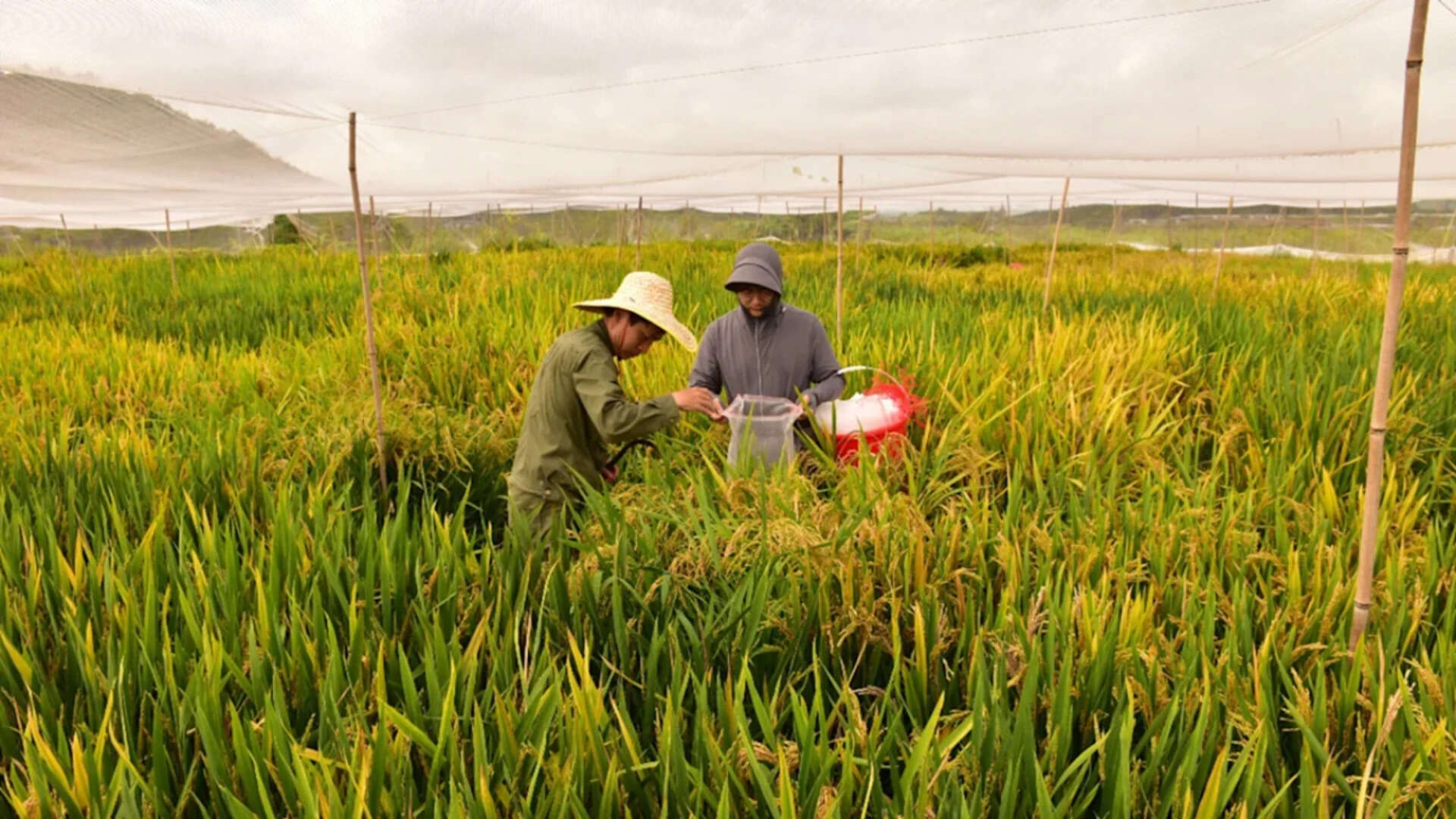
China’s new hybrid rice can preserve its high-yield traits across generations, allowing farmers to...
Summarized and contextualized by DistantNews.
At a glance
News
Named sources
New plan
- Chinese scientists have developed a self-cloning hybrid rice system that maintains high yields across generations.
- The breakthrough uses a naturally occurring gene called HUAXU, allowing farmers to potentially replant seeds instead of buying new ones annually.
- This innovation could significantly reduce seed costs for farmers globally and increase the adoption of hybrid rice, which currently has limited global acreage.
Scientists in China have achieved a significant breakthrough in agriculture with a new hybrid rice system capable of self-cloning, preserving high-yield traits across generations. This development, led by researcher Wang Kejian at the China National Rice Research Institute, could allow farmers to replant harvested seeds instead of purchasing new ones each season, drastically cutting costs.
The system utilizes a naturally occurring rice gene named HUAXU. When activated in hybrid rice egg cells, HUAXU triggers a process similar to natural apomixis, enabling the egg cell to develop into an embryo without fertilization. This creates exact genetic copies of the parent plant, maintaining the superior yield advantages characteristic of hybrid rice, which typically offers a 10 to 30 percent increase over standard varieties.
Previous methods for achieving similar results were less efficient or required complex gene mutations. However, the new Fix8 lines, developed using the HUAXU gene and a clonal gamete strategy, have demonstrated a cloning efficiency of over 99 percent in large-scale field tests. This high efficiency meets the threshold for commercial viability, a long-sought goal in plant breeding often referred to as the "one-line hybrid rice" concept.
This innovation addresses a major barrier to the wider adoption of hybrid rice. While hybrid rice accounts for about half of China's rice fields, its global acreage is only 5 percent due to the high cost of continually purchasing new hybrid seeds. The ability to replant seeds could make hybrid rice more accessible and economically feasible for farmers worldwide, potentially boosting global rice production.
DistantNews Editorial
Originally published by Times of India. Summarized and contextualized by our editorial team with added local perspective. Read our editorial standards.
More Stories

From Our Blog

What Press Freedom Means for the News You Read

What Gets Lost (and Found) When News Is Translated

The Critical Role of Diaspora Media in Global News

What Travellers Should Know About Countries with Restricted Press

A Digital Nomad's Guide to Following Local News
