


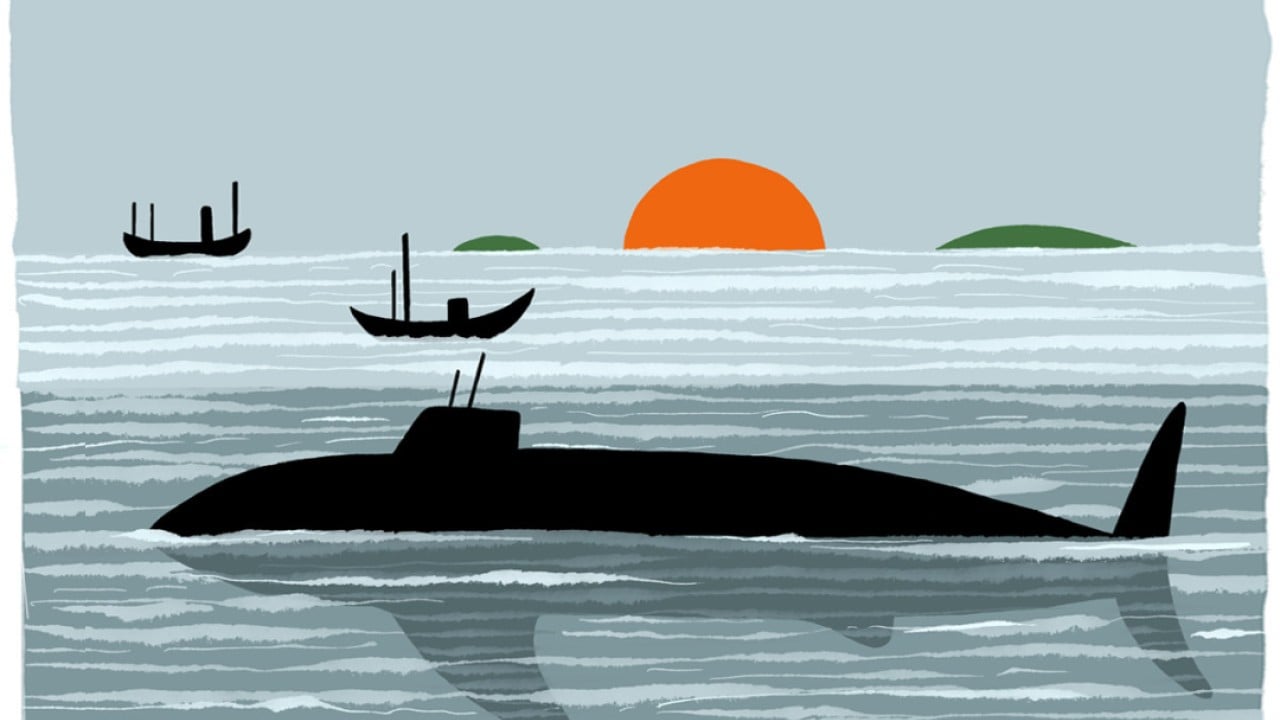
China’s submarine missile test joins elite nuclear club, raises regional stability questions
Translated from English, summarized and contextualized by DistantNews.
At a glance
News
Named sources
New plan
- China successfully tested an intercontinental-range submarine-launched ballistic missile on July 6, joining an elite group of nuclear powers.
- The test, the first long-range submarine-based missile test disclosed by China since 1982, traveled approximately 7,300km and landed near the Solomon Islands.
- Analysts suggest this capability enhances China's second-strike potential and its ability to target the continental U.S. from protected waters, moving towards continuous SSBN patrols.
China has joined an elite group of nations possessing intercontinental-range submarine-launched ballistic missile (SLBM) capabilities following a successful test on July 6. The People's Liberation Army (PLA) Navy fired a missile from a nuclear-powered submarine, a feat previously achieved by only the United States, Russia, Britain, and France – all permanent members of the UN Security Council.
Analysts believe the missile was launched from a Type 094 Jin-class submarine, a vessel equipped with ballistic missiles and considered a peak of nuclear deterrence due to its second-strike capability. This underwater nuclear deterrent is a strategic goal for major nuclear powers. The U.S. and the former Soviet Union first developed rudimentary forms of this capability in the late 1950s.
The July 6 test marked the first publicly disclosed long-range submarine-based missile test by the PLA Navy since 1982. The missile traveled about 7,300 kilometers, landing in the South Pacific near the Solomon Islands. Beijing described the event as a "routine part" of annual military training and stated that relevant countries were informed in advance.
This successful test indicates that the PLA Navy can now potentially target the continental United States from secure locations closer to Chinese waters. The next strategic step for Beijing is likely to involve continuous SSBN patrols, a practice used by the U.S. and the Soviet Union during the Cold War to maintain a constant strategic presence at sea and mitigate mutual insecurity. The development of underwater nuclear propulsion significantly altered the landscape of nuclear deterrence, shaping strategies alongside technological advancements and historical events like the Cuban missile crisis, ultimately contributing to Cold War stability through the doctrine of mutually assured destruction.
a routine part
DistantNews Editorial
Originally published by South China Morning Post in English. Translated, summarized, and contextualized by our editorial team with added local perspective. Read our editorial standards.
More Stories

From Our Blog

Countries Without a Free Press: What You Need to Know

What Press Freedom Means for the News You Read

What Gets Lost (and Found) When News Is Translated

The Critical Role of Diaspora Media in Global News

What Travellers Should Know About Countries with Restricted Press
