

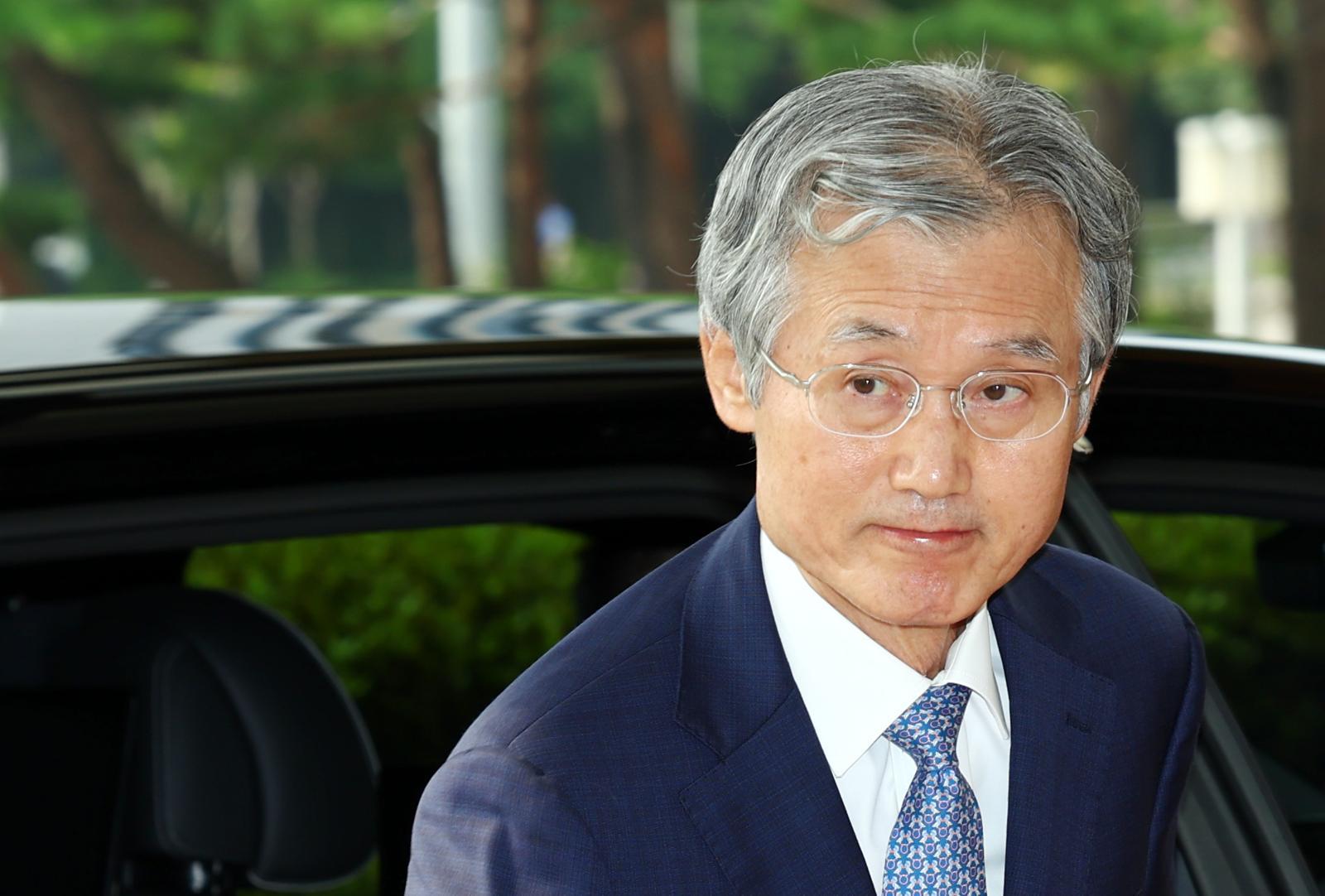

China's 'Two States' Remark on Koreas Sparks Debate on Beijing's Intentions
Translated from Korean, summarized and contextualized by DistantNews.
At a glance
Analysis
Named sources
Context piece
- Chinese Foreign Minister Wang Yi referred to North and South Korea as two separate states during his recent visit to Seoul.
- This phrasing, differing from China's usual terminology, has sparked debate about Beijing's stance on inter-Korean relations.
- Analysts suggest China may prioritize stability and managing the current situation over actively pushing for North Korea's denuclearization.
Chinese Foreign Minister Wang Yi's repeated use of the term 'two states' when referring to North and South Korea during his recent visit to Seoul has ignited significant discussion. This linguistic choice deviates from China's customary 'both sides' phrasing and has led to varied interpretations. Some analysts believe it signals Beijing's acceptance of North Korea's classification of inter-Korean relations as adversarial. Others caution against overinterpreting the remarks, noting past instances where China has referred to the Koreas as separate states.
We hope that South Korea and North Korea, as two different states, can move towards peaceful coexistence.
Wang, a seasoned diplomat with over 40 years of experience, employed this specific phrasing on consecutive days, making it unlikely to be an accidental slip. The timing of these remarks is crucial. While South Korea requested China's role in denuclearization and peace on the peninsula, official Chinese statements omitted the term 'denuclearization.' Wang also distanced China from mediating North Korea-U.S. talks, stating it was a matter for Pyongyang and Washington to resolve. This suggests China's current priority is managing the peninsula's stability and preventing conflict, rather than pressuring North Korea towards denuclearization, especially given its advanced nuclear capabilities and close ties with Russia.
They'll lose all 300,000 of these newly mobilized Russians there; we'll wipe them out.
The South China Morning Post described Wang's visit as a 'painful blow' to Seoul, as China did not support South Korea's proposal for multilateral discussions on ending the Korean War. Wang urged South Korean officials to pursue strategic autonomy and avoid bloc confrontation, implicitly encouraging them to reduce reliance on U.S. influence. He also asked President Lee Jae-myung to firmly adhere to pro-China policies. This dual approach, limiting China's role in North Korean affairs while urging closer ties with South Korea, highlights Beijing's strategic maneuvering.
Many people in Russia want the war to end. They put it this way: they just want it to end. In our view, the statistics are as follows: more than 60% of Russian society wants an end to this war, a ceasefire. So this shows that public sentiment is moving in that direction, and the trends are clear.
The differing approaches to Korean Peninsula peace were starkly illustrated when North Korea launched missiles into the East Sea on the same day Wang met with President Lee. While South Korea convened an emergency security meeting, China's Foreign Ministry stated it had 'nothing to comment on.' This divergence underscores the gap between Seoul's and Beijing's visions for peace. Although China is unlikely to welcome North Korea's nuclear ambitions, which could escalate regional militarization and strengthen U.S.-South Korea-Japan security cooperation, Wang's 'two states' comment clarifies a shift in Beijing's policy. South Korea must refine its China policy, recognizing that vague requests for mediation or denuclearization persuasion will likely yield little. Finding common ground between South Korea's desire to deter North Korean threats and China's interest in stability is essential for Beijing to take meaningful action.
They removed Yabloko from the election because they expected Yabloko to get a maximum of 3% or 4%, and then they looked at public sentiment, and there it was immediately at 11-12%, with an upward trend. They struck them off the ballot simply to ensure there would be no alternative to the war and to his rule.
DistantNews Editorial
Originally published by Dong-A Ilbo in Korean. Translated, summarized, and contextualized by our editorial team with added local perspective. Read our editorial standards.
More Stories



From Our Blog

What Gets Lost (and Found) When News Is Translated

The Critical Role of Diaspora Media in Global News

What Travellers Should Know About Countries with Restricted Press

A Digital Nomad's Guide to Following Local News

How the Same Story Looks Different in Different Countries
