


China says unmanned moon mission delayed over 'launch conditions'
Summarized and contextualized by DistantNews.
At a glance
News
From a news agency
Ongoing story
- China has delayed its planned research moon mission, Chang'e-7, due to unfavorable launch conditions.
- The mission, part of Beijing's goal to land astronauts on the moon by 2030, was scheduled for later this year.
- This delay follows a recent rare launch failure of a Long March 7A rocket, prompting a comprehensive assessment of the space program's readiness.
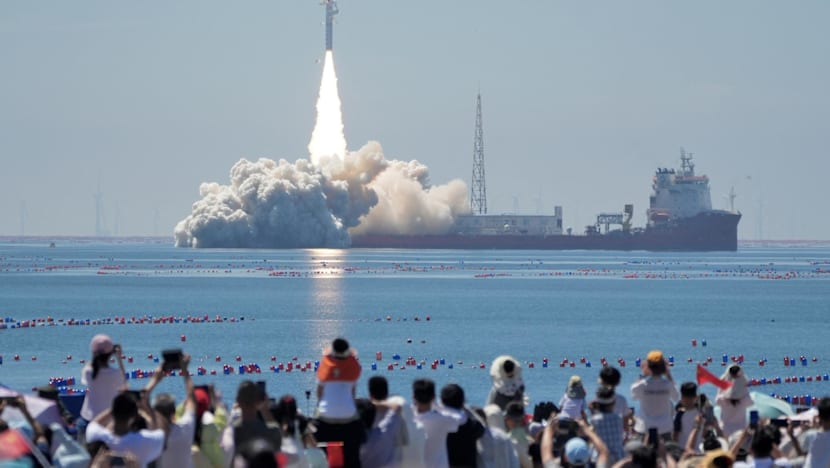
China's manned space agency announced Sunday it is delaying its research moon mission, Chang'e-7, citing that the mission "does not meet launch conditions." The delay comes less than two weeks after a rare launch failure involving a Long March 7A rocket, prompting a comprehensive review of the nation's space endeavors.
does not meet launch conditions and cannot take place during the planned window this year
The Chang'e-7 mission, a key component of Beijing's ambition to land astronauts on the moon by 2030, was slated to depart this year. The agency stated the decision was based on the "principle of prudence, reliability and absolute mission success." The mission's objective is to search for water resources at the moon's south pole.
This postponement follows a recent incident where a Long March 7A carrier rocket carrying a communications satellite experienced an "anomaly" during flight, resulting in an explosion witnessed by crowds. The cause of that failure is currently under investigation.
based on the principle of prudence, reliability and absolute mission success
China has invested heavily in its space program, aiming for significant achievements like lunar landings. The delay of the Chang'e-7 mission, coupled with the recent launch failure, underscores the challenges and rigorous assessments involved in its ambitious space goals, even as it races against programs like the U.S. Artemis initiative.
space dream
DistantNews Editorial
Originally published by CNA. Summarized and contextualized by our editorial team with added local perspective. Read our editorial standards.
More Stories



From Our Blog

What Gets Lost (and Found) When News Is Translated

The Critical Role of Diaspora Media in Global News

What Travellers Should Know About Countries with Restricted Press

A Digital Nomad's Guide to Following Local News

How the Same Story Looks Different in Different Countries
