


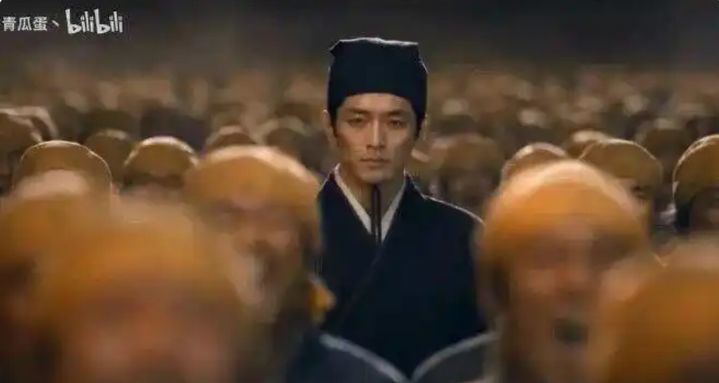
Chinese AI Drama 'The Greatest Sin of My Life' Tops 13 Million Views
Translated from Korean, summarized and contextualized by DistantNews.
At a glance
In-depth
Sources not specified
Context piece
- A short AI-generated drama from China, 'The Greatest Sin of My Life,' has gained over 13 million views on the video platform Bilibili.
- The drama, set in the late Han Dynasty, uses AI tools to depict historical events and human tragedy, bypassing potential censorship.
- Viewers praise the AI's ability to explore sensitive topics that might be restricted in traditional TV dramas.
A short drama created entirely by artificial intelligence (AI) in China, titled 'The Greatest Sin of My Life,' is rapidly gaining popularity online, with viewership exceeding 13 million on the Chinese video platform Bilibili. The creator reportedly used two AI programs to produce the entire drama independently.
The drama is set in the late Han Dynasty and follows a character who investigates a series of mysterious 'monster' incidents. Initially perceived as supernatural events like 'abnormally transformed trees' or 'grass turning into people,' the investigation uncovers a deeper truth: these phenomena were not the work of supernatural beings but the tragic consequences of harsh politics and famine.
The narrative reveals that the 'monster appearances' were merely pretexts used by the court to conceal talented individuals. To prevent the populace from seeking retribution, the protagonist is forced to document these events as records of supernatural occurrences in official documents. The story culminates with the outbreak of the Yellow Turban Rebellion, where rebel leader Zhang Jiao rallies his followers with a powerful speech about resistance.
The drama concludes with a message to future generations, urging them not to blame ghosts or spirits but to look at the suffering of the people. It is dedicated to those whose stories were never recorded in history. The creator, known as 'Qing Hwa Dan,' adapted the script from notes written years prior, emphasizing that the story is fictional while hoping audiences will view history critically.
Chinese netizens have noted that such a sensitive narrative might not pass censorship if produced as a live-action TV drama. However, the AI short film format, under the guise of a 'fictional supernatural story,' allows it to circumvent strict censorship standards and serve as an outlet for emotional expression. Some commenters acknowledged that AI is capable of tackling subjects beyond the scope of traditional television, while also pointing out the stark portrayal of harsh realities.
DistantNews Editorial
Originally published by Dong-A Ilbo in Korean. Translated, summarized, and contextualized by our editorial team with added local perspective. Read our editorial standards.
More Stories



From Our Blog

What Gets Lost (and Found) When News Is Translated

The Critical Role of Diaspora Media in Global News

What Travellers Should Know About Countries with Restricted Press

A Digital Nomad's Guide to Following Local News

How the Same Story Looks Different in Different Countries
