


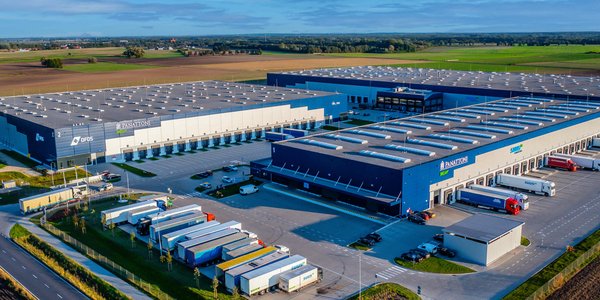
Chinese E-Commerce Giants Establish European Logistics Hubs in Poland
Translated from Polish, summarized and contextualized by DistantNews.
At a glance
News
Named sources
Context piece
- Chinese e-commerce platforms are significantly expanding their logistics operations in Europe, using Poland as a key hub.
- These companies leased over 400,000 square meters of warehouse space in Poland in the first half of 2026, driving down vacancy rates.
- Major players like AliExpress, Temu, and Shein are investing in Polish logistics infrastructure to support their European market growth.
Chinese online retail giants are making a significant push into the European market, with Poland emerging as a crucial logistics base. In the first half of 2026, Asian e-commerce platforms leased more than 400,000 square meters of warehouse space in Poland, a move that has substantially reduced vacancy rates in the country's industrial sector.
For the first time in several quarters, we are observing a return of new contracts prevailing over renegotiations. Net demand exceeded 2.1 million square meters, showing that companies are not only securing existing locations but are developing their businesses and expanding distribution networks covering not only the domestic market but also the European one. This is a positive signal of a change in tenants' attitudes and a good forecast for further growth of the warehouse sector in Poland.
This surge in demand is a primary driver of growth for Poland's logistics and e-commerce sectors. Companies such as AliExpress, Temu, and Shein are actively developing their logistical operations, with Shein opening a logistics center in Poland in December of the previous year. This expansion signifies a strategic investment in building a robust operational foundation for their European activities.
The increased leasing activity has led to a sharp decline in warehouse vacancy rates, dropping from 7.1% to 6.3% in just three months. While this rate is still considered relatively high, larger warehouse modules exceeding 30,000 square meters are becoming scarce in many locations. The overall Polish market's absorption rate has improved, with available space now estimated to be absorbed in approximately seven months, down from 8.5 months previously. Some markets, like Wroclaw, are even tighter, with absorption rates around five months.
The vacancy rate of 6.3% may still seem relatively high, but in practice, it is a widely dispersed volume, and in many locations, larger modules exceeding 30,000 square meters are already lacking.
Regions such as Silesia, Lower Silesia, Lodz, Masovia, and Greater Poland have seen the highest tenant activity. The growth in net demand, which includes new leases and expansions, accounted for 60% of the total leased area, indicating that companies are not just securing existing locations but actively developing their distribution networks across Poland and Europe. This trend suggests a positive outlook for Poland's warehouse sector as these Asian platforms solidify their presence.
From the perspective of the entire Polish market, the buffer has decreased from the equivalent of about 8.5 months to just 7 months (in such a period, all currently available space would theoretically be absorbed by the market at the average net annual demand from the last five years). In some markets, the situation is much tighter – these indicators are around 5 months in Wroclaw and 6 months in Szczecin, Tricity, and Central Poland.
DistantNews Editorial
Originally published by Rzeczpospolita in Polish. Translated, summarized, and contextualized by our editorial team with added local perspective. Read our editorial standards.
More Stories

From Our Blog

What Gets Lost (and Found) When News Is Translated

The Critical Role of Diaspora Media in Global News

What Travellers Should Know About Countries with Restricted Press

A Digital Nomad's Guide to Following Local News

How the Same Story Looks Different in Different Countries
