


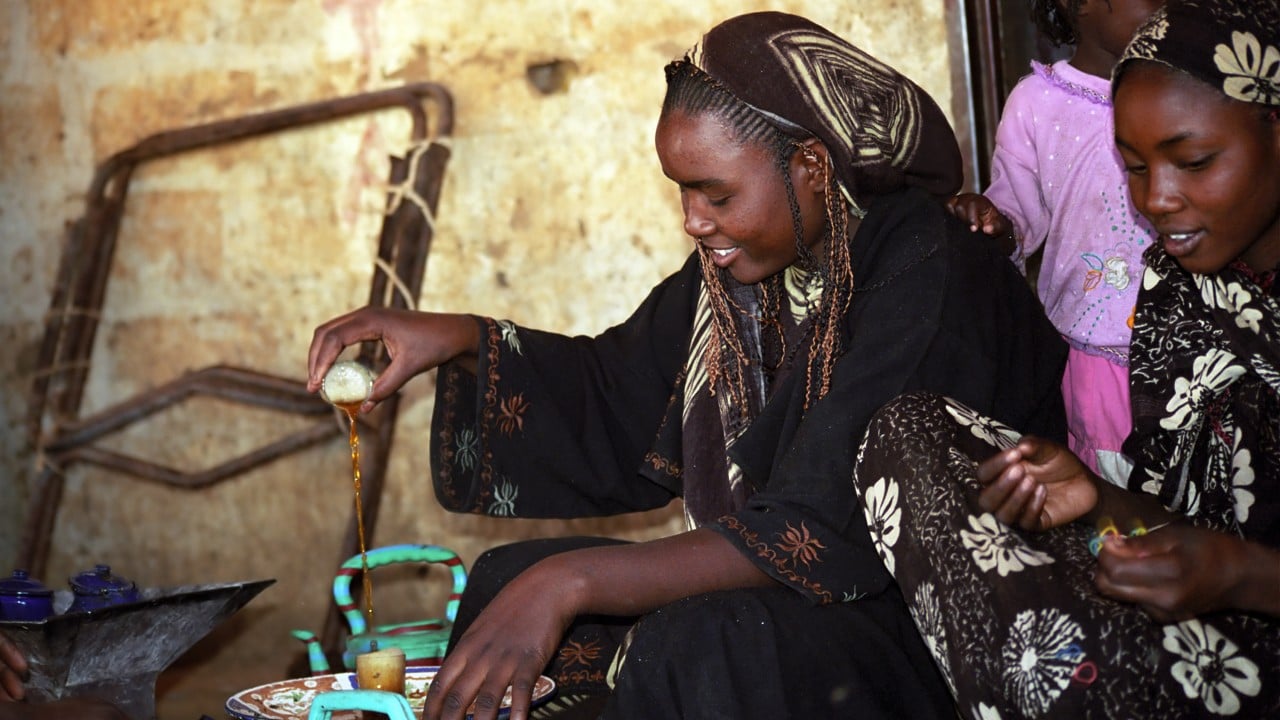
Chinese green tea is bringing people together in West Africa, 3 cups at a time
Summarized and contextualized by DistantNews.
At a glance
In-depth
Documents & data
Context piece
- Chinese green tea, prepared in a traditional three-round ritual called ataya, has become a popular social custom across West Africa.
- Countries like Mauritania, Gambia, Mali, Senegal, and Niger import over 90% of their tea from China, highlighting strong trade ties.
- The ataya ritual fosters social interaction, providing a dedicated time for conversation and connection among family, friends, and colleagues.
A traditional West African tea ritual, known as ataya, is fostering social connections across the region, with Chinese green tea at its heart. This custom, observed from government offices to roadside stalls in countries like Senegal, Mali, and Niger, involves preparing and serving strong, sweet green tea in three distinct rounds.
The ataya ritual provides a dedicated space for family, friends, and colleagues to engage in conversation and strengthen social bonds. Chinese tea has become dominant in markets where ataya is widely consumed. Data from the Observatory of Economic Complexity shows that in 2024, over 90% of Mauritania's tea imports by value came from China, amounting to $65.1 million out of its total $66.4 million tea purchases.
Similarly, in Gambia, China supplied approximately 91% of the country's tea imports in 2024, valued at $28.5 million out of $31.3 million. China is also a significant supplier of green tea for Mali, Senegal, and Niger, nations where the ataya tradition is deeply ingrained.
The cultural significance of tea is recognized even in diplomatic circles. A guide for Chinese visitors in Mauritania, published by the Chinese embassy, notes the local tradition of serving tea to guests, referred to as "three cups of tea upon meeting." This practice underscores the deep integration of Chinese green tea into the social fabric of West Africa.
DistantNews Editorial
Originally published by South China Morning Post. Summarized and contextualized by our editorial team with added local perspective. Read our editorial standards.
More Stories
From Our Blog

Countries Without a Free Press: What You Need to Know

What Press Freedom Means for the News You Read

What Gets Lost (and Found) When News Is Translated

The Critical Role of Diaspora Media in Global News

What Travellers Should Know About Countries with Restricted Press
