


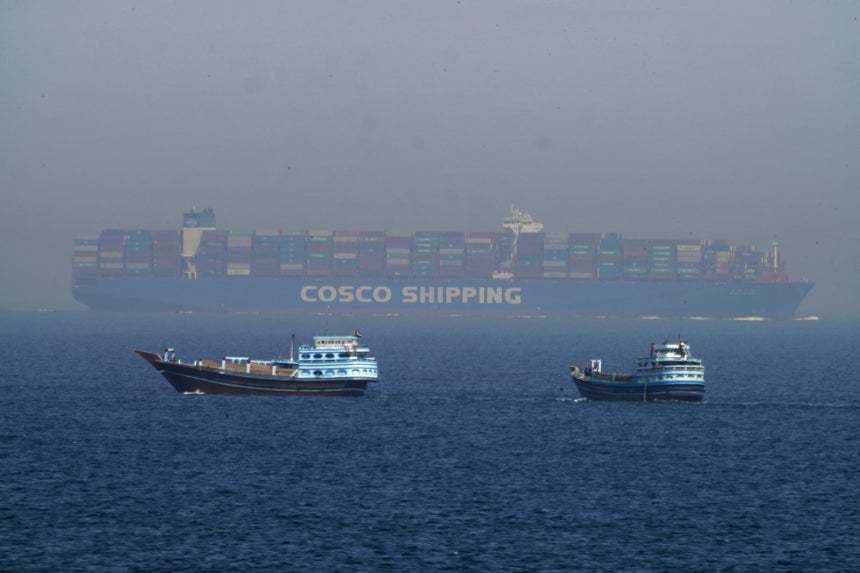
Chinese Tanker Transits Hormuz Despite U.S. Blockade
Translated from Korean, summarized and contextualized by DistantNews.
TLDR
- A Chinese oil tanker, the "Rich Starry," passed through the Strait of Hormuz despite a U.S. "reverse blockade" operation.
- The U.S. initiated its blockade on May 13th, targeting vessels involved in trade with Iran.
- The tanker, carrying methanol and owned by Shanghai Xuanrun Shipping, is subject to U.S. sanctions due to its dealings with Iran.
In a move that challenges American unilateralism, a Chinese oil tanker, the "Rich Starry," successfully navigated the Strait of Hormuz, defying the U.S. "reverse blockade" that commenced on May 13th. This operation, aimed at disrupting trade with Iran, was seemingly circumvented by the Chinese vessel, highlighting the complexities and potential ineffectiveness of such measures in a critical global waterway.
The "Rich Starry," operated by Shanghai Xuanrun Shipping, was carrying approximately 250,000 barrels of methanol, loaded in the UAE. Its passage marks the first known instance of a vessel transiting the strait after the U.S. imposed its blockade. The tanker and its owner are already under U.S. sanctions for engaging in trade with Iran, underscoring the ongoing tensions and the U.S. administration's efforts to exert pressure on Tehran's economic partners.
While the U.S. has implemented this blockade, China has openly criticized such actions. The Chinese Foreign Ministry has labeled the U.S. measures as "dangerous and irresponsible." However, Beijing has remained notably silent on the specific passage of its own sanctioned vessel through the Strait of Hormuz, indicating a careful balancing act between its opposition to U.S. sanctions and its own commercial interests in the region.
This incident underscores the strategic importance of the Strait of Hormuz and the intricate geopolitical dynamics at play. The ability of a sanctioned Chinese vessel to pass through despite U.S. efforts raises questions about the reach and impact of American sanctions and the growing assertiveness of China in international trade routes. The situation remains fluid, with potential implications for regional stability and global energy markets.
DistantNews Editorial
Originally published by Dong-A Ilbo in Korean. Translated, summarized, and contextualized by our editorial team with added local perspective. Read our editorial standards.
More Stories



From Our Blog

What Gets Lost (and Found) When News Is Translated

The Critical Role of Diaspora Media in Global News

What Travellers Should Know About Countries with Restricted Press

A Digital Nomad's Guide to Following Local News

How the Same Story Looks Different in Different Countries
