


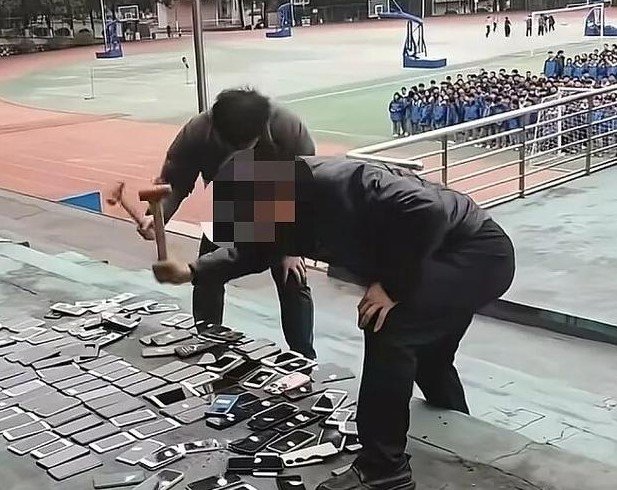
Chinese Teachers Destroy Confiscated Phones in Front of Students
Translated from Korean, summarized and contextualized by DistantNews.
At a glance
News
Sources not specified
Outcome reported
- Teachers at a private school in Chenzhou, Hunan province, China, destroyed over 100 confiscated mobile phones with hammers.
- The incident occurred in front of students as a warning against bringing phones to school.
- Local education authorities deemed the school's actions inappropriate, stating that personal property cannot be arbitrarily disposed of.
A controversial incident unfolded at a private school in Chenzhou, Hunan province, China, where teachers publicly destroyed over 100 confiscated mobile phones using hammers. The act, carried out in front of students, was intended as a stern warning against bringing personal devices to school.
Video footage of the event circulated on social media, showing school staff smashing the phones one by one in the schoolyard. This display sparked widespread criticism, with many condemning it as a violation of students' rights and personal property.
In response to the backlash, the school administration claimed the phones had been confiscated long ago and their owners had not claimed them. They stated the destruction was meant to reinforce the school's policy against mobile phone use. However, this explanation did little to quell public anger.
Netizens criticized the school's methods as illegal and outdated, questioning the educational value of destroying property. The local education bureau intervened, declaring the school's actions inappropriate. Authorities emphasized that even unclaimed confiscated items are personal property and cannot be arbitrarily discarded by the school, promising to take appropriate legal action.
DistantNews Editorial
Originally published by Dong-A Ilbo in Korean. Translated, summarized, and contextualized by our editorial team with added local perspective. Read our editorial standards.
More Stories



From Our Blog

What Gets Lost (and Found) When News Is Translated

The Critical Role of Diaspora Media in Global News

What Travellers Should Know About Countries with Restricted Press

A Digital Nomad's Guide to Following Local News

How the Same Story Looks Different in Different Countries
