


Chinese vendors soak cabbages in formaldehyde to preserve freshness, authorities investigate
Translated from Korean, summarized and contextualized by DistantNews.
At a glance
News
Sources not specified
Context piece
- Chinese vendors were caught soaking cabbages in formaldehyde solution to maintain freshness during transport.
- Formaldehyde is classified as a Group 1 carcinogen by the WHO and is banned for use in food processing in China.
- Authorities are investigating the incident and tracing the distribution of the contaminated vegetables.
In a disturbing revelation from Hebei Province, China, vegetable vendors have been caught using formaldehyde solution to preserve the freshness of cabbages before transport. This practice involves soaking the vegetables in a chemical known to be a Group 1 carcinogen by the World Health Organization's International Agency for Research on Cancer (IARC).
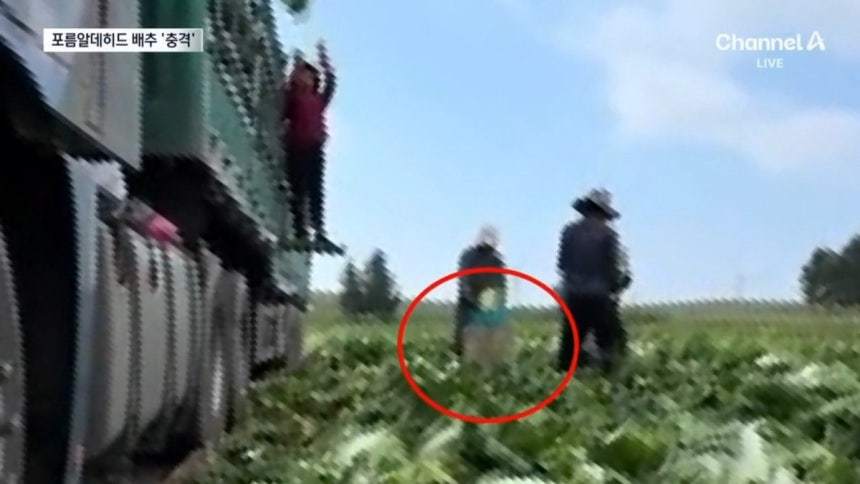
All the transport vehicles were applying formaldehyde solution to the cabbages before loading them.
The incident occurred in Kangbao County, Zhangjiakou City, where eyewitnesses observed vendors applying the formaldehyde solution to cabbages as they were being loaded onto transport vehicles. Videos shared online showed bottles labeled 'formaldehyde solution' near the loading area. Vendors claimed the chemical could keep the cabbages fresh for an additional two to three days, with one indicating the produce was destined for Suqian City in Jiangsu Province.
Local authorities have confirmed the use of formaldehyde solution, identifying it as an illegal act by vendors to maintain freshness during transit. Investigations are underway, and legal actions are being taken against those involved. China's food safety and agricultural product quality laws strictly prohibit the production, sale, or use of formaldehyde as a food processing aid.
Using formaldehyde solution can keep the cabbages fresh for 2 to 3 days longer.
While formaldehyde is classified as a carcinogen, this classification indicates its potential to cause cancer, not the immediate risk from a single consumption. Authorities are urgently tracing the distribution network of the affected cabbages. Concerns remain about whether these contaminated vegetables have been exported, including to South Korea. The report suggests this might not be an isolated incident, raising suspicions that it could be a common practice in the region's vegetable procurement process, putting consumers at risk under the guise of maintaining freshness.
The vendors' illegal act to maintain freshness during the cabbage transportation process.
DistantNews Editorial
Originally published by Dong-A Ilbo in Korean. Translated, summarized, and contextualized by our editorial team with added local perspective. Read our editorial standards.
More Stories



From Our Blog

What Gets Lost (and Found) When News Is Translated

The Critical Role of Diaspora Media in Global News

What Travellers Should Know About Countries with Restricted Press

A Digital Nomad's Guide to Following Local News

How the Same Story Looks Different in Different Countries
