


Choi Tae-won: 'AI semiconductor demand to increase up to 100% next year... Considering U.S. investment'
Translated from Korean, summarized and contextualized by DistantNews.
At a glance
Interview
Named sources
Context piece
- South Korean semiconductor demand is expected to surge by 60-100% next year due to AI, potentially doubling overall demand.
- Companies face difficulties increasing supply, leading to a widening gap between demand and supply, with potential geopolitical implications.
- SK Group Chairman Choi Tae-won emphasized the need for increased investment, including in the U.S., and strategic market protection to maintain South Korea's semiconductor industry leadership.
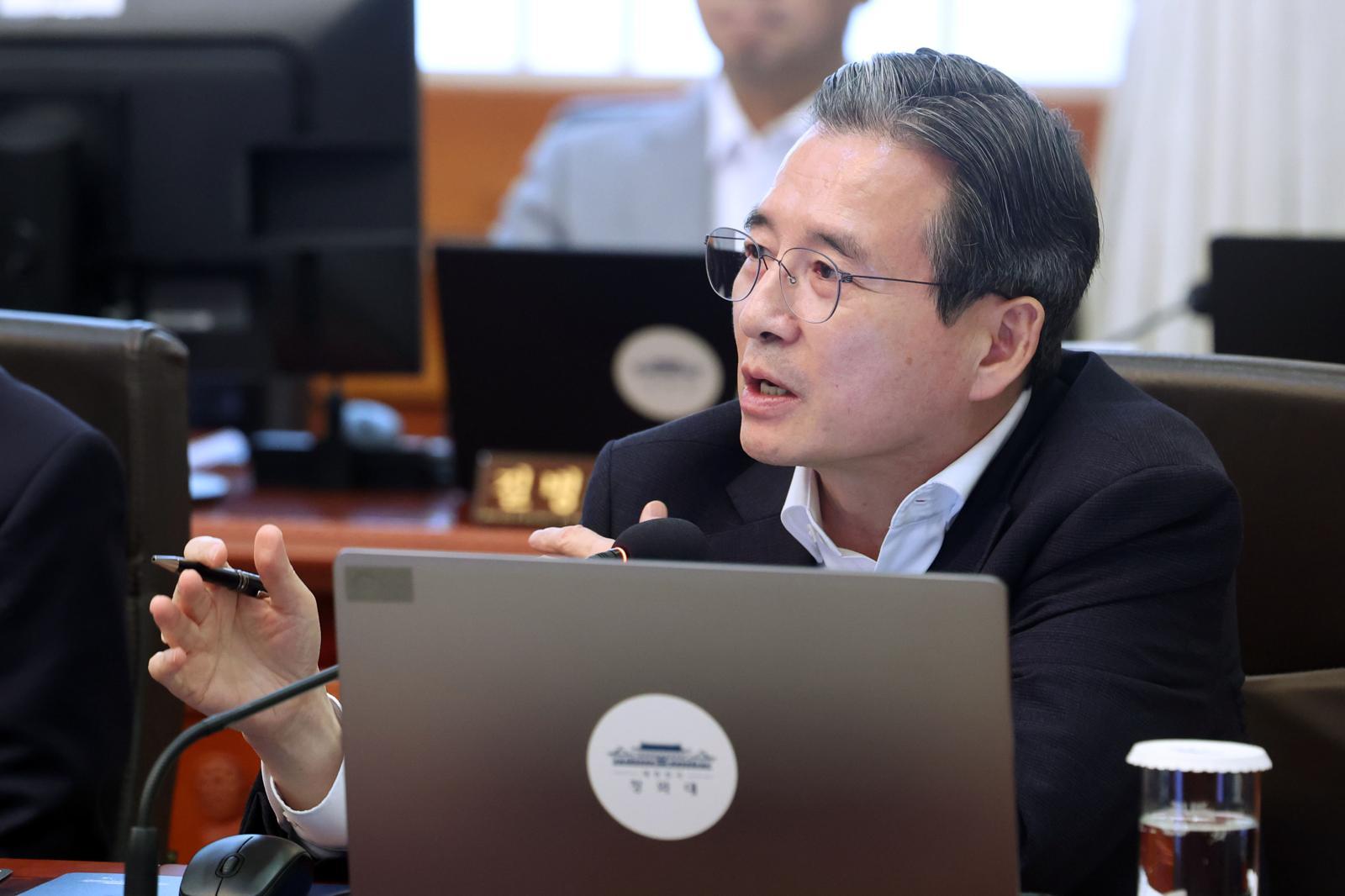
South Korean semiconductor demand is poised for exponential growth next year, driven primarily by the burgeoning artificial intelligence sector. Choi Tae-won, chairman of the SK Group and the Korea Chamber of Commerce and Industry, stated that customer requests indicate a 60-100% increase in AI memory usage compared to this year. Given that AI-related semiconductors constitute over half of the total demand, this surge is expected to boost overall semiconductor demand by at least 50-60%.
However, semiconductor manufacturers are struggling to ramp up production, creating a significant supply-demand gap for the coming year. Choi described the potential memory shortage as "pandemonium" and indicated that companies are facing immense pressure and lobbying efforts to increase output. He also warned that the semiconductor industry's role in economic security could lead to increased pressure from foreign governments, referencing the 1986 U.S.-Japan Semiconductor Agreement as a historical precedent for geopolitical conflicts arising from the sector.
Choi stressed the importance of strategic investment and market stewardship for South Korea's semiconductor industry. "We must cultivate our land well to continue harvesting," he said, advocating for companies to increase supply, even at the cost of reduced profit margins, to protect and grow the market. Failure to adequately increase memory supply could result in South Korean firms losing market share to emerging competitors like China's CXMT.
To address these challenges, Choi indicated a willingness to expand investments, including potential semiconductor manufacturing facilities in the United States, citing the need to consider infrastructure and trade pressures. He reaffirmed commitment to developing the semiconductor cluster in Honam, South Korea, citing its ideal infrastructure conditions. Choi also highlighted the critical need for infrastructure investment in electricity and power transmission to support the growth of AI and related technologies, identifying energy and electrical equipment as key bottlenecks for future AI development.
Regarding SK Hynix's recent bonus controversy, Choi emphasized the principle of stakeholder happiness, stating that employee happiness should not come at the expense of other stakeholders like workers, shareholders, suppliers, and the local community. He suggested that sustainable happiness requires addressing such issues but acknowledged that the current perception needs time to evolve and expressed confidence that Hynix's labor and management would find a resolution.
DistantNews Editorial
Originally published by Hankyoreh in Korean. Translated, summarized, and contextualized by our editorial team with added local perspective. Read our editorial standards.
More Stories


From Our Blog

What Gets Lost (and Found) When News Is Translated

The Critical Role of Diaspora Media in Global News

What Travellers Should Know About Countries with Restricted Press

A Digital Nomad's Guide to Following Local News

How the Same Story Looks Different in Different Countries
