


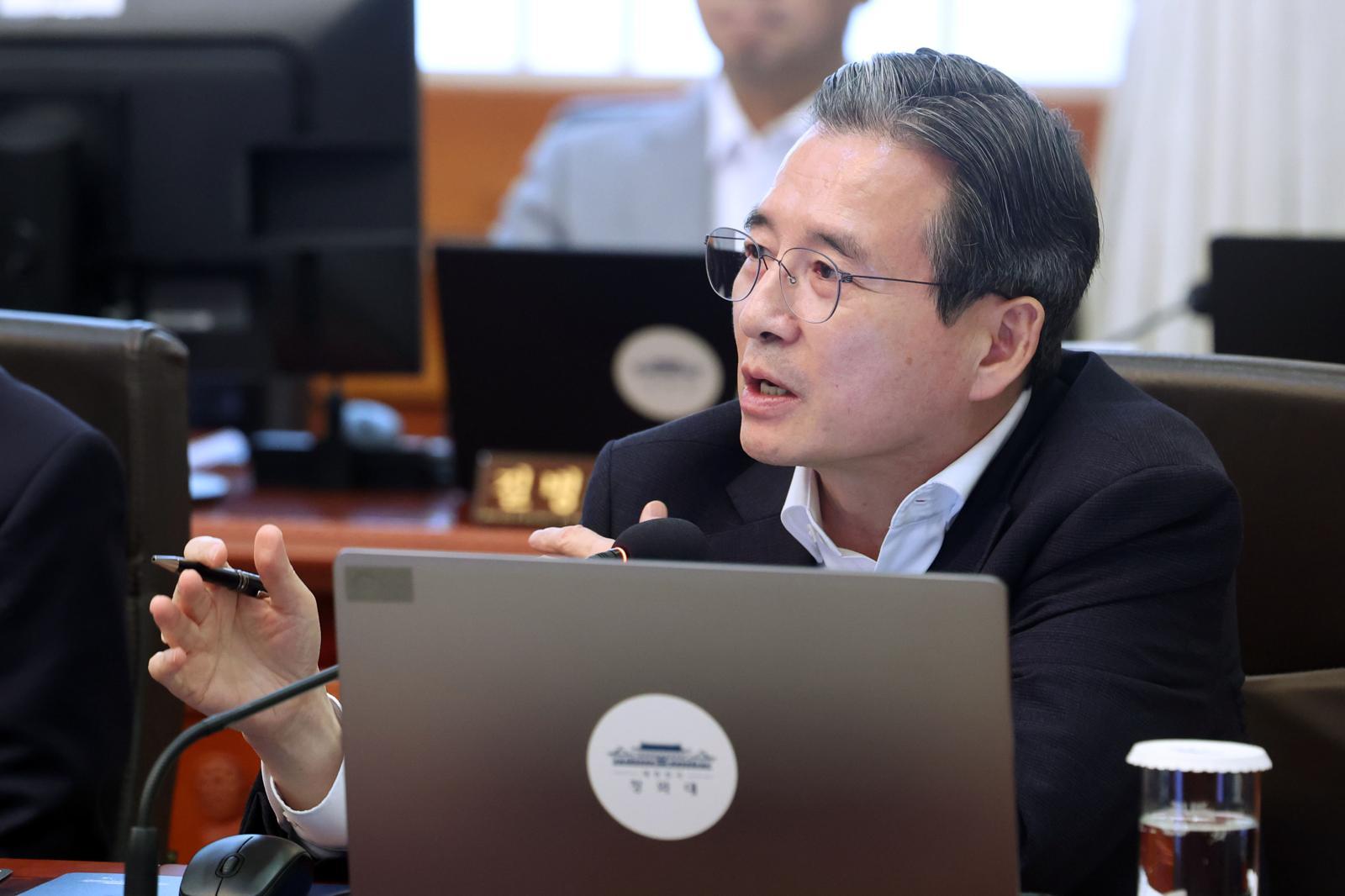
South Korea: Delisting leveraged ETFs would shock market, says presidential aide
Translated from Korean, summarized and contextualized by DistantNews.
At a glance
News
Sources not specified
Context piece
- South Korea's Presidential Policy Chief Kim Yong-beom stated that delisting leveraged ETFs tracking Samsung Electronics and SK Hynix would be difficult due to potential market shock.
- Kim acknowledged concerns about market volatility caused by these ETFs, which have over 10 trillion won invested, and suggested exploring ways to minimize their impact.
- He also discussed real estate policies, emphasizing the need for diverse short-term supply solutions and a differentiated approach to property taxes based on usage and value.
South Korea's Presidential Policy Chief Kim Yong-beom has indicated that delisting leveraged exchange-traded funds (ETFs) that track single stocks like Samsung Electronics and SK Hynix is unlikely, citing the significant market shock such a move would cause. These ETFs, which have attracted over 10 trillion won in investment, are facing criticism for amplifying stock market volatility.
Speaking on KBS's 'Sunday Diagnosis,' Kim stated that delisting these already established products and investments would be "hard to imagine" due to the inherent shock to the market. Instead, he proposed that the focus should be on "considering more diverse methods to minimize the impact these products have on the market at specific times."
Kim highlighted the issue of "gap rate" – the discrepancy between an ETF's market price and its net asset value – as a key concern. He suggested that authorities, asset managers, and securities firms need to discuss ways to "minimize the gap rate" and "minimize market shock." Potential adjustments could include extending the management cycle for the gap rate from the current 30 minutes to perhaps two hours, or exploring alternative methods beyond selling physical assets or using other derivatives to manage the gap rate appropriately.
Regarding real estate policy, Kim acknowledged the challenging supply-demand situation, describing it as a "very challenging situation." He defended his earlier remark to "just build (housing)," explaining it as a call to "mobilize all sorts of methods" for short-term supply, such as "purchasing and leasing non-apartments." He also proposed converting commercial properties into officetels and changing the land use of commercial areas in the third new city developments to housing to boost short-term supply.
Kim also touched upon property tax reforms, suggesting a differentiated approach for multiple homeowners versus single homeowners, and for those who live in their properties versus those who do not. He noted that opinions from discussions suggest that even a single, high-value, owner-occupied home might warrant different tax treatment due to its impact on affordability and the housing market. The key remaining questions involve determining the appropriate tax levels and setting the criteria for these distinctions.
DistantNews Editorial
Originally published by Dong-A Ilbo in Korean. Translated, summarized, and contextualized by our editorial team with added local perspective. Read our editorial standards.
More Stories



From Our Blog

What Gets Lost (and Found) When News Is Translated

The Critical Role of Diaspora Media in Global News

What Travellers Should Know About Countries with Restricted Press

A Digital Nomad's Guide to Following Local News

How the Same Story Looks Different in Different Countries
