


Choosing Design in Turkish Universities: A Look at Future Careers
Translated from Turkish, summarized and contextualized by DistantNews.
At a glance
In-depth
Sources not specified
Context piece
- Turkey's higher education system offers over 200 institutions, with many universities housing architecture and design programs under a single faculty.
- The global creative economy is valued at over $3 trillion, with creative services exports reaching $1.4 trillion in 2022, highlighting design's significant economic impact.
- Future trends in design fields like architecture and industrial design emphasize sustainability, restorative practices, and circular economy principles, adapting to climate change and new economic models.
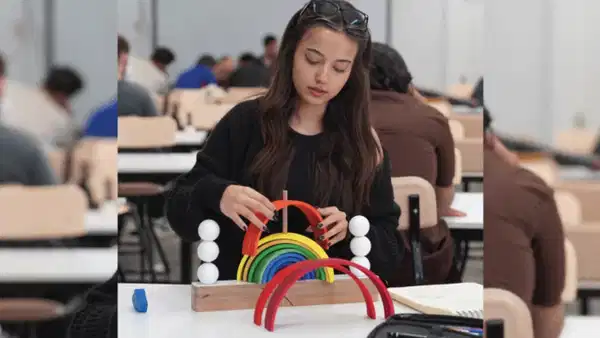
Turkey's universities are preparing students for a rapidly evolving design landscape, with over 200 institutions offering a wide array of programs. Many universities group architecture and design under a single faculty, signaling the interdisciplinary nature of modern design education. This initial separation can indicate whether a student's focus will lean more towards technical or artistic expression.
The global creative economy, now exceeding $3 trillion, underscores the international significance of design. Creative services exports alone reached $1.4 trillion in 2022, demonstrating design's substantial role in global trade. Choosing a design program means entering a field with significant economic influence.
Future architects will likely focus on restorative practices, addressing climate change and socioeconomic pressures by improving existing structures and prioritizing carbon footprint and climate control. Interior design will continue to focus on the psychological impact of spaces, optimizing environments for well-being and functionality. Specialized fields like architectural lighting design and neurolighting, which tailors light and space to human biorhythms, represent exciting future directions.
Industrial design is also transforming, shifting from single-use products to "product-service systems" that are repairable and have a second life, aligning with the rise of the circular economy. This field equips designers with a unique perspective applicable to everything from designing everyday objects to contributing to space exploration. Graphic and visual communication design, while impacted by AI, remains crucial for two-dimensional design and brand identity.
DistantNews Editorial
Originally published by Cumhuriyet in Turkish. Translated, summarized, and contextualized by our editorial team with added local perspective. Read our editorial standards.
More Stories


From Our Blog

What Gets Lost (and Found) When News Is Translated

The Critical Role of Diaspora Media in Global News

What Travellers Should Know About Countries with Restricted Press

A Digital Nomad's Guide to Following Local News

How the Same Story Looks Different in Different Countries
