


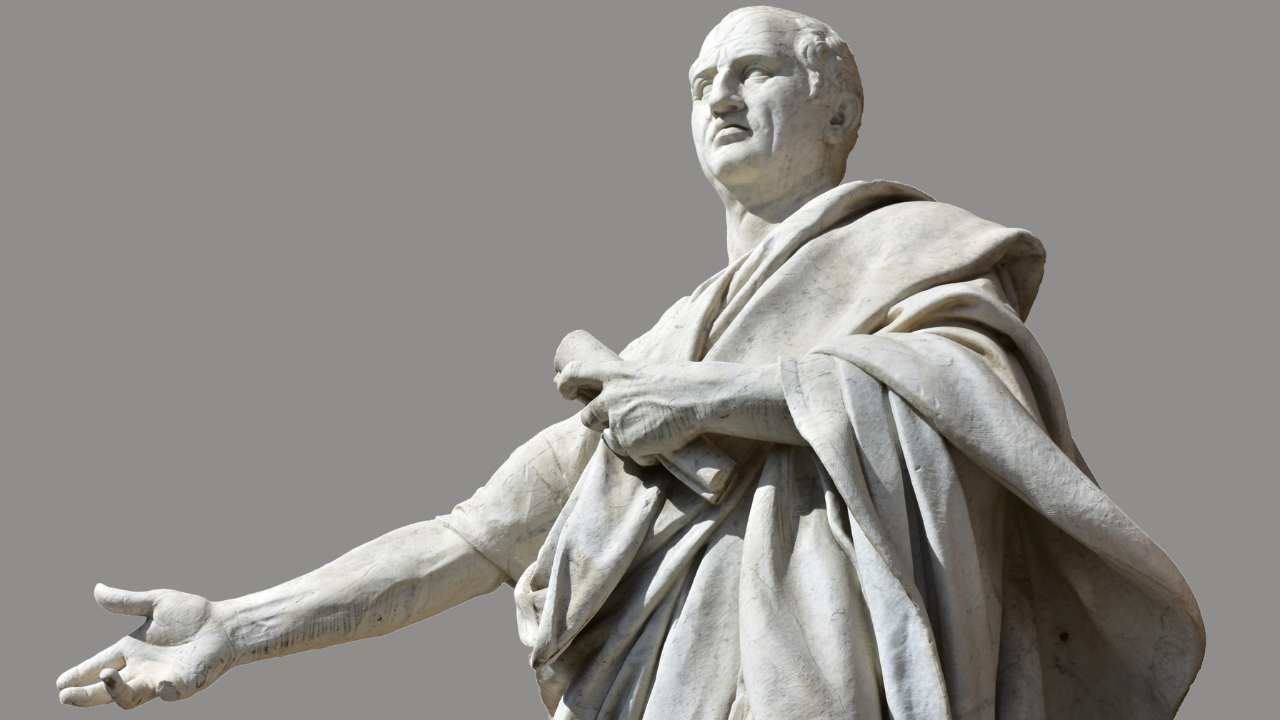
Cicero's Quote of the Day: 'If we are not ashamed to think it, we should not be ashamed to say it'
Translated from English, summarized and contextualized by DistantNews.
At a glance
Analysis
Sources not specified
Context piece
- Roman statesman Marcus Tullius Cicero advocated for aligning thoughts and words, criticizing self-censorship.
- He argued that if an idea is not shameful to think, it should not be shameful to say, especially in public life.
- Cicero's quote, from his "Letters to Friends," remains relevant for challenging silence and promoting honest discourse in institutions.
The Roman statesman Marcus Tullius Cicero, known for his oratory and philosophy, famously advocated for the congruence of thought and speech, particularly criticizing the culture of silent agreement.
If we are not ashamed to think it, we should not be ashamed to say it.
Cicero's quote, "If we are not ashamed to think it, we should not be ashamed to say it," encapsulates his belief that individuals should not suppress their true opinions out of fear, social pressure, or a desire to avoid conflict. He argued that in public life, where debate and open expression were valued, hiding one's genuine beliefs for political convenience signaled moral decline.
Our thoughts and words should match.
This sentiment, found in his "Letters to Friends" written during the turbulent final years of the Roman Republic, reflects an honest engagement with politics and personal integrity. At a time when Julius Caesar's power was rising, making open criticism dangerous, Cicero maintained that honest opinions, expressed without malice, should be voiced. He believed that when people refrain from speaking necessary truths, institutions weaken from within.
Staying silent because of fear, social pressure, or a desire to avoid conflict is a failure of courage.
Cicero's idea is rooted in Stoic and Academic Skeptic philosophies, emphasizing consistency between private beliefs and public actions as a mark of true virtue. Philosopher Hannah Arendt later echoed this, arguing that public life deteriorates when honest discussion is replaced by careful compliance. Hiding real opinions to fit in can lead to cognitive dissonance and a gradual departure from one's own values, ultimately weakening institutions.
He believed that when ordinary people stop speaking necessary truths, institutions begin to weaken from within.
DistantNews Editorial
Originally published by Times of India in English. Translated, summarized, and contextualized by our editorial team with added local perspective. Read our editorial standards.
More Stories


From Our Blog

What Press Freedom Means for the News You Read

What Gets Lost (and Found) When News Is Translated

The Critical Role of Diaspora Media in Global News

What Travellers Should Know About Countries with Restricted Press

A Digital Nomad's Guide to Following Local News
