


Cinematographer Explains the True Effect of IMAX's 1.43:1 Ratio in 'Oppenheimer'
Translated from Korean, summarized and contextualized by DistantNews.
At a glance
In-depth
Named sources
Context piece
- The film "Oppenheimer" was shot entirely in IMAX format, a long-held dream of director Christopher Nolan.
- Cinematographer Kim Woo-hyung explains the technical aspects of IMAX 1.43:1 aspect ratio and how it differs from previous Nolan films.
- The article discusses the challenges and unique aesthetic of using the heavy IMAX cameras and the format's potential to counter the crisis in cinema due to streaming services.
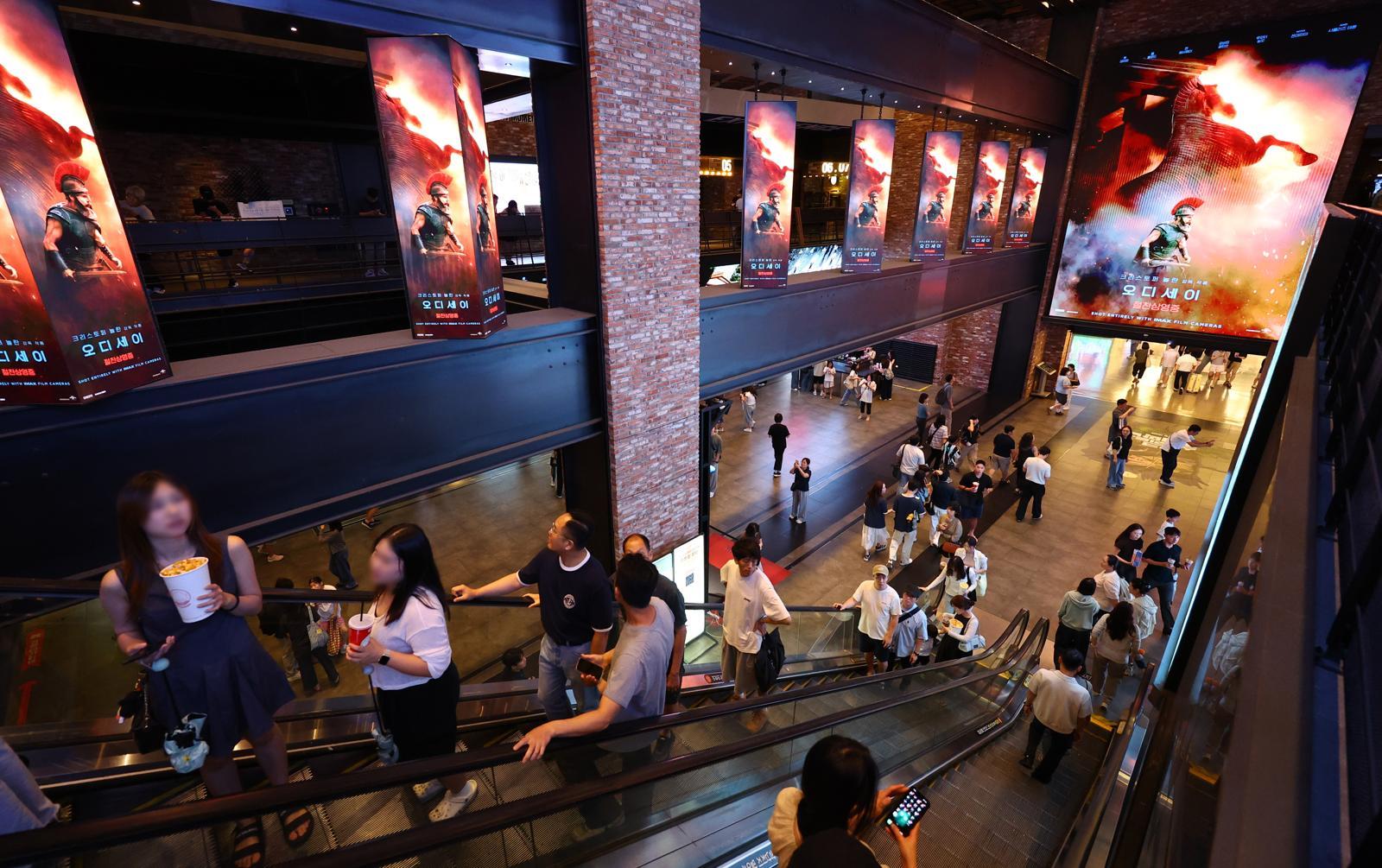
Director Christopher Nolan's "Oppenheimer" achieved a long-held dream by being filmed entirely in IMAX format, a significant achievement that has sparked a ticket-buying frenzy in South Korea, particularly at the CGV Yongsan I'Park Mall.
Shooting the entire film in IMAX was a dream I've had since I was about 16 years old.
Cinematographer Kim Woo-hyung delves into the technical nuances of IMAX, explaining that the original aspect ratio for IMAX cameras shooting 65mm film horizontally is 1.43:1. This contrasts with the 2.2:1 ratio of standard cameras using the same film stock vertically. In Nolan's previous films, the mix of these ratios caused constant letterboxing and shifting frames, which Kim suggests detracted from the immersive IMAX experience. "Oppenheimer," however, is the first feature film shot entirely in the native IMAX aspect ratio, ensuring a consistent visual experience, though it may be resized to 1.90:1 in some theaters.
Kim also analyzes the film's deliberate lack of dynamic camera work, attributing the sense of speed to rapid cuts. He notes that even slight camera movements are amplified on the giant IMAX screen, and the need to shift focus between subtitles and the actors' faces could be disorienting initially. Despite these challenges, Kim praises the film's adherence to the fundamental principle of storytelling through the camera's perspective, avoiding ostentatious spectacle and allowing the audience to be fully immersed in the world of the film. This, he argues, is the true effect of the IMAX format, reminiscent of the awe experienced by early cinema audiences.
The original aspect ratio of IMAX cameras shooting 65mm film horizontally is 1.43:1, while the aspect ratio of standard cameras shooting the same film vertically is 2.2:1. In Nolan's previous films, the mix of these two aspect ratios meant that letterboxes constantly appeared during screening. The framing inevitably had to fluctuate depending on action and dialogue scenes. To put it a bit exaggeratedly, the dialogue scenes captured in the standard widescreen format were offsetting the overwhelming impact that IMAX provides.
The article touches upon the practical difficulties of using IMAX cameras, such as their immense weight (around 136kg or 300 pounds for the "Kiddligley" camera with a "blimp" soundproofing device) which limits mobility. Kim suggests that the reluctance to use IMAX for feature films stemmed from a perception that close-ups would reveal too much detail, making audiences uncomfortable. Overcoming this required significant effort from Nolan, likely involving increased budgets for film, equipment rental, processing, and scanning, as well as the need for larger crews and slower production schedules. Indeed, "Oppenheimer" had a production budget of $250 million, the highest for any Nolan film.
This is not to disparage the widescreen format. It's just that I couldn't find another way to intuitively explain the distinction that the film "Oppenheimer" has achieved. In any case, this is the first time in history that a 'full IMAX feature film' has been created, shot entirely in the original IMAX aspect ratio. Of course, it may be resized to 1.90:1 depending on the specifications of the theater, but at least the screen ratio will no longer change in the middle of the movie.
Kim concludes by drawing a parallel to the introduction of widescreen formats like CinemaScope in the 1950s, which emerged as a response to the threat of television. Today, with the proliferation of streaming services and larger home screens, cinema faces a similar crisis. Kim suggests that IMAX offers a unique visual experience that can differentiate the theatrical offering and recapture audience attention, much like widescreen did decades ago.
Even with ordinary handheld shots, the slightest tremor of the camera is amplified on the giant screen, which is unavoidable. Moreover, because I had to constantly shift my gaze up and down to read the subtitles, I often missed the actors' faces. It wasn't enough to completely disrupt the viewing experience, but I was quite flustered and inwardly uncomfortable in the early part of the film. Given the physical size of the IMAX camera with its soundproof blimp, dynamic or aggressive movements would have been fundamentally impossible.
DistantNews Editorial
Originally published by Hankyoreh in Korean. Translated, summarized, and contextualized by our editorial team with added local perspective. Read our editorial standards.
More Stories


From Our Blog

What Gets Lost (and Found) When News Is Translated

The Critical Role of Diaspora Media in Global News

What Travellers Should Know About Countries with Restricted Press

A Digital Nomad's Guide to Following Local News

How the Same Story Looks Different in Different Countries
