


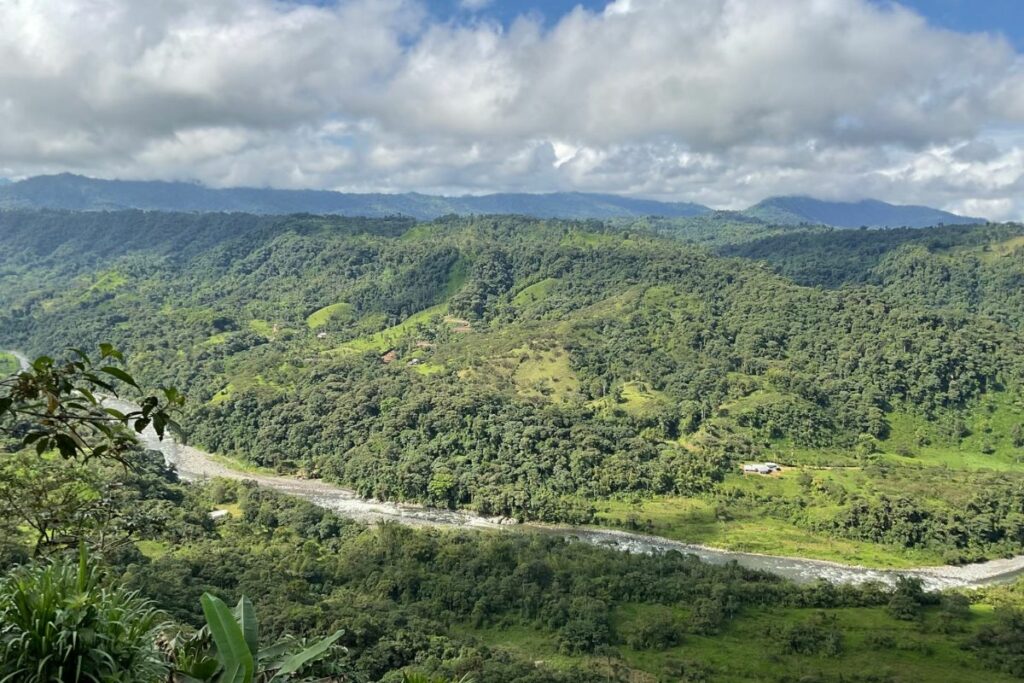
Citizen Fight Unites Northwest Pichincha for the Caoní River
Translated from Spanish, summarized and contextualized by DistantNews.
At a glance
In-depth
Named sources
Context piece
- Residents of Ecuador's Pichincha province are campaigning to save the Caoní River from contamination and overdevelopment.
- The river, vital to the region's ecosystem and biodiversity, is threatened by wastewater and land fragmentation for housing.
- Local communities, universities, and organizations have united to protect the river, highlighting its ecological and tourism importance.
The Caoní River, a significant tributary in Ecuador's northwestern Pichincha province, is facing a critical threat from pollution and unsustainable development. Once a pristine waterway described as pure and white, the river now suffers from contamination, posing a risk to its ecosystem and the communities that depend on it.
It is a small river, about 70 kilometers long, that forms a small valley along its course through the three cantons of Pichincha.
Patricio Espinel, a community leader from San Miguel de Los Bancos, one of the three cantons the river flows through, describes the Caoní as a small river, about 70 kilometers long, that sustains a valley. Historically a natural pathway for indigenous peoples, the river and its surrounding territory are crucial habitats for endemic and endangered species. Studies indicate that the Caoní region hosts 4.93% of Ecuador's amphibian biodiversity, with 35 species found there.
In the Caoní area, there is 4.93% of Ecuador's amphibian biodiversity, which means 35 species.
However, the river's natural beauty has attracted development, turning it into a "backyard for Quito." Land is being fragmented and sold for vacation homes, leading to the clearing of approximately 200 hectares of forest annually. This rapid urbanization results in untreated wastewater being discharged into the Caoní and other local rivers, exacerbating the pollution problem, particularly in the upper reaches near San Miguel de Los Bancos.
In the Caoní area, there is 4.93% of Ecuador's amphibian biodiversity, which means 35 species.
Residents have reported observing contaminated water and experiencing skin rashes or urinary tract infections after swimming in the river. In response to these escalating issues, evidenced by scientific studies, inhabitants from the northwestern Pichincha region have launched a collective initiative called "Chocó Andino Salvemos el Caoní" (Chocó Andino Let's Save the Caoní). This movement, joined by universities and organizations, aims to prevent further damage to the river and protect the health and environment of the three cantons.
In the Caoní area, there is 4.93% of Ecuador's amphibian biodiversity, which means 35 species.
DistantNews Editorial
Originally published by El Comercio in Spanish. Translated, summarized, and contextualized by our editorial team with added local perspective. Read our editorial standards.
More Stories


From Our Blog

What Gets Lost (and Found) When News Is Translated

The Critical Role of Diaspora Media in Global News

What Travellers Should Know About Countries with Restricted Press

A Digital Nomad's Guide to Following Local News

How the Same Story Looks Different in Different Countries
