


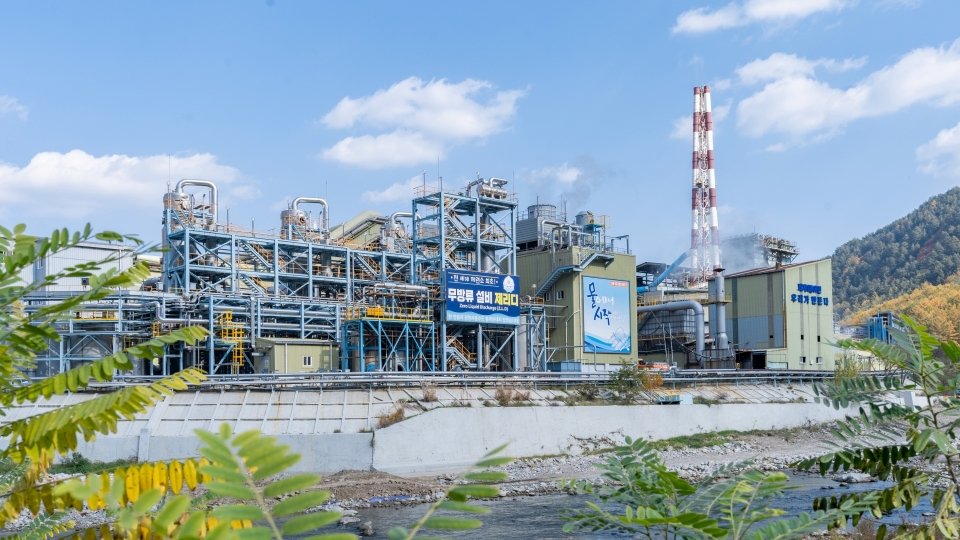
Civic groups sue government over slow response to smelter pollution
Translated from Korean, summarized and contextualized by DistantNews.
At a glance
News
Sources not specified
Under investigation
- Civic groups have filed a complaint with the Corruption Investigation Office for High-ranking Officials (CIO) against the government, citing insufficient follow-up measures for cadmium pollution from the Seokpo Smelter.
- A study commissioned by the government estimated the Seokpo Smelter's contribution to cadmium and zinc pollution in the Nakdong River and Andong Dam sediment.
- Despite the study's findings from four years ago, civic groups claim no substantial cleanup or restoration efforts have been made, leading to the CIO complaint for dereliction of duty.
Civic groups are taking legal action against the government, accusing it of failing to implement adequate follow-up measures concerning heavy metal pollution from the Youngpoong Seokpo Smelter into the upper Nakdong River. The Environmental Movement Federation of Andong and other related civic organizations have filed a complaint with the Corruption Investigation Office for High-ranking Officials (CIO), alleging dereliction of duty.
The dispute centers on a government-commissioned study released in May 2022. This research, utilizing isotope analysis, estimated the Seokpo Smelter's significant contribution to cadmium and zinc contamination in the Nakdong River and Andong Dam sediment. The study indicated the smelter's contribution to cadmium pollution ranged from 77% to 95.2% in sediment near the smelter, 67% to 89.8% about 40 kilometers downstream, and 57% to 64% in the surface sediment of Andong Lake.
The Ministry of Environment commissioned 'Nakdong River Upper Reaches Water Quality and Sediment Investigation Research (II)' and investigated the pollution sources of the Nakdong River upper reaches and Andong Dam sediment through analysis of lead (Pb), zinc (Zn), and cadmium (Cd) isotopes.
Despite the study's findings being officially announced four years ago, civic groups assert that no substantial cleanup or restoration actions have been taken against the identified polluter. They are demanding concrete measures for pollution source identification and sediment cleanup. The groups also called for the establishment of a task force under the Prime Minister's Office to discuss the relocation and restoration of the Seokpo Smelter.
The government's follow-up measures for heavy metal pollution in the Nakdong River upper reaches and Andong Dam sediment have not been implemented for a long time.
The government, however, has stated that the contribution figures are estimates based on methods like isotope analysis and that some data relied on literature, leading to differing opinions on the research methodology. Currently, the government is conducting a detailed investigation into the impact of the Seokpo Smelter site and surrounding pollution sources on the Nakdong River. The Minister of Climate, Energy, and Environment, Kim Sung-hwan, has previously inspected the smelter's environmental management and indicated that operational suspension could be considered if the smelter is found to be impacting the Nakdong River's drinking water source.
Meanwhile, the police are also reinvestigating the alleged cadmium pollution case. The Seoul Metropolitan Police Agency's Investigation Review Committee recently ordered a reinvestigation into charges against Yeongpung Group's advisor, Jang Hyeong-jin, for violating environmental laws. This follows a previous decision by the Gangnam Police Station to not forward the case to prosecutors, citing insufficient evidence of Jang's effective control after stepping down as CEO and the statute of limitations. The reinvestigation will focus on whether Jang maintained substantial control over Yeongpung after his departure.
If it is determined that the Seokpo Smelter is affecting the Nakdong River's drinking water source, operational suspension can be considered.
DistantNews Editorial
Originally published by Dong-A Ilbo in Korean. Translated, summarized, and contextualized by our editorial team with added local perspective. Read our editorial standards.
More Stories


From Our Blog

What Gets Lost (and Found) When News Is Translated

The Critical Role of Diaspora Media in Global News

What Travellers Should Know About Countries with Restricted Press

A Digital Nomad's Guide to Following Local News

How the Same Story Looks Different in Different Countries
