


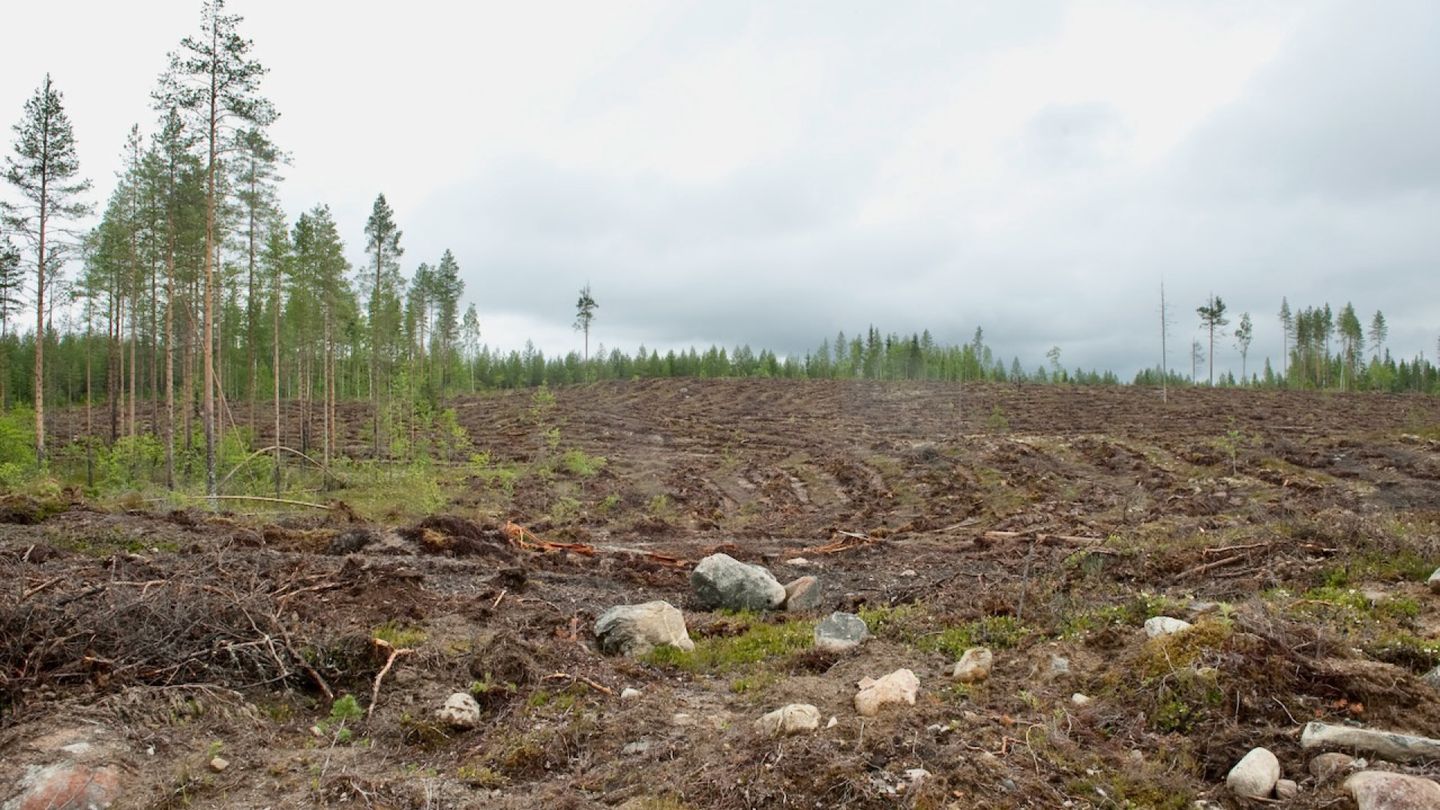
Clearcut Forests Struggle to Recover Biodiversity for Decades, Study Finds
Translated from Finnish, summarized and contextualized by DistantNews.
At a glance
News
Named sources
Context piece
- Clearcutting forests significantly reduces biodiversity for decades, even up to a century, according to new research.
- The decline is particularly evident in the loss of lichens and mosses dependent on old-growth forest microclimates.
- The study highlights that the impact extends beyond rare species, affecting common forest organisms and overall ecosystem function.
New research indicates that the recovery of forests after clearcutting takes much longer than previously thought, with biodiversity loss persisting for decades, potentially up to a century. The study, involving forest ecologist Professor Jari Kouki, emphasizes that assessing forest recovery solely by the regrowth of trees is insufficient.
If there are thick decaying trunks on the ground, standing dead trees, and old lichen on old trunks? If not, many species of old forest are likely missing.
"If there are thick decaying trunks on the ground, standing dead trees, and old lichen on old trunks? If not, many species of old forest are likely missing," Kouki explained. He noted that the microclimate of old trees, which remains shady, moist, and cool, is crucial for many species. When surrounding forests are logged, these trees are suddenly exposed to sun, wind, and drying, eliminating the specific microclimate needed by many species, even if new trees eventually grow in the area.
The research, published in journals like Biological Conservation and Nature Sustainability, reveals that while some biodiversity may return within 30 years, the re-establishment of lichens, mosses, and species dependent on dead wood in boreal forests can take much longer. Some species groups showed no clear recovery within the study periods. Mosses took over 100 years to recover, lichens around 95 years, vascular plants about 85 years, and small mammals over 55 years. Beetles dependent on dead wood showed no clear recovery during the observation period.
The authorities of Queen’s University wrote that they would send the student back if he did not produce his certificate. We had to write officially to confirm that he graduated from Sokoto State University, and thankfully they accepted our explanation. The student retained his admission.
Recovery was faster in deciduous forests, where ecosystems either better withstood disturbances or recovered within 12–25 years. However, Kouki stressed a significant new finding: the impacts of clearcutting are not limited to rare and endangered species but affect common forest species and the entire ecosystem. The decline of decomposers hinders nutrient cycling, and the reduction of pollinators can impede the reproduction of familiar forest plants like blueberries and lingonberries. Even as new trees grow quickly after logging, many species rely on features like large trunks, dead wood, decaying matter, shaded and moist surfaces, and stable microclimates, elements that disappear with clearcutting.
The impacts of clearcutting are not limited to rare and endangered species, but they are also visible in common forest species and entire ecosystems.
DistantNews Editorial
Originally published by Helsingin Sanomat in Finnish. Translated, summarized, and contextualized by our editorial team with added local perspective. Read our editorial standards.
More Stories

From Our Blog

What Gets Lost (and Found) When News Is Translated

The Critical Role of Diaspora Media in Global News

What Travellers Should Know About Countries with Restricted Press

A Digital Nomad's Guide to Following Local News

How the Same Story Looks Different in Different Countries
