


CNDH Denies Army Exoneration in Ayotzinapa Case, Cites 'Malicious' Campaign
Translated from Spanish, summarized and contextualized by DistantNews.
At a glance
News
Sources not specified
Context piece
- Mexico's National Human Rights Commission defended its resolution on the Ayotzinapa case, denying it exonerates the Army.
- The CNDH stated that individual actions by military personnel were found, not a broader plan, and noted 17 soldiers are already facing legal proceedings.
- The commission criticized claims of its lack of autonomy and accused critics of launching a malicious campaign to discredit its work.
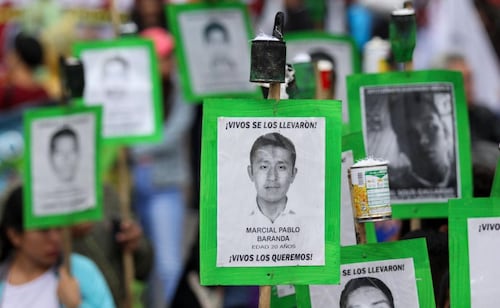
Mexico's National Human Rights Commission (CNDH) has vehemently defended its recent resolution concerning the Ayotzinapa case, rejecting accusations that it exonerates the Mexican Army. Rosario Piedra Ibarra, head of the CNDH, stated that the resolution does not absolve the military of responsibility in the 2014 disappearance of 43 students.
The days of September 26 and 27, 2014, there was no participation of Defense elements in any of the violent events against students, much less the existence of a "counter-insurgency" plan or special strategy for the extermination of normalistas.
The commission clarified that its investigation identified "individual actions" by military personnel, not a systemic plan or "counter-insurgency" strategy to eliminate students. The CNDH emphasized that no military personnel participated in the violent events of September 26-27, 2014, nor was there evidence of a plan to exterminate the students.
It is false, capricious, and malicious to assume that this recommendation is proof of the CNDH's lack of autonomy and that the Mexican Army is exempted from its responsibility.
Despite these clarifications, the CNDH dismissed claims that its recommendation signals a lack of autonomy or absolves the Army, pointing out that at least 17 soldiers are already facing legal proceedings related to the case. The commission characterized the criticism as a "capricious and malicious campaign" aimed at discrediting its work and preventing justice.
A new campaign has been launched to discredit the work of this National Human Rights Commission.
"We have undertaken a new campaign to discredit the work of this National Human Rights Commission," the CNDH stated, asserting that critics have failed to provide arguments or evidence contradicting its conclusions. The commission also dismissed reliance on potentially forged documents by its detractors. The CNDH maintained that its resolution is technically, legally, and methodologically sound, and that its purpose is to support victims' pursuit of truth and justice, not to absolve or defend anyone, as that role belongs to judicial authorities.
The CNDH does not exonerate or defend anyone; that is the responsibility of the jurisdictional authorities, of the Public Ministry. The central purpose of every Recommendation was to vindicate the reasons and the struggle of the victims, and to contribute to the truth.
DistantNews Editorial
Originally published by El Universal in Spanish. Translated, summarized, and contextualized by our editorial team with added local perspective. Read our editorial standards.
More Stories



From Our Blog

What Press Freedom Means for the News You Read

What Gets Lost (and Found) When News Is Translated

The Critical Role of Diaspora Media in Global News

What Travellers Should Know About Countries with Restricted Press

A Digital Nomad's Guide to Following Local News
