


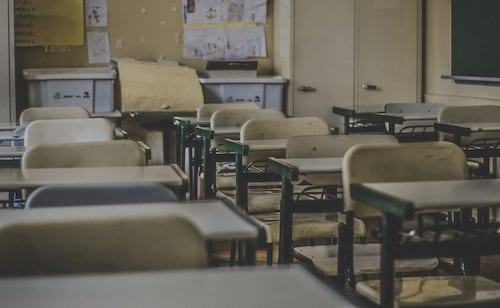
CNTE leaves students without classes in three states; Mexicanos Primero warns of education rights violation
Translated from Spanish, summarized and contextualized by DistantNews.
At a glance
News
Sources not specified
Ongoing story
- A teachers' union strike has prevented approximately 1.4 million students in three Mexican states from attending classes since June 1.
- The civil organization Mexicanos Primero warns that the strike violates students' right to education.
- The union's actions disrupt learning, deepen educational disparities, and limit future opportunities for vulnerable students.
The National Union of Education Workers (CNTE) strike has left students in three Mexican states without classes, prompting warnings from civil organizations about the violation of their right to education.
According to the Public Education Secretariat (SEP), around 1.4 million students in Oaxaca, Guerrero, and Michoacán have been unable to attend school since the national strike began on June 1. In Oaxaca, the suspension of activities started even earlier, on May 25, prolonging school closures in various regions of the state.
Mexicanos Primero, a civil organization, stated in a release that the most overlooked consequence of these disruptions is the direct impact on learning. Each day without classes translates to lost instructional hours, thousands of closed schools, and detrimental effects on students' educational development.
The organization emphasized that no demand or grievance can justify infringing upon the right to education. It highlighted that schools are crucial spaces for shaping the nation's future and must ensure the continuity of learning nationwide. Mexicanos Primero cautioned that the paralysis of schools not only affects the academic calendar but also disrupts educational trajectories, widens learning gaps, exacerbates social inequalities, and restricts future opportunities for children in vulnerable contexts.
Mexicanos Primero further argued that learning losses are not fully recovered through subsequent agreements, as their effects are cumulative and uneven. Students may advance to the next grade without having consolidated the learning from the previous cycle, making it difficult to address educational deficits. The NGO urged against normalizing class suspensions due to labor or political conflicts, asserting that education should be a central public priority, superseding short-term interests.
DistantNews Editorial
Originally published by El Universal in Spanish. Translated, summarized, and contextualized by our editorial team with added local perspective. Read our editorial standards.
More Stories



From Our Blog

What Press Freedom Means for the News You Read

What Gets Lost (and Found) When News Is Translated

The Critical Role of Diaspora Media in Global News

What Travellers Should Know About Countries with Restricted Press

A Digital Nomad's Guide to Following Local News
