


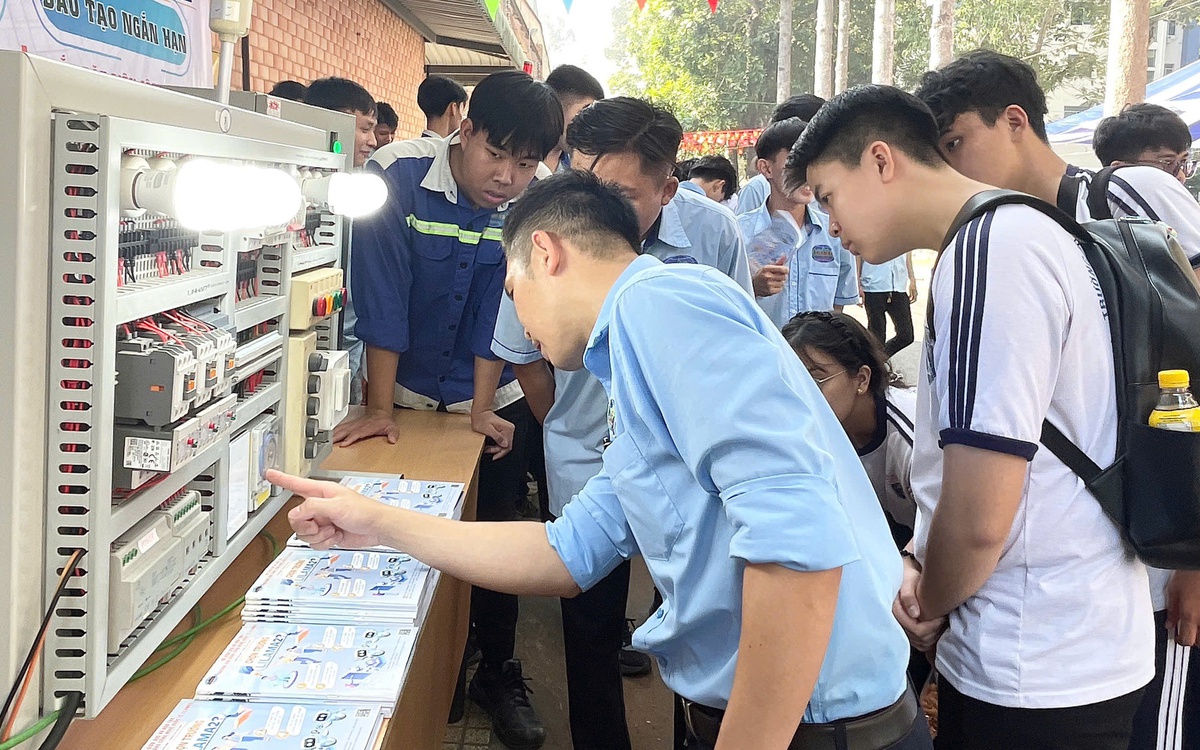
College Education in Vietnam: Job Opportunities and University Transfer Routes
Translated from Vietnamese, summarized and contextualized by DistantNews.
TLDR
- Vietnamese higher education institutions are adapting curricula to better meet labor market demands, with a focus on practical skills.
- Vocational colleges offer a pathway to early employment and further university studies through credit transfer.
- Institutions like Lilama 2 College are partnering with businesses to ensure graduates are job-ready, with some programs receiving government subsidies.
In Vietnam, a significant shift is underway in higher education, emphasizing practical skills and aligning vocational training more closely with the needs of the labor market. Institutions are increasingly highlighting the benefits of pursuing college-level (cao đẳng) education, not just as a direct route to employment but also as a viable stepping stone for those aspiring to pursue university degrees later through transfer pathways.
College education not only helps learners access the working environment early but also opens up opportunities for transfer, long-term career development if there is a clear orientation.
Discussions led by representatives from institutions like Ho Chi Minh City University of Industrial Engineering and the Lilama 2 International College of Technology underscore this evolving perspective. They argue that the traditional emphasis on university degrees at all costs has led to unemployment among some graduates. Instead, a more pragmatic approach, focusing on individual aptitude and market demand, is advocated. Vocational training, in this context, is presented as a sensible option for students who can acquire practical skills and enter the workforce sooner, rather than struggling in academic programs that may not suit their abilities.
The education policy is being adjusted towards clearer phân luồng (streaming/channeling), to suit the actual needs of the labor market. The important thing is that students need to clearly understand their own abilities to choose the right path.
Colleges like Lilama 2 are actively forging strong ties with businesses, integrating practical training and real-world exposure into their curricula from the second year onwards. This industry-aligned approach aims to equip students with the hands-on experience and technical proficiency demanded by employers. Furthermore, the article notes that certain programs receive substantial government support, making quality technical education more accessible. This includes fields like automotive technology, metal cutting, and industrial electricity, where student fees can be significantly reduced.
University is not the only path. Students can choose to study at a vocational college, gain work experience, and continue to transfer to university when needed.
The narrative also addresses concerns about career prospects for female students, with institutions confirming that many technical fields are now open and suitable for women. Programs focusing on machine operation, software programming, and system control are designed to be inclusive. The ease of transferring credits from vocational colleges to universities is also highlighted, alleviating concerns about the perceived difficulty of bridging the gap between different levels of higher education. This multi-faceted approach aims to create a more flexible and responsive educational system that serves both individual aspirations and national economic development.
Many students are concerned about whether transferring from college to university is difficult. According to him, the training programs between schools currently have many similarities, making it convenient for credit recognition.
DistantNews Editorial
Originally published by Tuổi Trẻ in Vietnamese. Translated, summarized, and contextualized by our editorial team with added local perspective. Read our editorial standards.
More Stories


From Our Blog

What Gets Lost (and Found) When News Is Translated

The Critical Role of Diaspora Media in Global News

What Travellers Should Know About Countries with Restricted Press

A Digital Nomad's Guide to Following Local News

How the Same Story Looks Different in Different Countries
