


Colonial Museum Showcased Imperial Might, Later Became 'Gift' of Science from Emperor
Translated from Korean, summarized and contextualized by DistantNews.
TLDR
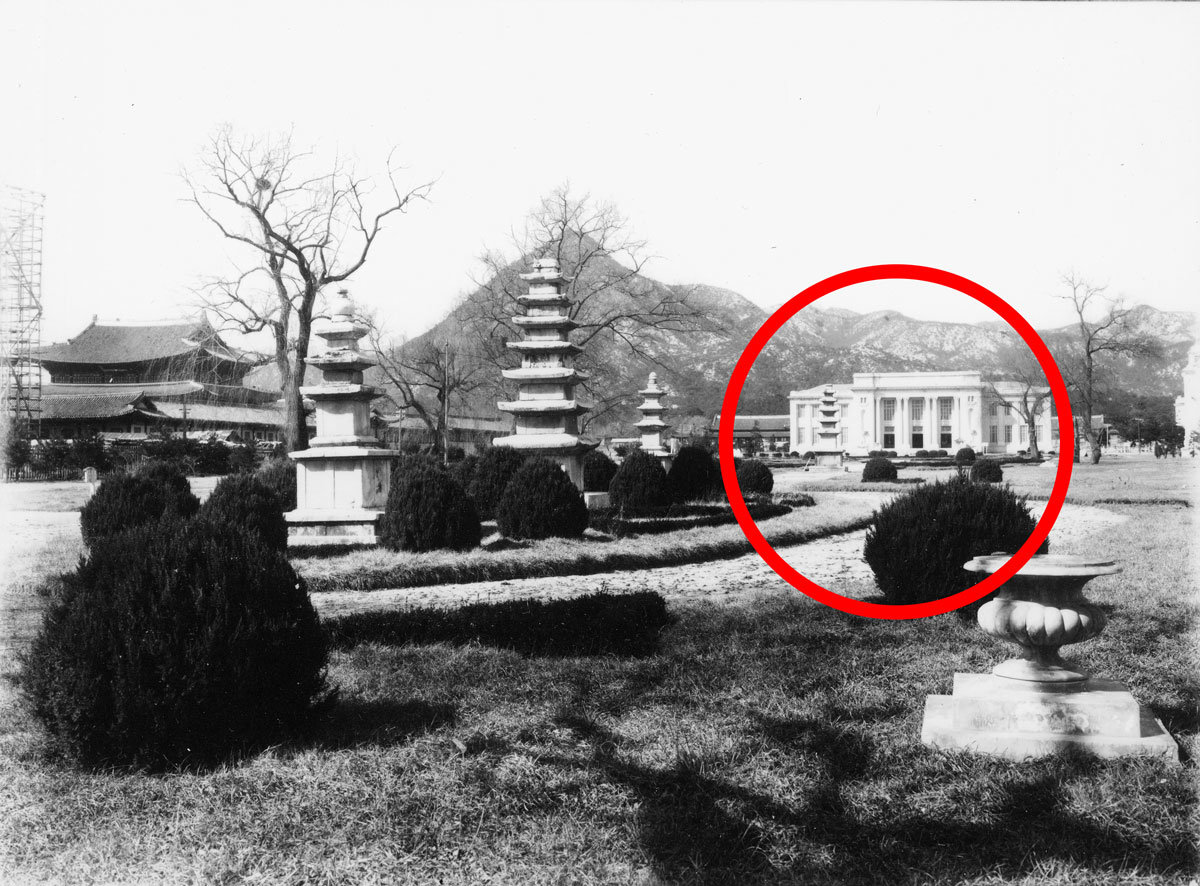
- The Governor-General's Museum, established in 1915 within Gyeongbok Palace, displayed collected artifacts and even palace structures as outdoor exhibits.
- The museum's design is attributed to Ichiro Nomura, who also designed the Taiwan Governor-General's Office Museum, and its collection initially focused on Korean items, with some Chinese and Indian artifacts.
- In 1927, the former Governor-General's Office building was repurposed into the Imperial Gift Science Museum, symbolizing scientific advancement as a gift from the Emperor to promote modernization and dispel superstition.
The colonial-era Governor-General's Museum, established in Gyeongbok Palace in 1915, served a dual purpose. It was a cultural institution showcasing collected artifacts, but also a potent symbol of Japanese colonial power, displaying not only unearthed relics but also elements of the palace itself as exhibits. The museum's design, likely by Ichiro Nomura, mirrored that of the Taiwan Governor-General's Office Museum, reflecting a standardized approach to colonial administration.
The museum, which collects, preserves, and exhibits old relics, is an essential cultural and social education facility for a modern city.
The collection initially focused on Korean items, supplemented by Chinese and Indian artifacts deemed relevant to the Empire's interests. This curated collection aimed to present a specific narrative, integrating Korean history and culture into the broader imperial framework. The museum's outdoor exhibits, which included stone pagodas and even parts of Gyeongbok Palace structures like Geunjeongjeon and Gyeonghoeru, further blurred the lines between historical preservation and colonial assertion.
The Governor-General's Museum was planned to be built soon after the forced annexation of Korea in 1910.
Following the March 1st Movement and a growing desire for scientific and technological advancement among Korean intellectuals, the colonial administration adapted. In 1927, the former Governor-General's Office building was transformed into the Imperial Gift Science Museum. This rebranding, coinciding with Emperor Taishō's wedding anniversary, framed scientific progress as a benevolent gift from the Emperor to the Korean people. The museum's stated mission, as articulated by its first director, was to disseminate scientific knowledge to the 'relatively low-class Korean populace,' aiming to dispel superstition and foster industrial growth.
The museum's outdoor exhibits were arranged to make even the original Gyeongbok Palace buildings, such as Geunjeongjeon and Gyeonghoeru, appear as extensions of the outdoor display.
However, the museum's exhibits primarily showcased Japanese scientific and technological prowess, with Korean contributions relegated to the final sections, such as the zoology and botany displays. This arrangement reinforced the colonial hierarchy, positioning Japanese advancements as superior and Korean achievements as secondary. The museum, therefore, represented a complex interplay of cultural display, colonial ideology, and a calculated response to local aspirations for modernization, all under the guise of imperial benevolence.
In order to escape the current crisis and build civilization and achieve prosperity like others, we must first study natural science and popularize natural science.
DistantNews Editorial
Originally published by Dong-A Ilbo in Korean. Translated, summarized, and contextualized by our editorial team with added local perspective. Read our editorial standards.
More Stories


From Our Blog

What Gets Lost (and Found) When News Is Translated

The Critical Role of Diaspora Media in Global News

What Travellers Should Know About Countries with Restricted Press

A Digital Nomad's Guide to Following Local News

How the Same Story Looks Different in Different Countries
