


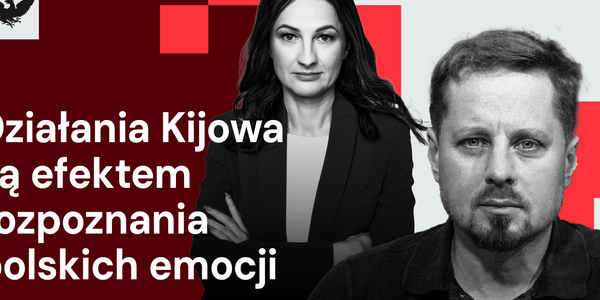
Commentator: Ukraine skillfully uses narrative to influence Poland
Translated from Polish, summarized and contextualized by DistantNews.
At a glance
Analysis
Named sources
Context piece
- A Polish commentator argues that Ukraine effectively uses narrative and social science knowledge to influence Polish public opinion and politics.
- Marcin Duma suggests Ukraine's actions stem from a deep understanding of Polish emotions, historical traumas, and public debate mechanisms.
- Poland is criticized for lacking similar tools and knowledge to effectively influence foreign public discourse and pursue its national interests.
Ukraine skillfully employs narrative and social science expertise to influence Polish public opinion and political discourse, according to commentator Marcin Duma. He argues that Kyiv's actions are not accidental but are a result of a precise understanding of Polish emotions, historical sensitivities, and the dynamics of public debate.
Ukrainians know what they are doing, they know how to do it and they know where to press to achieve the desired effect.
"Ukrainians know what they are doing, they know how to do it and they know where to press to achieve the desired effect," Duma stated, explaining that Ukraine's effectiveness stems from a well-researched mapping of Polish society. This knowledge allows them to anticipate public reactions and exert indirect pressure on politicians and state institutions.
The basis of each of these instruments is knowledge and excellent understanding of societies, because without knowing how to target a message, what narrative to build, effective influence is simply not possible.
Duma highlighted that such soft power tools are widely used by other nations, including Germany, France, the United States, and Great Britain, which develop networks of foundations, think tanks, and NGOs to analyze societies and support foreign policy. "The basis of each of these instruments is knowledge and excellent understanding of societies, because without knowing how to target a message, what narrative to build, effective influence is simply not possible," he explained.
Information and narrative are weapons.
He contrasted this with Poland, which he believes lags significantly in this area. Warsaw, in Duma's view, lacks not only the necessary tools but also the fundamental knowledge to effectively influence public debate abroad and advance its national interests. He pointed to the need for Poland to develop its "third sector", independent organizations capable of long-term research and building influence beyond its borders, especially given the limited capacity of existing state-affiliated think tanks. Duma stressed the urgency of building these structures while relative peace prevails, enabling Poland to better navigate future security crises.
What we lack is activity and the expansion of the third sector.
DistantNews Editorial
Originally published by Rzeczpospolita in Polish. Translated, summarized, and contextualized by our editorial team with added local perspective. Read our editorial standards.
More Stories



From Our Blog

What Gets Lost (and Found) When News Is Translated

The Critical Role of Diaspora Media in Global News

What Travellers Should Know About Countries with Restricted Press

A Digital Nomad's Guide to Following Local News

How the Same Story Looks Different in Different Countries
