


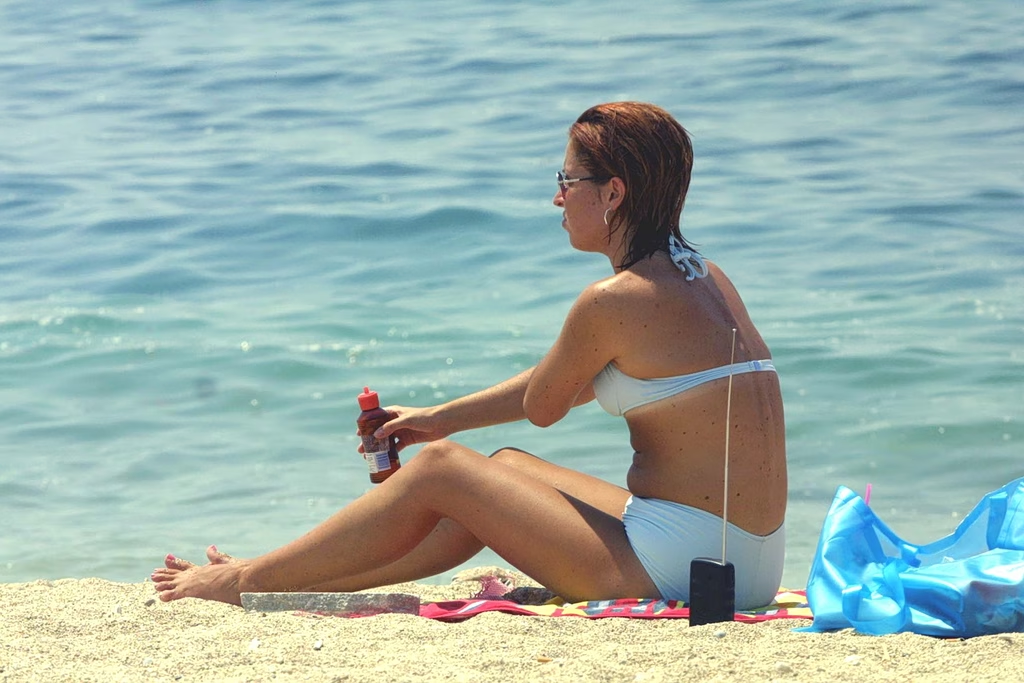
Common Sunscreen Mistakes That Halve Protection, Experts Warn
Translated from Greek, summarized and contextualized by DistantNews.
At a glance
News
Named sources
Context piece
- Experts warn that many people significantly reduce sunscreen effectiveness by applying it incorrectly.
- Key mistakes include applying sunscreen too late, using too little product, and not reapplying frequently enough.
- Proper application involves applying sunscreen 20-30 minutes before sun exposure, using a generous amount, and reapplying every two hours or after swimming or towel-drying.
While sunscreen is a common beach essential, experts caution that many individuals fail to achieve adequate protection due to improper application, not necessarily choosing the wrong product. The effectiveness of sunscreen can be halved by common mistakes.
A primary error is applying sunscreen just before entering the water or upon arrival at the beach. Dermatologists emphasize that sunscreen needs time to absorb and form a protective film on the skin. Applying it 20 to 30 minutes before sun exposure is recommended to ensure full efficacy. When applied immediately before sun or water exposure, the product hasn't stabilized, leading to it being washed away by sweat or reduced in effectiveness by water, leaving skin vulnerable to UV rays.
Another significant mistake is using too little sunscreen. Experts estimate that an adult requires approximately a full shot glass of product for the entire body, with sufficient amounts for the face, ears, and neck. Applying half the recommended amount can drastically lower the Sun Protection Factor (SPF), making the skin more susceptible to sun damage.
Even waterproof sunscreens do not offer indefinite protection. Reapplication is crucial, ideally every two hours, and certainly after swimming, heavy sweating, or towel-drying. Prolonged exposure to ultraviolet radiation is linked to sunburns, premature skin aging, sunspots, wrinkles, and an increased risk of skin damage. Therefore, using sunscreen correctly is as vital as selecting the appropriate SPF.
DistantNews Editorial
Originally published by Ta Nea in Greek. Translated, summarized, and contextualized by our editorial team with added local perspective. Read our editorial standards.
More Stories



From Our Blog

What Gets Lost (and Found) When News Is Translated

The Critical Role of Diaspora Media in Global News

What Travellers Should Know About Countries with Restricted Press

A Digital Nomad's Guide to Following Local News

How the Same Story Looks Different in Different Countries
