


Concern Over Chinese Cabbage Prompts Seoul to Recheck Kimchi Supply Chain
Translated from Korean and summarized by DistantNews. Read the original for the full story.
At a glance
News
Official statement
Ongoing story
- Seoul launched a four-part safety program covering the distribution and consumption of Chinese cabbage and kimchi.
- South Korea’s food safety ministry found no formaldehyde in 82 tested samples, while the city began additional testing and inspections.
- Officials will check country-of-origin labeling and hygiene at about 9,500 kimchi-handling businesses through Sept. 30.
Seoul is tightening checks on Chinese cabbage and kimchi after reports that some producers in China’s Hebei province used formaldehyde to keep cabbage fresh.
The Seoul Metropolitan Government said its four-part safety program would cover the entire chain, from wholesale-market deliveries to products sold online, restaurants, traditional markets and other consumer locations. Formaldehyde is classified as a Group 1 carcinogen by the International Agency for Research on Cancer, part of the World Health Organization.
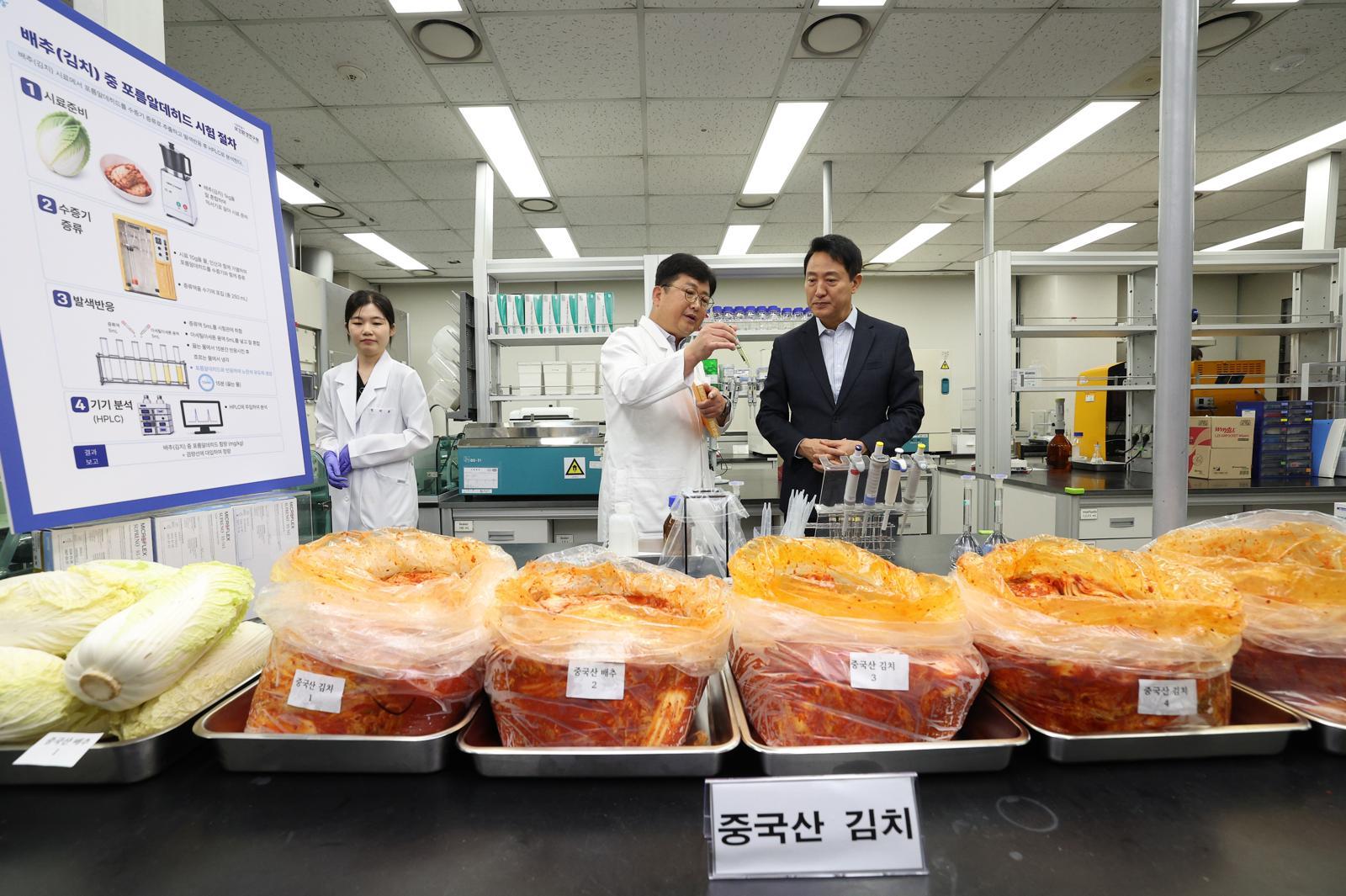
South Korea’s Ministry of Food and Drug Safety found no formaldehyde in 82 samples of Chinese cabbage, kimchi and salted cabbage tested through Aug. 27. Seoul Mayor Oh Se-hoon visited the city’s Research Institute of Public Health and Environment on Aug. 31 to inspect sample preparation, detailed analysis and the process for disclosing test results.
There can be no complacency in food safety.
The city said no Chinese whole cabbages of the type at issue had entered Garak Market through August. It recorded 1,191 tons of Chinese wrapped and young cabbages entering the market, while 5,094 tons of packaged Chinese cabbage kimchi entered South Korea through 65 importers in August.
By Sept. 30, officials plan to inspect country-of-origin labels and hygiene conditions at about 9,500 businesses. The checks include food manufacturers, side-dish shops, restaurants, traditional markets and other cabbage retailers. Seoul is also testing 12 samples collected from online and offline retailers. It said products posing health risks or violating origin-labeling rules could lead to referrals, administrative penalties and criminal investigations.
We will carefully inspect everything from cabbage entering wholesale markets to products distributed online and offline, as well as restaurants and traditional markets, and take strict action immediately if a problem is found.
About this summary
Originally published by Dong-A Ilbo in Korean. Translated, summarized, and contextualized automatically by DistantNews, with a note on how the source frames the story. Not individually reviewed before publishing. How this works.
More Stories


From Our Blog

What Gets Lost (and Found) When News Is Translated

The Critical Role of Diaspora Media in Global News

What Travellers Should Know About Countries with Restricted Press

A Digital Nomad's Guide to Following Local News

How the Same Story Looks Different in Different Countries
