


Conflict with Russia: Is this going to go on forever?
Translated from German and summarized by DistantNews. Read the original for the full story.
At a glance
Analysis
Official statement
Ongoing story
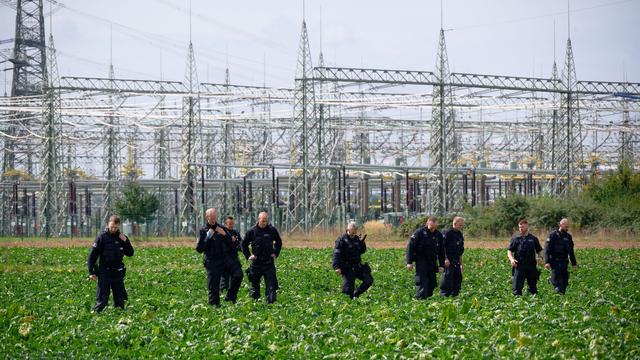
- Germany accused Russia of responsibility for the hybrid attack in Leipzig on Aug. 4 after an attempted attack.
- Interior Minister Alexander Dobrindt said people had acted on behalf of Russian state agencies, and the government announced plans to close Russia’s consulate general in Bonn.
- The article examines why hybrid warfare is difficult to grasp politically and psychologically and how German society should respond.
Germany’s response to the attempted attack in Leipzig has moved beyond a conventional security question. It has also exposed a psychological and political challenge that is harder to define.
Interior Minister Alexander Dobrindt said the people involved had acted “on behalf of Russian state agencies.” The government then concluded that Russia was responsible for the hybrid attack in Leipzig on Aug. 4 and announced, among other measures, the closure of Russia’s consulate general in Bonn.
on behalf of Russian state agencies
Yet the article argues that the nature of hybrid warfare makes clear-cut answers difficult. People want firm boundaries and an unambiguous explanation of who is responsible. The reality, it says, demands that Germans adopt a paradoxical stance toward a threat that remains latent while still requiring a response.
The questions are both political and psychological: why is Russia’s hybrid war so difficult to grasp, and how should the state and society react? The article’s answer begins with an uncomfortable assessment: “Unfortunately, yes,” the conflict may continue indefinitely. The challenge is not simply to identify an adversary, but to live with uncertainty without treating the threat as either imaginary or fully visible.
Unfortunately, yes.
About this summary
Originally published by Die Zeit in German. Translated, summarized, and contextualized automatically by DistantNews, with a note on how the source frames the story. Not individually reviewed before publishing. How this works.
More Stories

From Our Blog

What Gets Lost (and Found) When News Is Translated

How the Same Story Looks Different in Different Countries

The Critical Role of Diaspora Media in Global News

What Travellers Should Know About Countries with Restricted Press

A Digital Nomad's Guide to Following Local News
