

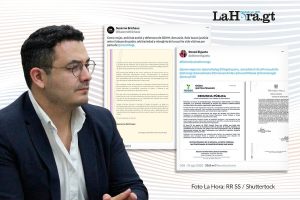

Congress to Resume Anti-Money Laundering Law Debate Amid Technical Refinements
Translated from Spanish and summarized by DistantNews. Read the original for the full story.
At a glance
News
Named sources
Context piece
- Guatemalan Congress is set to resume discussions on a comprehensive anti-money laundering and terrorism financing law (Initiative 6593).
- Technical teams from financial intelligence units, the banking superintendency, and financial associations will participate in refining the bill.
- Key amendments focus on the roles and responsibilities of public notaries and politically exposed persons (PEPs) to meet international standards while seeking legislative flexibility.
The Guatemalan Congress is poised to re-engage with the critical legislation aimed at combating money laundering and terrorism financing, as detailed in Prensa Libre. Initiative 6593, often referred to as the anti-lavado law, is undergoing a crucial phase of technical and constitutional review. The urgency is clear: Guatemala faces an upcoming evaluation by the Financial Action Task Force of Latin America (Gafilat), making the timely and effective passage of an updated law paramount.
This law has some gaps, according to us, that we want to fill, but we don't want to harm the law so that we can pass the evaluation of the Financial Action Task Force of Latin America (Gafilat).
President of Congress, Luis Contreras, has emphasized the commitment to finding consensus. The upcoming discussions on May 25th will involve key stakeholders, including the Intendencia de Verificación Especial (IVE), the Superintendencia de Bancos (SIB), and representatives from the banking and finance sectors. This collaborative approach is vital to ensure the law not only meets international standards set by Gafilat but also addresses domestic concerns and practicalities.
Significant attention is being given to the potential impact of the law on specific professions, particularly public notaries. The proposed requirements for registration, client verification, and reporting place a substantial burden on notaries, who are seen as crucial in preventing illicit financial activities. Contreras has indicated a desire to find ways to 'flexibilize' these requirements, acknowledging the potential strain on professionals, especially new entrepreneurs, while balancing the need to comply with global financial regulations. This reflects a common challenge in developing nations: adapting international standards to local economic realities.
The notary public has three functions: to register, to register their clients, and to report. That is, they take on quite complicated work.
Another key area of focus is the definition of Politically Exposed Persons (PEPs). The debate centers on how broadly this category should be defined, with legislators preferring a narrower scope (first-degree relatives and spouses) compared to potentially broader international interpretations. This nuance is critical for Guatemala, as it seeks to enhance its financial transparency regime without unduly hindering legitimate financial activities or creating excessive bureaucratic hurdles. The success of these negotiations will determine Guatemala's standing in the global fight against financial crime.
Legislators would like it to be the first degree of affinity and the first degree of consanguinity.
About this summary
Originally published by Prensa Libre in Spanish. Translated, summarized, and contextualized automatically by DistantNews, with a note on how the source frames the story. Not individually reviewed before publishing. How this works.
More Stories

From Our Blog

News in Translation: What Gets Lost, and How We Keep the Framing

Diaspora Media: How Communities Abroad Follow Home

Traveling Where the Press Is Not Free: How to Read the News There

The Digital Nomad's Guide to Local News

The Same Story, Different Countries: How Coverage Changes at the Border
