


Conquering Demanding Markets with Green – Sustainable Products
Translated from Vietnamese, summarized and contextualized by DistantNews.
At a glance
News
Sources not specified
Context piece
- Ben Thanh Rubber Joint Stock Company is accelerating its green transformation to meet international market demands for sustainable products.
- The company utilizes certified sustainable forest rubber and recycled rubber, aiming for Net Zero emissions by implementing solar power and biomass boilers.
- This strategic shift towards green and digital transformation enhances competitiveness and meets stringent international environmental standards.
Ben Thanh Rubber Joint Stock Company is intensifying its green transformation efforts to capture demanding international markets with its sustainable rubber products.
The company produces a diverse range of rubber products, including fabric-core and steel-core conveyor belts, V-belts, and technical rubber components for industries such as mining, cement, fertilizer, and water supply. Its products are not only supplied domestically but also exported to countries like Japan, the United States, Australia, Indonesia, Malaysia, and Egypt. To meet increasingly high customer expectations, the company identifies technological innovation as a key driver for growth. Ben Thanh operates under an ISO 9001 quality management system, and its laboratory is VILAS-accredited according to ISO 17025, ensuring accuracy in product quality testing and evaluation.
Alongside its market strategy, the company is focusing on deep development through investments in modern machinery, research into new products, and continuous innovation in production technology. This approach is crucial for maintaining a competitive edge and improving product quality. In its medium to long-term development plan, Ben Thanh has designated green development and achieving Net Zero emissions as a strategic pillar.
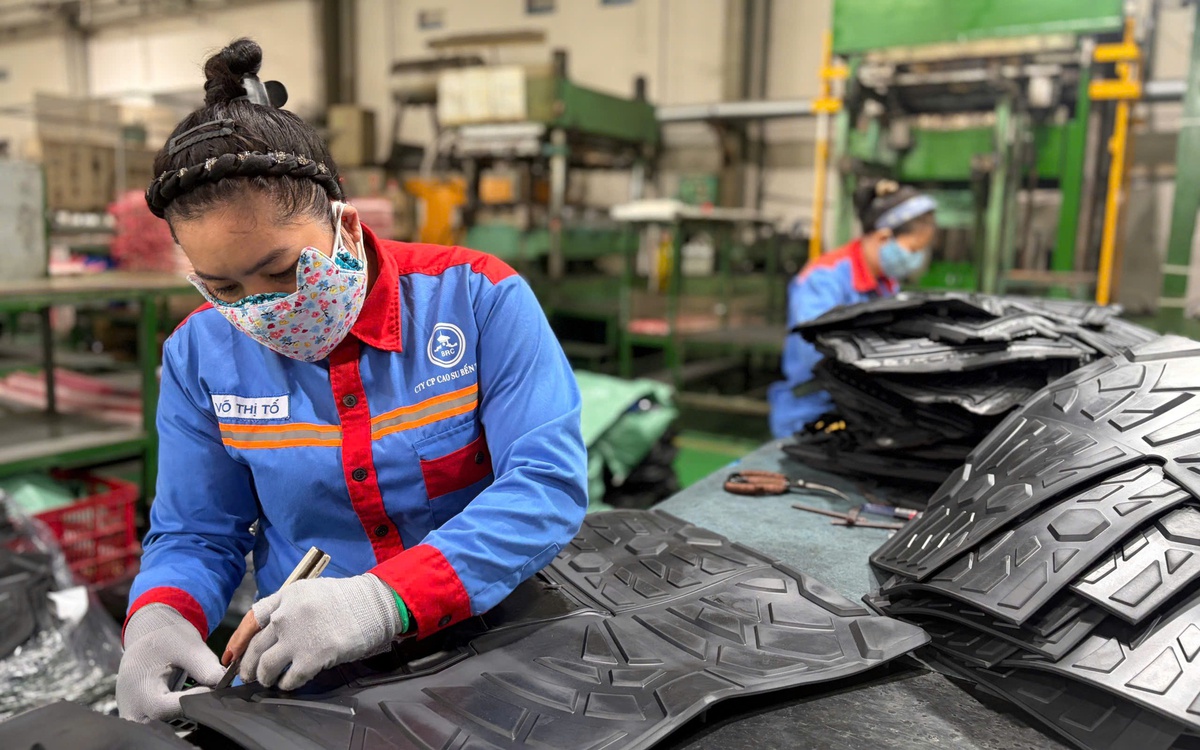
Nguyễn Trần Nghiêm Vũ, General Director of Ben Thanh Rubber, stated that the company uses rubber materials certified for sustainable forest development from the Vietnam Rubber Group. Additionally, 90% of the raw materials for its technical rubber products, used for automotive floor mats and mudguards exported to Germany and Japan, are recycled rubber. For the latter half of 2026, the company plans to install rooftop solar power to reduce carbon emissions and transition to biomass boilers.
Ben Thanh is also researching the replacement of traditional chemicals with environmentally friendly materials that meet international standards like the EU's RoHS. These initiatives not only reduce environmental impact but also create a competitive advantage as export markets increasingly tighten their sustainable development criteria. Alongside green transformation, digital transformation is emerging as another significant driver for the company's growth. Following the direction set by the Vietnam Rubber Group, Ben Thanh has been researching and gradually implementing technology in its production management.
The raw materials for the company's conveyor belt production are rubber products with sustainable forest development certification from the Vietnam Rubber Group. Besides, we use recycled rubber from the circular economy for technical rubber products, accounting for 90% of the total raw materials for floor mats and mudguards exported to Germany and Japan. In the second half of 2026, we will move towards using rooftop solar power to reduce carbon emissions and switch to biomass boilers.
DistantNews Editorial
Originally published by Tuổi Trẻ in Vietnamese. Translated, summarized, and contextualized by our editorial team with added local perspective. Read our editorial standards.
More Stories

From Our Blog

What Gets Lost (and Found) When News Is Translated

The Critical Role of Diaspora Media in Global News

What Travellers Should Know About Countries with Restricted Press

A Digital Nomad's Guide to Following Local News

How the Same Story Looks Different in Different Countries
