


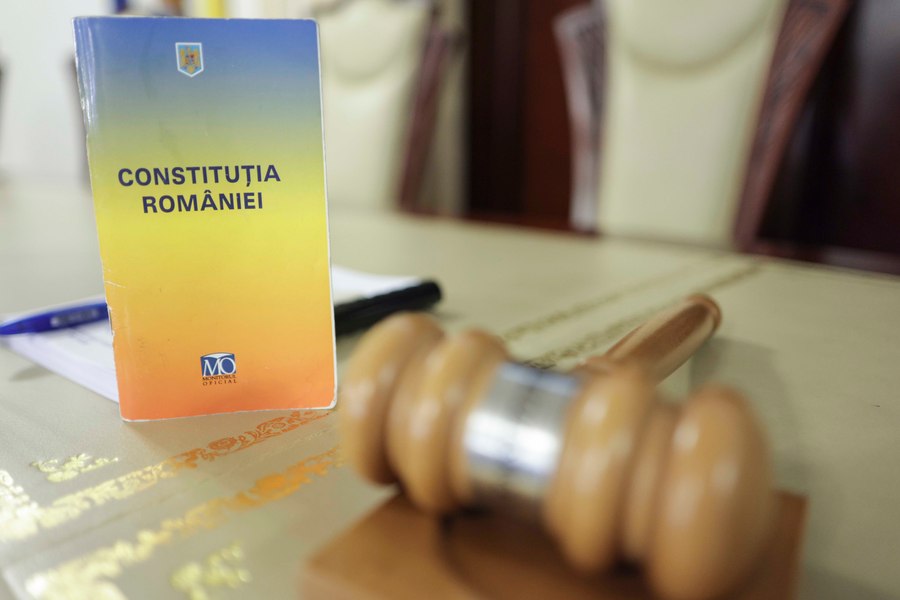
Constitutional Court Does Not Provide Consultations: Former Judges Explain Conditions for Intervention in Government Crisis
Translated from Romanian, summarized and contextualized by DistantNews.
TLDR
- Former Constitutional Court judges discussed the conditions under which the institution can be involved in the current governmental crisis.
- They clarified that the Constitutional Court does not provide consultations, and its involvement is limited to specific constitutional conflicts.
- The judges explained that the court could only be approached if the interim situation is not resolved or if the government's political structure changes, requiring parliamentary approval.
The Romanian Constitutional Court (CCR) does not offer advisory opinions, a point emphasized by former judges in light of the ongoing governmental crisis. As reported by News.ro, the discussion centered on the precise circumstances under which the CCR could be formally petitioned. The clarification comes amid speculation that the PSD might seek the court's intervention to resolve the political deadlock following the withdrawal of their ministers from the current cabinet.
Augustin Zegrean, a former president of the CCR, was firm in his stance, stating that the court is not a consultative body. He questioned the logic of asking the court to dictate actions, suggesting that political actors should navigate the constitutional framework themselves. Zegrean outlined that the CCR's jurisdiction is invoked only when constitutional conflicts arise, such as a failure to resolve an interim government situation or a significant shift in the government's political composition that necessitates parliamentary ratification.
Deci Curtea Constituţională nu dă consultaţii El (n. red. - liderul PSD Sorin Grindeanu) vrea să întrebe ce să facă, când să facă, cum să facă. De ce nu cere Curţii Constituţionale să facă şi cererea în locul lui?
Further elaborating on the procedures, Zegrean noted that the distinction between the resignation of one minister versus multiple ministers is procedural rather than substantive regarding the need for parliamentary hearings. If a replacement maintains the existing political balance, the Prime Minister can propose the new minister, who is then appointed by the President. However, any change altering the government's political structure requires parliamentary approval. He also stressed that interim mandates cannot exceed 45 days.
Former judge Tudorel Toader echoed these sentiments, explaining that the CCR would deem itself incompetent to issue a mere "viewpoint" or "legal opinion." Such requests, he stated, would be handled administratively with an extrajudicial response. Toader suggested that the PSD leader could potentially petition the CCR regarding a constitutional legal conflict if the Prime Minister refuses a vote of confidence after a change in the government's political makeup.
Şi nici nu îl înregistrează ca dosar privind excepţii sau obiectii de neconstituţionalitate, intră în administrative şi dă un răspuns extrajudiciar.
DistantNews Editorial
Originally published by Adevărul in Romanian. Translated, summarized, and contextualized by our editorial team with added local perspective. Read our editorial standards.
More Stories



From Our Blog

What Gets Lost (and Found) When News Is Translated

The Critical Role of Diaspora Media in Global News

What Travellers Should Know About Countries with Restricted Press

A Digital Nomad's Guide to Following Local News

How the Same Story Looks Different in Different Countries
