


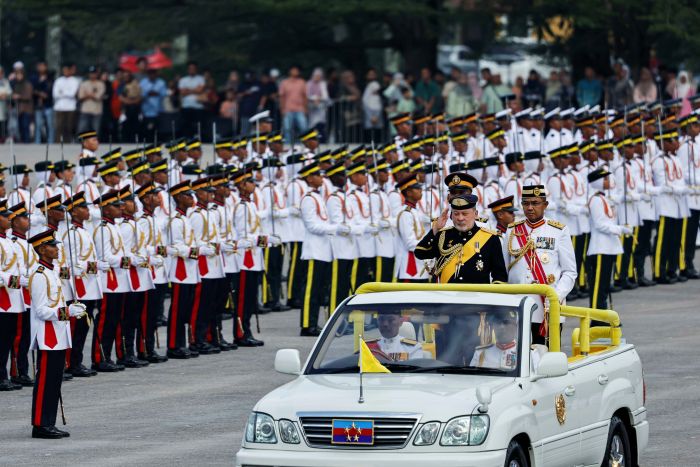
Constitutional Monarchy: Malaysia's Pillar of Unity and Harmony
Translated from Malay, summarized and contextualized by DistantNews.
At a glance
Analysis
Sources not specified
Context piece
- Malaysia's constitutional monarchy serves as a cornerstone of national unity and harmony, with Islam holding a special position as the religion of the Federation.
- The institution of the Yang di-Pertuan Agong, the King, evolved from historical Malay leadership and was solidified following opposition to the Malayan Union, becoming a symbol of stability.
- Islamic principles of unity and adherence to leadership in good causes are emphasized as vital for maintaining societal and national stability, mirroring the historical importance of the Medina Charter.
Malaysia's constitutional monarchy is presented as the bedrock of national unity and harmony, with Islam holding a unique status as the Federation's religion. The institution of the Yang di-Pertuan Agong, the King, is framed as a historical continuation of Malay leadership and a symbol of unity for the multi-ethnic population.
The article traces the origins of the monarchy to historical Malay sultanates like Langkasuka and the Melaka Sultanate founded by Parameswara. The position of Yang di-Pertuan Agong emerged from the Reid Commission's recommendations, partly as a response to public opposition to the Malayan Union, which sought to diminish the authority of Malay rulers. The first Yang di-Pertuan Agong was elected in August 1957, and the institution has since remained a pillar of national stability and unity.
Drawing parallels with Islamic teachings, the text highlights Islam's emphasis on unity and rejection of division, likening a united community to a strong building. Historical Islamic events like the Battle of Badr and the Battle of Hunain are cited to illustrate the consequences of unity and disunity. The Medina Charter is presented as a foundational document for a sovereign society that ensures fair rights for all.
In the Malaysian context, the Yang di-Pertuan Agong and the Malay rulers are seen as crucial in safeguarding political stability and national unity, guided by the Constitution. Achieving unity requires open-mindedness, generosity, and mutual respect, embodying the Malay proverb 'united we stand, divided we fall.' The article concludes that the constitutional monarchy is central to Malaysia's unity and harmony, emphasizing the need to maintain the close relationship between the King and the people for the nation's continued peace, unity, and prosperity under the Constitution and divine guidance.
DistantNews Editorial
Originally published by Utusan Malaysia in Malay. Translated, summarized, and contextualized by our editorial team with added local perspective. Read our editorial standards.
More Stories



From Our Blog

What Gets Lost (and Found) When News Is Translated

The Critical Role of Diaspora Media in Global News

What Travellers Should Know About Countries with Restricted Press

A Digital Nomad's Guide to Following Local News

How the Same Story Looks Different in Different Countries
