


Construction Boom Instead of Rice Fields: Who Owns Bali? - How Digital Nomads Are Changing an Island
Translated from German, summarized and contextualized by DistantNews.
At a glance
News
From a news agency
Context piece
- Bali's popular Canggu district, once a fishing village, is undergoing rapid development driven by an influx of digital nomads.
- The construction boom is replacing rice fields with buildings, leading to traffic congestion, noise, and waste issues.
- Local residents express sadness and frustration as their traditional landscapes disappear and land is sold to investors, raising questions about who truly owns Bali.
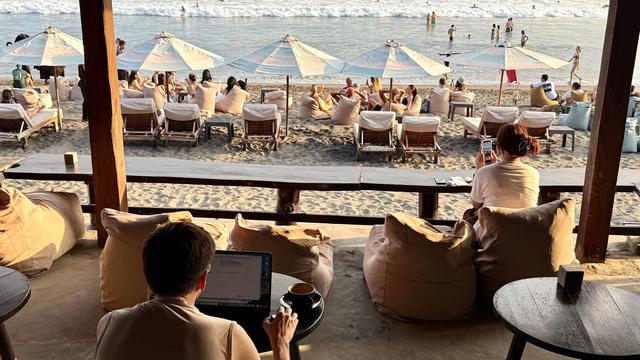
Canggu, a coastal area on Bali's southwest coast, is no longer recognizable as the fishing village it once was. The once-charming locale, known for its narrow paths, has transformed into a global hotspot for digital nomads over the past decade. Today, it is characterized by trendy eateries, yoga studios, and co-working spaces, but also by a relentless construction boom.
Cranes and excavators dominate the landscape as new projects replace rice fields. This rapid development is fueled by a growing number of long-term visitors, primarily from Europe, Russia, and Australia. The transformation has brought with it traffic chaos, noise pollution, and mounting waste problems, sparking increasing resentment among the local Balinese population.
"Everything has changed in recent years, and that makes us very sad sometimes," said hotel employee Giri, her voice trembling. "Our nature, the typical landscapes are disappearing because almost all land is being sold to wealthy investors." The visual evidence of this shift is stark: concrete structures now dominate where lush green fields once lay.
The influx of foreigners, often seen riding rented scooters without helmets, has further inflamed tensions. In 2023, Governor Wayan Koster felt compelled to issue an official code of conduct for international visitors, addressing issues from respectful behavior in temples to mandatory helmet use. The growing question on the island is increasingly: "Who does Bali actually belong to?" There is a palpable sense that expatriates are building their own networks and businesses, often marginalizing the local Balinese population.
Everything has changed in recent years, and that makes us very sad sometimes. Our nature, the typical landscapes are disappearing because almost all land is being sold to wealthy investors.
DistantNews Editorial
Originally published by Die Zeit in German. Translated, summarized, and contextualized by our editorial team with added local perspective. Read our editorial standards.
More Stories


From Our Blog

What Gets Lost (and Found) When News Is Translated

How the Same Story Looks Different in Different Countries

The Critical Role of Diaspora Media in Global News

What Travellers Should Know About Countries with Restricted Press

A Digital Nomad's Guide to Following Local News
